The Bichon Frise is truly a tiny, cheerful cloud walking on four paws. With their affectionate nature and perpetually happy disposition, they capture the hearts of everyone they meet. But their stunning, snow-white coat is more than just beautiful; it’s a unique part of their charm and requires very specific care.
Grooming a Bichon Frise is not just about keeping them pretty. It is absolutely essential for their health, comfort, and happiness. Without the right care, that fluffy white coat can quickly become a tangled, uncomfortable mess.
Think of grooming as a delightful ritual, not a chore. This guide will walk you through everything you need to know, from the moment you bring home your new puppy to maintaining that perfect ‘powder puff’ silhouette for years to come.
Bichon Frise Grooming Requirements:
When you look at a Bichon Frise, you see a magnificent, cotton-ball-like coat. What you need to understand is that their hair is very different from many other breeds. They have a double coat: a soft, dense undercoat and a curly, coarser outer coat.
This combination of hair is what gives them their signature look. It also makes them a low-shedding (and often hypoallergenic) breed, which is great for allergy sufferers.
However, the shed hair gets trapped in the surrounding coat instead of falling out. If not regularly brushed, this trapped hair quickly twists and forms painful, tight mats and tangles.
These mats can pull on your dog’s skin, restrict movement, and hide serious skin issues or parasites. This is why regular, consistent grooming is a non-negotiable part of the bichon frise grooming requirements. It is truly a health need, not just a cosmetic one.
Their coat grows continuously, similar to human hair. This means that, unlike breeds that only need seasonal maintenance, your Bichon requires lifelong attention. Their coat must be trimmed approximately every 4 to 8 weeks, depending on the desired length and style.
The classic, rounded ‘powder puff’ look is the breed standard, but many owners opt for a shorter, low-maintenance “teddy bear clip” to make daily care easier.
Grooming Your Bichon Frise Puppy:
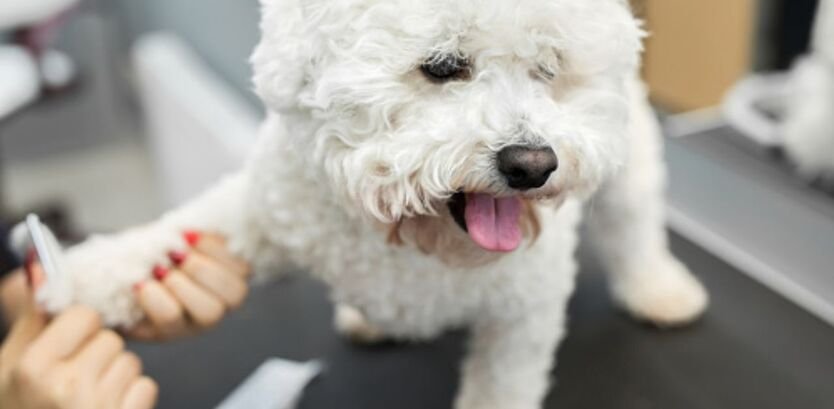
The moment you bring home your fluffy Bichon Frise puppy is the perfect time to start their grooming education. Grooming bichon frise puppy routines should focus on making the experience positive and relaxing, not scary.
Puppyhood is the critical phase for socialization. If your puppy learns that being brushed, bathed, and having their feet handled is a good thing, future grooming sessions will be much easier for both of you.
Start slow. Introduce the grooming tools one by one. Let your puppy sniff the brush and clippers (while they are turned off). Give a small treat and lots of praise.
The first few brushing sessions should be very short, just 5 to 10 minutes. Gently brush their back and sides, focusing on positive reinforcement and ending on a good note before they get wiggly or bored.
Handle their paws, ears, and tail frequently. These are the sensitive spots a professional groomer or you will need to touch often. If they get used to it now, they won’t fight it later.
Introduce the bath gently. Use warm water and puppy-safe, tearless shampoo. The first bath might be awkward, but keep it calm and playful. Always dry them thoroughly, using a low-heat dryer, to prevent chills and matting.
Essential Bichon Frise Grooming Tips:
Mastering these core skills is key to keeping that beautiful, cloud-like coat in top condition. These bichon frise grooming tips are what separate a perfectly fluffy coat from a tangled mess.
The Brushing Routine: Daily is Best
Because of their unique coat texture, the Bichon Frise must be brushed every single day, or at least every other day. Waiting longer than two days can easily lead to serious matters.
You need two essential brushes: a quality slicker brush and a metal comb (preferably one with widely spaced teeth on one end and finer teeth on the other).
The Key Technique: Line Brushing
You can’t just brush over the top of the coat. You need a line brush. This technique ensures you reach all the way down to the skin, which is where mats start.
- Start by misting the coat lightly with a detangling spray or a conditioning spray. Never brush a dry coat, as this can break the hair.
- Use a slicker brush to section the coat, starting at the bottom of the legs or tail.
- Hold the hair above the section you are working on, and brush a small line of hair down to the skin.
- Move up slightly and repeat, working line by line across the entire body.
- After using the slicker brush, follow up with the metal comb. The comb is your “mat detector.” If the comb glides smoothly through the hair from root to tip, you have done a good job. If it catches, go back and brush that area again until the comb slides through easily.
Pay extra attention to high-friction areas: under the legs, behind the ears, around the collar, and where the tail meets the back. These spots mat the fastest.
Bathing the Bichon Frise
A Bichon Frise generally needs a bath every two to four weeks. If you let them go much longer, the oils build up and can cause the coat to mat faster, and they will lose their bright white color.
- Brush First! This is a golden rule. You must thoroughly brush out any tangles before the bath. Water tightens mats, making them impossible to remove without cutting them out.
- Use a high-quality, whitening or brightening shampoo specifically made for dogs. Rinse all the soap out completely. Soap residue can irritate the skin and also attract dirt.
- Follow up with a conditioner. Conditioners help close the hair shaft, making the coat smoother and less likely to tangle in the coming days.
The Drying Process: Crucial for Fluff
How you dry your Bichon is just as important as how you wash them. Air drying is an absolute no-go, as it leads to terrible matting and can make your dog cold.
Use a low-heat, high-velocity pet dryer (a human hairdryer can be too hot and doesn’t have enough power).
- Immediately after the bath, wrap your Bichon in a towel to soak up the excess water.
- Begin using the dryer while line brushing. You must brush the coat straight as you dry it. This technique straightens the curls slightly, preventing them from knotting up as they dry and creating that wonderful, fluffy volume.
Grooming Bichon Frise At Home:

Doing the full grooming job for your bichon frise at home is achievable, but it requires the right equipment and a little practice. Investing in quality tools will make the process easier and produce a better result.
The Haircut: The ‘Powder Puff’ Look
Achieving the classic Bichon haircut is typically done in three main steps: the body, the sanitary areas, and the rounded head.
- The Body Clip: Use clippers with a guard or a blade length that suits your lifestyle. A The 7 blade leaves a nice, full length while still being manageable at home. Move the clippers smoothly in the direction the hair grows.
- Sanitary Areas: Use a short blade, like a #10, carefully around the private areas and the underside of the tail to keep these areas clean and hygienic.
- The Face and Paws: This is where the artistry comes in. You will use curved and straight scissors to meticulously shape the head into a perfect round ball. Trim the hair around the eyes (avoiding the eyes themselves!) to keep vision clear and prevent irritation. Trim the hair between the paw pads to stop it from collecting debris.
Remember, practice makes perfect. Start conservatively, and you can always trim more later. The goal is safety and comfort first.
Nail Care and Ear Cleaning
Don’t forget the details! Keeping the nails short is crucial for your Bichon’s posture and comfort. Overgrown nails can cause pain and permanent damage to their foot structure.
Clip or grind the nails every 2 to 3 weeks. If you are nervous about clipping, use a nail grinder, which files the nail down slowly and gives you more control. Remember to trim just the tip, avoiding the quick (the pink part containing blood vessels).
The Bichon’s floppy ears are prone to developing infections. You should check and clean their ears weekly. Use a veterinarian-approved ear cleaner and a cotton ball to gently wipe the visible part of the ear canal.
A unique bichon frise grooming need is plucking or trimming the hair inside the ear canal. Excessive hair can trap moisture and wax. Many owners prefer a professional groomer or vet to handle this delicate task to prevent injury.
Addressing Specific Bichon Frise Grooming Needs

While the overall routine is consistent, Bichons have a few specific challenges that need special attention.
Tear Staining (The Pink/Brown Under-Eye Marks)
Many Bichons develop unsightly reddish-brown stains beneath their eyes. This is caused by porphyrins, which are compounds found in tears and saliva that turn reddish-brown when exposed to air.
To Minimize Tear Staining:
- Keep the area dry and trimmed: This is the most important step. Keep the hair around the eyes short so tears do not soak into a long strand of hair.
- Wipe daily: Gently wipe the tear tracks daily with a clean, damp cloth or a specialty eye wipe to remove moisture and debris.
- Diet and Water Quality: Sometimes, changing to filtered water and a high-quality diet can help reduce the staining, as tear production can be linked to overall health. Always consult your vet if the discharge looks thick or smells bad, as it could be a sign of an infection.
Dealing with Mats and Tangles
Despite your best efforts, sometimes a mat will form. If you encounter a mat that cannot be gently pulled apart with your fingers or worked out with a slicker brush, resist the urge to pull hard.
Safe Mat Removal:
- Use a mat splitter or a seam ripper (used for sewing) to carefully slice the mat vertically, breaking it into smaller sections.
- Once divided, you can use the metal comb to gently pick out the smaller sections of the mat, working from the tip of the hair inward toward the skin.
- If the mat is tight against the skin (a ‘felted’ mat), it must be removed by clipping underneath it with a safety guard or seeking professional help. Never try to cut a mat out with scissors unless you can see the skin clearly, as it is incredibly easy to accidentally cut the dog’s skin.
Maintaining the Bright White Color
The bright white coat is a hallmark of the breed, but it can quickly look dingy. Use a shampoo with optical brighteners, which are safe for dogs and help counteract yellowing. Regular bathing and proper drying are the best defense against a dull coat.
Conclusion
Caring for the iconic coat of a Bichon Frise is a commitment, but it is one that pays off with a happy, healthy, and stunningly beautiful companion. By following these comprehensive bichon frise grooming guides, maintaining daily brushing habits, and ensuring regular haircuts, you are giving your fluffy friend the best possible quality of life.
Remember, the time you spend grooming is also valuable bonding time. It’s your chance to check their skin for bumps, feel their muscles, and simply enjoy a quiet moment with your very own cheerful white cloud.
Frequently Asked Questions (FAQs)
How often does a Bichon Frise need a professional groomer?
Most Bichon Frise owners schedule professional grooming every 4 to 8 weeks. This keeps their coat neat, hygienic, and at a manageable length, complementing essential daily home care.
What is the best type of brush for a Bichon Frise?
The slicker brush is the most crucial tool. It must be used alongside a metal comb to ensure you reach the dense undercoat and remove all tangles right down to the skin.
Is it really necessary to brush a Bichon Frise every day?
Yes, it is highly recommended. Their non-shedding, curly hair quickly traps dead hair. If not brushed daily or every other day, this trapped hair rapidly forms painful, tight mats that can be difficult to remove.
My Bichon hates being groomed. What can I do?
Use patience, high-value treats, and very short, positive sessions. Start with gentle strokes and reward immediately. Gradually increase the duration of the grooming session, always ending on a good note. If resistance is severe, seek advice from a professional groomer or dog behaviorist.