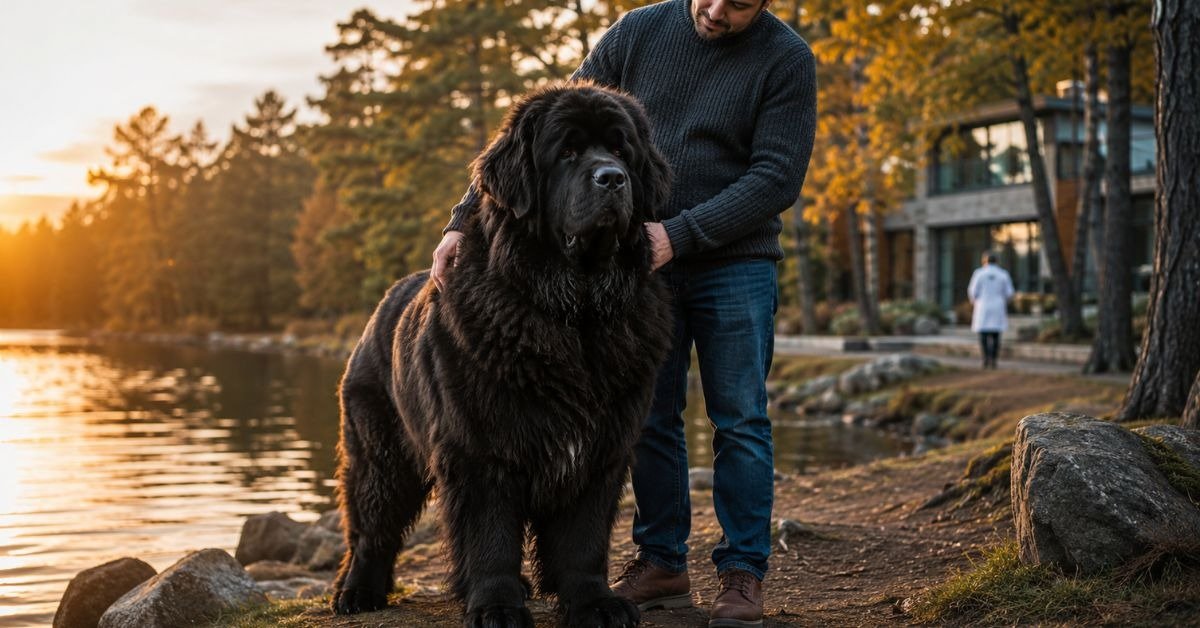
There’s a particular kind of heartbreak that comes with loving a giant breed. You bring home this enormous, drooling, impossibly sweet puppy who grows into a 150-pound teddy bear that thinks he’s a lapdog. And somewhere in the back of your mind, a quiet worry sits: giant breeds don’t get enough time. Newfoundlands, for all their size and strength, carry a surprising number of internal vulnerabilities that smaller breeds simply don’t face in the same way.
This isn’t meant to scare you. It’s meant to arm you. Understanding Newfoundland health issues early, really understanding them, not just skimming a list is the single best thing you can do for a dog who would swim through a hurricane to save you, but can’t tell you when something inside him hurts.
Let’s talk through what actually matters.
Why Newfoundlands Face Unique Health Challenges

Size is not free. Every extra pound of muscle and bone puts strain on a heart that has to pump blood further, joints that bear more load, and a digestive system that occupies far more real estate than nature really planned for.
Add to that a genetic pool that, like most purebred lines, carries inherited risk factors passed down through generations of breeding for specific traits the broad chest, the thick coat, the calm temperament and you get a breed prone to a specific and predictable cluster of conditions.
The good news? Predictable means preventable, or at least manageable. Knowledge really is leverage here.
Heart Health: The Silent Threat Behind Every Newfoundland Health Issue

If there’s one category that should top every owner’s watch list, it’s cardiac disease. Newfoundlands are genetically predisposed to two serious heart conditions, and both can progress with almost no visible symptoms until the damage is significant.
Subaortic Stenosis (SAS)
This is a narrowing of the area just below the aortic valve, forcing the heart to work harder to push blood out to the body. It’s one of the most common inherited heart defects in the breed, and it ranges from mild (barely affecting quality of life) to severe (sudden cardiac death, even in young, seemingly healthy dogs).
Warning signs to watch for:
- Fatigue after minimal exertion
- Fainting or collapsing episodes (syncope)
- A visible heart murmur detected during a vet exam
- Labored breathing at rest
Here’s the unsettling part: many dogs with moderate to severe SAS show zero outward symptoms until a catastrophic event occurs. This is why cardiac screening before breeding, and annual heart checks for every Newfoundland, aren’t optional extras they’re essential.
Dilated Cardiomyopathy (DCM)
DCM causes the heart muscle to thin and stretch, weakening its ability to pump effectively. Unlike SAS, which is present from birth, DCM often develops later in life, making it a condition owners need to stay alert to well into a dog’s adult years.
Symptoms tend to creep in slowly:
- Reduced stamina during walks or play
- A persistent, soft cough, especially at night
- Swollen belly (a sign of fluid buildup)
- Pale or bluish gums
An annual cardiac ultrasound, or at minimum a thorough auscultation by your vet, should be a non-negotiable part of your dog’s yearly checkup. Catching either of these conditions early can mean the difference between medication that manages the problem for years and a sudden, devastating loss.
Bloat and Gastric Torsion: The Emergency That Waits for No One

If you own a deep chested giant breed and haven’t heard of bloat, please stop reading right now and go learn the symptoms. This is genuinely a life or death situation, and it can go from “my dog seems a little off” to fatal in under an hour.
Gastric Dilatation-Volvulus (GDV), commonly called bloat, happens when the stomach fills with gas and then twists on itself, cutting off blood supply. Deep chested breeds like Newfoundlands are at significantly elevated risk compared to smaller, narrower-bodied dogs.
Recognize these symptoms immediately:
- A visibly distended, hard abdomen
- Unproductive retching (trying to vomit but nothing comes up)
- Restlessness, pacing, unable to get comfortable
- Excessive drooling
- Rapid, shallow breathing
- Collapse
There is no home remedy. There is no “wait and see.” If you suspect bloat, you drive to the emergency vet immediately. This condition kills dogs within hours if untreated.
Reducing the risk:
- Feed two or three smaller meals rather than one large one
- Use a slow feeder bowl to prevent gulping air
- Avoid vigorous exercise for at least an hour before and after meals
- Consider discussing a preventative gastropexy (surgically tacking the stomach in place) with your vet, particularly if your dog has family history of GDV
This single condition is responsible for more sudden giant-breed deaths than almost anything else on this list, which is exactly why it deserves this much space.
Joint and Skeletal Strain: The Cost of Carrying That Much Body Weight

A dog built like a small bear is going to put enormous pressure on joints designed to support far less mass over a normal lifespan. This is where structural Newfoundland health issues become most apparent, usually starting in the growth phase and compounding with age.
Hip and Elbow Dysplasia
These are malformations of the joint where the ball and socket don’t fit together properly, leading to grinding, pain, and eventually arthritis. Genetics play the biggest role, but nutrition and exercise during puppyhood matter enormously too.
Signs to watch for:
- Bunny hopping gait when running
- Reluctance to climb stairs or jump into the car
- Stiffness after resting that improves with gentle movement
- Audible clicking or grinding from the hips or elbows
Getting hip and elbow scores done through OFA or PennHIP before breeding is standard practice among responsible breeders, and it should factor heavily into your decision if you’re choosing a puppy.
ACL/CCL Tears
The cranial cruciate ligament (equivalent to the human ACL) stabilizes the knee. In giant breeds, the sheer torque generated by their body mass during a sudden turn, jump, or awkward landing puts tremendous stress on this ligament, and tears are shockingly common.
Symptoms include:
- Sudden lameness in a back leg
- Sitting with one leg held out to the side
- Swelling around the knee joint
- Reluctance to bear weight
Unlike smaller dogs, giant breeds rarely heal well from CCL tears without surgical intervention. The body weight involved makes conservative management far less reliable.
Prevention strategies:
- Keep your dog at a lean, healthy weight (extra pounds mean extra torque on every joint)
- Avoid high-impact activities like repeated jumping off furniture or hard surfaces
- Build muscle gradually through controlled leash walks rather than explosive play
- Joint supplements containing glucosamine, chondroitin, and omega-3 fatty acids can support cartilage health long-term
Cystinuria: The Genetic Kidney Risk Few Owners Know About

This one catches people off guard because it isn’t widely discussed outside breed-specific circles, yet it’s a well documented hereditary condition in Newfoundlands.
Cystinuria is a genetic defect affecting how the kidneys reabsorb an amino acid called cystine. When cystine isn’t properly reabsorbed, it accumulates in urine and can crystallize into stones, painful, and potentially life-threatening if they block the urinary tract.
Watch for:
- Straining to urinate
- Blood in the urine
- Frequent, small urinations
- Licking at the genital area
- In severe blockages: vomiting, lethargy, and abdominal pain (a true emergency)
The encouraging news is that genetic testing exists for this exact mutation. If you’re getting a puppy, ask the breeder directly whether the parents have been tested for cystinuria. If you already own an adult Newf, a simple urine test can screen for elevated cystine levels, and dietary management (lower-protein, specially formulated diets) combined with increased water intake can meaningfully reduce stone formation risk.
Skin, Coat, and Ear Care: The Grooming Side of Giant Breed Health

Newfoundlands were bred to work in cold water, and that thick double coat is a masterpiece of natural engineering. It’s also, unfortunately, a perfect environment for bacteria, yeast, and moisture-related problems if you’re not staying on top of it.
Hot Spots
These are localized areas of irritated, infected skin that can appear seemingly overnight and spread with alarming speed. They’re often triggered by trapped moisture (hello, swimming) combined with matting or reduced airflow through that dense coat.
Prevention:
- Dry your dog thoroughly after every swim, paying special attention to the neck folds, chest, and underarms
- Brush regularly to prevent matting, which traps moisture against the skin
- Address any minor scratch or irritation quickly before your dog turns it into a full hot spot through licking and chewing
Ear Infections
Those beautiful, heavy, floppy ears look adorable, but they also restrict airflow into the ear canal. Combined with water exposure from swimming, this creates near perfect conditions for yeast and bacterial infections.
Signs of trouble:
- Head shaking or tilting
- A noticeable odor from the ears
- Redness or dark discharge
- Scratching at the ears more than usual
Clean ears after every swim with a vet-approved drying solution, and check them weekly even when your dog hasn’t been in water.
Skin Fold Dermatitis
Less common than in breeds with exaggerated wrinkles, but Newfoundlands can still develop irritation in areas where skin folds trap moisture, particularly around the neck and any facial folds.
Keep these areas clean and dry, and check them during regular grooming sessions rather than waiting for a problem to announce itself.
Building a Preventative Action Plan for a Longer, Healthier Life

Everything above sounds like a lot, and honestly, it is. But the entire point of understanding these Newfoundland health issues is building a proactive routine rather than reacting to crises. Here’s what that routine should actually look like.
Weight Management Extra weight amplifies almost every risk on this list — joint stress, cardiac workload, bloat risk. Keep ribs easily palpable but not visible, and resist the urge to overfeed just because your dog has puppy-dog eyes the size of dinner plates.
Joint Supplements Starting glucosamine, chondroitin, and omega-3 supplementation early, even before symptoms appear, can support long-term joint integrity, particularly given how much load these dogs carry daily.
Safe Exercise During Growth Phases Giant breed puppies grow at a startling rate, and their growth plates don’t fully close until 18-24 months. Avoid:
- Jogging or running on hard pavement before 12-18 months
- Jumping from heights (car, furniture, stairs)
- Repetitive high-impact activities
Instead, favor controlled leash walks, swimming (gentle and low-impact), and free play on soft ground.
Slow-Feeding Routines Beyond just bloat prevention, slow feeding reduces the likelihood of gulping, which reduces gas buildup and digestive discomfort generally. A slow-feeder bowl is a five-dollar investment against a five-figure emergency vet bill.
Regular Veterinary Screening Annual cardiac checks, hip and elbow monitoring, urine screening for cystine levels, and routine bloodwork should all be part of your dog’s yearly wellness visit, not something you wait to schedule until a symptom appears.
Final Thoughts: Loving a Giant Breed Means Watching Closely
There’s a reason experienced Newfoundland owners tend to become amateur health experts the stakes are simply higher with a breed this large, this loyal, and unfortunately, this genetically predisposed to serious conditions. But none of this needs to feel like a countdown clock. Dogs who receive consistent preventative care, early screening, and attentive owners regularly live full, joyful lives well into their golden years.
Understanding Newfoundland health issues isn’t about living in fear of what might go wrong. It’s about giving your gentle giant every possible advantage to stay by your side a little longer because dogs like this deserve every extra year we can help them have.