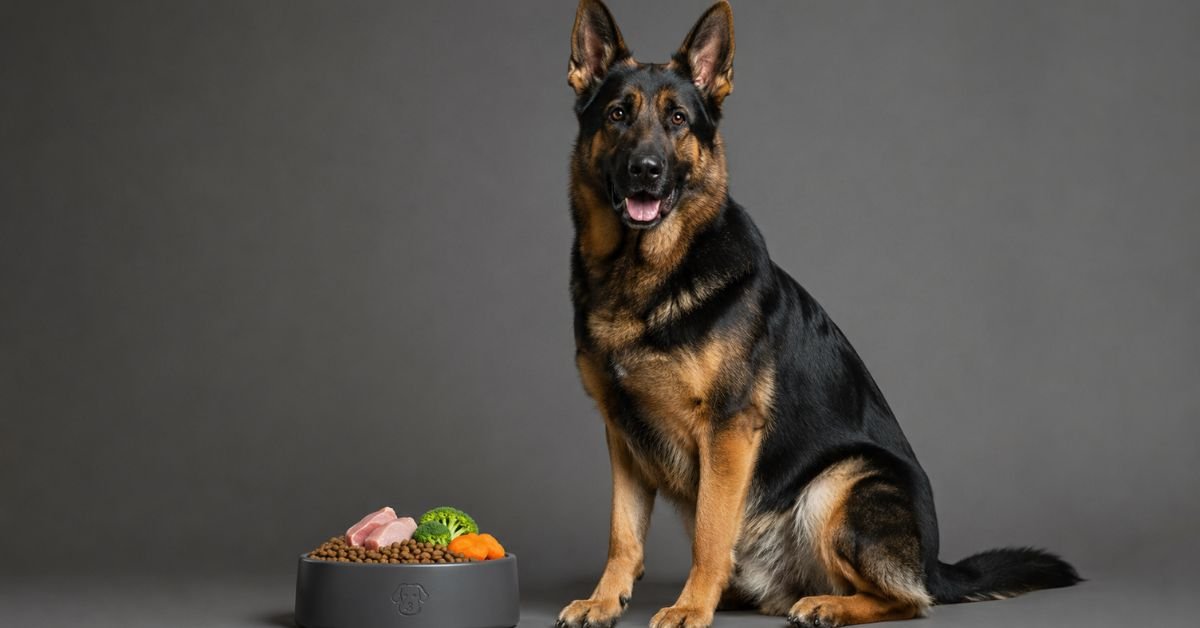
There’s a reason German Shepherds consistently rank among the world’s most beloved dog breeds they are brilliant, fiercely loyal, and breathtakingly athletic. But beneath that majestic exterior lies a body that is surprisingly unforgiving when fed the wrong way. Understanding German Shepherd food and nutrition isn’t just about picking a bag off the shelf; it’s about building a science-backed feeding strategy tailored to one of the most anatomically complex breeds in existence.
This guide cuts through the generic dog food advice flooding the internet and delivers a breed-specific nutrition blueprint grounded in the latest 2026 WSAVA guidelines, real community insights, and the evolving fresh-food movement.
Quick Answer:
The ideal GSD diet is built on high-quality animal protein (25–30% for adults), moderate fat (12–18%), and controlled calcium levels especially during puppyhood to prevent rapid bone growth linked to hip dysplasia. Every feeding plan should also incorporate joint-supporting nutrients like Glucosamine and Chondroitin, along with easily digestible carbohydrate sources to protect the breed’s notoriously sensitive stomach. Feed multiple small meals daily and always follow bloat-prevention protocols.
The Unique Anatomy of a German Shepherd: Why Generic Food Fails
Most dog food marketing is designed for the “average dog” a concept that simply doesn’t apply to German Shepherds. Two anatomical realities make GSDs nutritionally distinct from most other breeds.
The Deep Chest & Bloat Risk
German Shepherds possess a deep, narrow chest cavity a physical trait that predisposes them to Gastric Dilatation-Volvulus (GDV), commonly called bloat. This is a life-threatening condition where the stomach fills with gas and twists on itself. Certain dietary habits eating too fast, consuming one giant meal per day, exercising immediately after eating dramatically elevate this risk. The type of food matters, but so does how it’s delivered.
Rapid Bone Growth & Hip Dysplasia

GSD puppies grow at an extraordinary rate. During the first 12–18 months, their skeletal system is under enormous stress. Excessive calcium, oversized portions, or high-calorie diets that push rapid weight gain can strain developing joints and contribute to hip and elbow dysplasia the breed’s most prevalent hereditary health concern. A generic “large breed puppy” food sometimes isn’t enough; you need precise macronutrient ratios calibrated for GSD growth curves.
Macronutrient Breakdown for GSDs in 2026
Based on updated WSAVA nutritional guidelines and breed-specific research, here are the recommended macronutrient ranges for German Shepherds across all life stages. Look for foods that meet AAFCO nutritional adequacy statements as a minimum baseline.
| Life Stage | Protein (Dry Matter) | Fat (Dry Matter) | Calcium (Dry Matter) | Key Focus |
| Puppy (2–12 months) | 22–26% | 10–16% | 1.0–1.6% | Controlled growth; joint protection |
| Adult (1–7 years) | 25–30% | 12–18% | 0.5–1.0% | Muscle maintenance; energy balance |
| Senior (7+ years) | 28–32% | 10–14% | 0.5–0.8% | Muscle retention; reduced phosphorus for kidney health |
Pro Tip: Senior GSDs often need more protein, not less a common misconception. Aging muscle mass (sarcopenia) accelerates without adequate protein intake. Unless your vet identifies kidney disease, don’t switch your senior GSD to a low-protein formula arbitrarily.
Solving the Top GSD Community Issues
Spend ten minutes in r/germanshepherds or on any GSD-focused Quora thread and three complaints dominate the conversation. Here’s what the community is struggling with and what actually works.
The Battle with Sensitive Stomachs & Loose Stools

The GSD sensitive stomach diet problem is real and widespread. German Shepherds have a relatively short digestive tract compared to body size, and many dogs in the breed carry genetic predispositions to inflammatory conditions like Exocrine Pancreatic Insufficiency (EPI) and Inflammatory Bowel Disease (IBD).
What’s actually causing the loose stools?
- Sudden food transitions (the #1 cause always transition over 10–14 days minimum)
- Overfeeding loose stool is often the body’s way of expelling excess food
- Low-quality fillers like corn syrup, excessive beet pulp, or artificial preservatives
- A fat content that’s too high for your individual dog’s pancreatic tolerance
- Parasites or bacterial overgrowth (rule these out with your vet first)
What helps:
- Transition slowly: mix 25% new food with 75% old food for days 1–3, then 50/50, then 75/25
- Add a canine probiotic (look for Lactobacillus acidophilus and Enterococcus faecium strains)
- Choose foods with prebiotic fiber sources like chicory root or pumpkin
- Consider a limited ingredient diet (LID) with a single novel protein during flare-ups
Is Chicken Really the Enemy? Navigating GSD Food Allergies
Here’s the most nuanced debate in the GSD community: “My dog has been itching and licking his paws constantly is it the chicken in his food?”
The honest answer: maybe, but probably not.
True food allergies in dogs are less common than most owners believe, affecting roughly 10–15% of dogs with allergic symptoms. The far more likely culprit is environmental allergens pollen, dust mites, or grass which are seasonal and affect paw-licking, facial rubbing, and ear infections in nearly identical ways to food reactions.
That said, chicken is a legitimate allergen for some GSDs, largely because it is the most ubiquitous protein in commercial dog food. Dogs sensitized through lifetime exposure can develop reactions.
How to properly investigate a food allergy:
- Work with your vet to rule out environmental causes first (skin testing or seasonal patterns)
- Conduct a strict dietary elimination trial minimum 8–12 weeks on a hydrolyzed protein or single novel protein diet (e.g., duck, venison, or kangaroo)
- Zero treats, flavored supplements, or chews during the trial any deviation restarts the clock
- Do not attempt multiple food switches back-to-back; this will never isolate the allergen
The “Kibble Strike”: Cracking the Picky Eater Phase
If your German Shepherd was eating fine and suddenly refuses their kibble at around 6–18 months, you’re dealing with the teenage GSD phase and it’s more behavioral than medical in most cases.
Adolescent GSDs test boundaries in every domain, including mealtime. A dog that learns that refusing food leads to tastier alternatives being offered has effectively trained you.
What not to do: Don’t panic and cycle through five different foods in two weeks. This often creates a genuinely picky dog.
What works:
- Stick to set mealtimes. Offer food for 15–20 minutes and remove it if uneaten. No free-feeding.
- Add a high-value food topper temporarily a spoonful of plain cooked chicken, bone broth (unsalted), or a splash of low-sodium sardine water can restart interest
- Rule out dental pain molar discomfort during adolescent teething can genuinely cause food refusal
- Check the kibble freshness. Oxidized fat in stale kibble smells rancid to a dog’s superior nose even if it smells fine to you. Check the manufacturing date.
German Shepherd Feeding Chart & Portion Control
Use this as a starting framework. Individual dogs vary always adjust based on body condition score (BCS) rather than weight alone. You should be able to feel (but not easily see) your GSD’s ribs.
| Age | Meals Per Day | Approximate Daily Amount* |
| 8–12 weeks | 4 meals | 1.5 – 2 cups |
| 3–6 months | 3 meals | 2 – 3 cups |
| 6–12 months | 2–3 meals | 3 – 4 cups |
| 1–5 years (adult) | 2 meals | 3 – 4.5 cups |
| 6+ years (senior) | 2 meals | 2.5 – 3.5 cups |
Based on a 1,500–1,600 kcal/cup kibble for a 60 tto 90 lb GSD. Always follow the specific caloric density of your chosen food and recalculate accordingly.
Key rules:
- Never feed one large meal per day to a GSD always split into at least two
- Working dogs, sport dogs, or dogs in cold climates may need 20–30% more calories
- Spayed/neutered adults typically need 10–20% fewer calories than intact dogs
The Lifesaving Feeding Rules: Preventing Bloat (GDV)

This section could genuinely save your dog’s life. GDV kills within hours without emergency surgery, and German Shepherds are in the high-risk category. Yet most nutrition articles skip over feeding mechanics entirely.
The evidence-based bloat prevention checklist:
- Feed at least two meals per day a single large meal is one of the highest-risk factors for GDV
- Use a slow feeder bowl or snuffle mat for fast eaters this alone dramatically reduces air ingestion
- Enforce a 60-minute rest period before AND after meals no vigorous play, running, or rough interaction
- Feed at floor level the “raised bowl prevents bloat” claim has been challenged by research; the 2000 Glickman study that promoted raised bowls was later scrutinized, and current evidence does not support elevated feeders as protective for large breeds
- Avoid foods with high fat content as the first few ingredients rapid gastric emptying disruption is a risk factor
- Know the warning signs: unproductive retching, distended abdomen, excessive drooling, restlessness, pale gums this is a veterinary emergency
If you have a particularly deep-chested GSD with anxiety or a history of bolting food, speak to your vet about prophylactic gastropexy a surgical procedure that tacks the stomach to the body wall during spay/neuter and reduces GDV risk by over 95%.
Commercial Kibble, Fresh, or Raw? Making the 2026 Choice
The landscape of dog food has shifted dramatically. Here’s a balanced breakdown of each approach for GSD owners in 2026.
Fresh & Gently Cooked Diets
Services like The Farmer’s Dog, Ollie, and Nom Nom have matured significantly and now carry AAFCO feeding trial certifications on many formulas not just nutrient analysis. For GSDs with chronic sensitive stomachs, many owners report substantial improvements on fresh diets due to higher moisture content and minimal ultra-processing.
Pros: Highly digestible, no artificial preservatives, formulated by board-certified veterinary nutritionists
Cons: Expensive (typically $80–$180/month for a GSD), requires refrigeration, portion discipline is critical
Raw Food Diet for German Shepherds
The raw food diet for German Shepherds debate remains heated. Proponents cite improved coat quality, firmer stools, and reduced allergy symptoms. The WSAVA and AVMA continue to express caution due to bacterial contamination risks (Salmonella, Listeria) particularly relevant in homes with children, elderly individuals, or immunocompromised people.
If you choose raw:
- Use commercially prepared, HPP-treated (high-pressure pasteurized) freeze-dried or frozen raw over homemade
- Ensure the formula is formulated to AAFCO standards by a veterinary nutritionist
- Never feed raw poultry bones cooked OR raw recreational bones carry fracture and obstruction risks; raw meaty bones are a separate, distinct practice
Pros: Highly palatable, often excellent for skin/coat, low carbohydrate
Cons: Contamination risk, expensive, nutrient imbalances in homemade versions, not ideal for immunocompromised households
Premium Dry Kibble

High-quality kibble remains the most practical, affordable, and extensively researched option for most GSD owners. Look for:
- Named animal protein as the first ingredient (e.g., “deboned chicken,” “salmon,” not “poultry meal”)
- No corn syrup, artificial colors, or BHA/BHT preservatives
- Added Glucosamine and Chondroitin the critical nutrients for GSD joints at levels of at least 400mg/kg glucosamine and 300mg/kg chondroitin, or supplement separately
- An AAFCO feeding trial statement (not just “formulated to meet AAFCO standards”)
- Brands with a full-time veterinary nutritionist on staff who publishes research
Avoid: Any kibble currently under FDA investigation for DCM (dilated cardiomyopathy) links. The grain-free/legume-rich trend of the 2010s carried real cardiac risk; post-2024 FDA guidance continues to monitor this area.
Conclusion
Feeding a German Shepherd well is not about finding the most expensive bag at the pet store or following the latest social media trend. It is about understanding that this breed brilliant, physical, and sensitive, has specific anatomical vulnerabilities and nutritional needs that no generic formula fully addresses.
Build your GSD’s nutrition strategy on these pillars:
- Life-stage appropriate macronutrients especially controlled calcium for puppies and higher protein for seniors
- Bloat prevention mechanics two meals minimum, slow feeding, rest after eating
- Gut health support probiotics, prebiotic fiber, and slow food transitions for that signature sensitive stomach
- Joint nutrition from day one Glucosamine and Chondroitin aren’t just for senior dogs; preventive supplementation in adults is increasingly supported
- An evidence-based food choice whether kibble, fresh, or raw, AAFCO certification and veterinary nutritionist formulation are non-negotiable
Above all, partner with a veterinarian you trust ideally one familiar with the breed — and revisit your GSD’s nutrition at every annual exam. Their body composition, activity level, and health status will change, and their diet should evolve with them.
A well-fed German Shepherd is an unstoppable force of loyalty, intelligence, and physical brilliance. Give them the fuel they deserve.
Frequently Asked Questions (FAQs)
Q1: How many times a day should I feed my German Shepherd?
Feed adults twice a day morning and evening. Puppies under 6 months need 3 to 4 smaller meals. Never feed just one large meal; it raises bloat risk significantly.
Q2: What foods should German Shepherds avoid?
Never feed grapes, onions, garlic, chocolate, xylitol, or cooked bones. High-fat table scraps should also be avoided, as GSDs are prone to pancreatitis.
Q3: When should I switch from puppy food to adult food?
At around 12–18 months. GSDs are large-breed dogs that keep developing past 12 months, so don’t rush the switch it can affect joint development.
Q4: Do German Shepherds need joint supplements?
Yes. Start Glucosamine and Chondroitin in adulthood don’t wait for problems to appear. Adding fish oil (Omega-3) further helps reduce joint inflammation.
Q5: Why does my German Shepherd have loose stools constantly?
Usually caused by fast food transitions, overfeeding, or low-quality ingredients. Transition slowly over 10 to 14 days, add a canine probiotic, and see your vet if it persists beyond two weeks.
Y