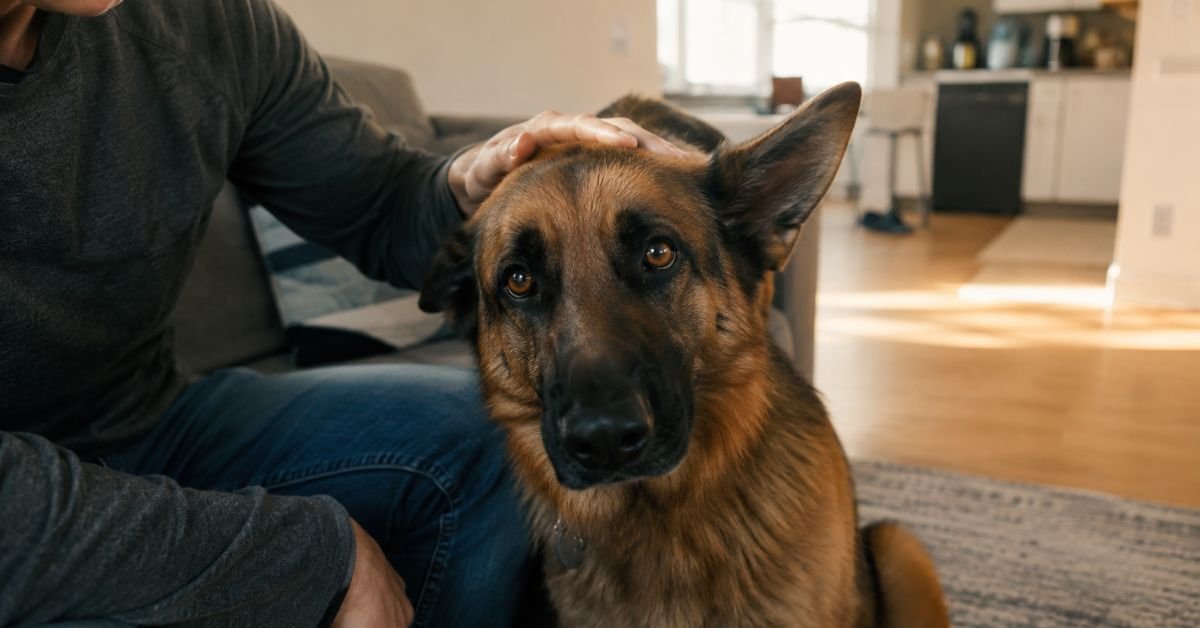
I still remember standing in my kitchen at 3 a.m., watching my German Shepherd Max pace in circles, drooling, unable to get comfortable. That was my first real education in german shepherd dog health issues, and it wasn’t from a textbook. It was terrifying, expensive, and completely avoidable if I’d known then what I know now.
Ten years and three GSDs later, I’ve learned that raising this breed means loving an athlete’s body wrapped around a fragile genetic lottery ticket. They’re smart, loyal, and built like tanks. They’re also prone to some serious, breed-specific conditions that sneak up on even experienced owners.
This isn’t a generic “watch for limping” article. This is what I actually do, month by month, to keep my dogs alive, mobile, and out of the emergency vet.
Why German Shepherd dog health issues Are Different (And Why That Matters)
GSDs were bred for movement, work, and stamina. Their deep chests, long spines, and rapid growth rate create a body that’s incredible under the right conditions and vulnerable under the wrong ones.
Add in a shrinking gene pool from decades of selective breeding, and you get a breed with a well-documented list of hereditary weak spots. Understanding these isn’t pessimism. It’s preparation.
The Big Three Genetic and Orthopedic Threats
Hip and Elbow Dysplasia

If you own a Shepherd long enough, you’ll hear this term. Dysplasia happens when the hip or elbow joint doesn’t form correctly, leading to grinding, pain, and eventually arthritis.
What’s new in 2026:
- Vets are now recommending PennHIP evaluations as early as 16 weeks, rather than waiting for the traditional OFA screening at two years old.
- More breeders are combining PennHIP with early genetic DNA panels that flag dysplasia-risk markers before a puppy even leaves the litter.
My personal rule: I never buy or adopt a GSD without seeing both parents’ hip and elbow scores. No exceptions, no matter how cute the puppy is.
What actually helps at home:
- Keep your puppy lean. Extra weight on developing joints is one of the biggest preventable risk factors.
- Avoid forced high-impact exercise (like jogging on pavement) before 18 months.
- Add ramps for cars and beds early, before pain forces the issue.
Degenerative Myelopathy (DM)
This one broke my heart the first time I watched an older Shepherd lose control of his back legs. DM is a progressive spinal cord disease, and it’s devastatingly common in this breed.
The 2026 game-changer: genetic DNA testing for DM is now affordable, fast, and something every responsible breeder should be doing. A simple cheek swab tells you if your dog carries the SOD1 gene mutation linked to the disease.
This falls squarely under GSD genetic disease prevention, and honestly, it should be as standard as a rabies shot conversation.
Testing won’t cure DM, but it lets you plan. Physical therapy, weight management, and mobility carts can add quality months, even years, once symptoms begin.
Bloat (GDV) The Emergency That Doesn’t Wait

Bloat is the one that keeps me up at night. Gastric Dilatation-Volvulus happens when the stomach fills with gas and twists. It can kill a healthy dog within hours.
Updated 2026 dietary guidelines for deep-chested breeds:
- Use slow-feeder bowls to prevent gulping.
- Wait at least 60 minutes after meals before vigorous exercise.
- Avoid raised feeding bowls unless your vet specifically recommends them; newer research has actually walked back the old advice that elevated bowls reduce bloat risk.
Many vets in 2026 are also discussing prophylactic gastropexy (a surgery that tacks the stomach in place) during a dog’s spay or neuter, especially for high-risk lines. I did this with my current Shepherd, Luna, and it’s one of the best decisions I’ve made as an owner.
The Silent Gastrointestinal and Immune Battles
Not every health crisis announces itself with a limp or a collapse. Some conditions are quiet, sneaky, and easy to dismiss as “just a sensitive stomach.”
Exocrine Pancreatic Insufficiency (EPI) in German Shepherds
GSDs are, for reasons researchers still don’t fully understand, wildly overrepresented in EPI cases compared to other breeds.
What EPI actually is: the pancreas stops producing enough digestive enzymes, so your dog can eat a full meal and still starve nutritionally.
Signs I’ve learned to watch for:
- Ravenous appetite paired with dramatic weight loss
- Greasy, pale, foul-smelling stool
- Coat that looks dull no matter what you feed
: How EPI Is Diagnosed in 2026
The gold standard is still the TLI (trypsin-like immunoreactivity) blood test, but turnaround times have improved significantly, with many labs now offering results in 48 hours instead of a week.
: Managing EPI Without Losing Your Mind
- Enzyme replacement powder mixed into every single meal, no exceptions
- A low-fiber, highly digestible diet
- Vitamin B12 (cobalamin) supplementation, since EPI dogs often can’t absorb it properly
I know an EPI diagnosis feels like a life sentence. It’s not. Dogs on proper enzyme therapy can live full, happy lives. It just means every meal becomes a small ritual.
German Shepherd Skin Allergies
If your Shepherd is constantly chewing their paws or has recurring hot spots, allergies are almost always the culprit.
Environmental vs. Food Allergies
Environmental allergies (pollen, dust mites, grass) tend to be seasonal and affect the paws, ears, and belly. Food allergies are usually year-round and often show up as gut issues alongside itchy skin.
H3: What’s Working in 2026
- Novel protein and hydrolyzed diets remain the gold standard for suspected food allergies.
- Monoclonal antibody injections (like the ones targeting itch pathways) have become more accessible and are lasting longer between doses.
- Omega-3 rich diets continue to show real improvement in skin barrier function.
: How to Actually Run an Elimination Diet Trial

This is the part nobody explains properly, and it’s where most owners give up too early. An elimination diet isn’t a quick swap. It’s a controlled experiment, and it only works if you run it correctly.
Here’s the process I follow, and the one most veterinary dermatologists recommend:
- Pick a true novel protein or hydrolyzed diet. This means a protein source your dog has never eaten before (kangaroo and venison are common choices) or a diet where the protein has been broken down into molecules too small to trigger an immune response.
- Commit to 8 to 12 weeks, minimum. This is the single biggest mistake I see. Skin cells and gut lining take time to heal and reset, so a two-week trial tells you nothing. If you quit at week three because you don’t see instant results, you have to start over from scratch.
- Nothing else goes in the mouth. No table scraps, no flavored medications, no rawhide, no “just one treat.” I learned this the hard way when a flavored heartworm chew quietly ruined an entire trial for one of my dogs.
- Switch everyone in the house to the same rule. If you have kids who sneak snacks under the table, or a partner who free-feeds another dog nearby, the trial is compromised.
- Track everything in a simple log. I keep a basic notebook with the date, what was eaten, and a 1-to-10 itch score. Patterns show up faster than you’d expect once it’s written down instead of just remembered.
- Reintroduce old food only after improvement. If symptoms clear up and then return once you reintroduce the previous diet, that’s your confirmation. This step matters because it separates a real food allergy from a coincidence.
Common traps that ruin an otherwise good trial:
- Flavored chewable medications (heartworm, flea, and joint chews are frequent hidden culprits)
- Dental chews or “hypoallergenic” treats that still share protein sources with the trigger food
- Letting your dog raid the trash, the cat’s bowl, or a neighbor’s yard
- Switching brands mid-trial because you assume “similar” ingredients count as consistent
If you can stay disciplined through the full 8 to 12 weeks, an elimination trial gives you clearer answers than most allergy blood panels on the market today.
German Shepherd Joint Supplements 2026: What Actually Works

I’ve tried a lot of products over the years. Some were a waste of money. A few made a genuine difference.
Ingredients backed by real evidence right now:
- Green-lipped mussel extract Naturally rich in omega-3s and glucosaminoglycans, with strong anti-inflammatory results in joint studies.
- UC-II collagen Works differently than traditional glucosamine/chondroitin and requires a much smaller dose.
- Novel peptide therapies Newer injectable and oral peptide formulations are entering the market in 2026, designed to support cartilage repair rather than just masking pain.
H3: How Peptide Therapies Actually Differ From NSAIDs
This is the part that took me a while to wrap my head around, so let me break it down the way my vet explained it to me.
Traditional NSAIDs (like carprofen or meloxicam) work by blocking inflammatory pathways after damage has already occurred. They reduce the pain and swelling signal, but they don’t rebuild anything. Think of it as turning down the fire alarm without putting out the fire.
Peptides work on a completely different mechanism. These are short chains of amino acids that act as signaling molecules, essentially instructing cartilage-producing cells (chondrocytes) to ramp up repair activity. Instead of suppressing a symptom, they’re nudging the body’s own tissue-building machinery to work harder.
A few practical distinctions worth knowing:
- NSAIDs are systemic and ongoing. They typically need to be taken daily, long-term, and carry real risks to the liver and kidneys with extended use, which is why routine bloodwork matters for dogs on chronic NSAID therapy.
- Peptides are often cyclical. Many of the newer formulations are dosed in short courses, several weeks on followed by a break, rather than as an indefinite daily medication.
- NSAIDs mask discomfort during activity. This can actually be risky in a dog with joint disease, because reduced pain perception sometimes leads to overuse and further damage, even though the dog “feels fine.”
- Peptides aim at the underlying tissue. The theory, and early results support this, is that supporting cartilage matrix production may slow the disease process itself rather than just covering the pain.
None of this means NSAIDs are bad. My own dogs have needed them during acute flare-ups, and there’s no substitute for fast relief when a dog is in visible pain. But peptide therapy is one of the first genuinely new mechanisms I’ve seen enter this space in years, rather than just another reformulated glucosamine blend.
I’d treat 2026-era peptide options as a conversation to have with your vet for dogs already showing early joint changes, not a replacement for NSAIDs during a genuine flare, but a potential long-game addition alongside them.
I start joint supplements on my Shepherds around age five, sometimes earlier if they’re working or high-activity dogs. Waiting until they’re already limping means you’re playing catch-up.
The Cost of German Shepherd Vet Care (Let’s Be Honest About Money)

Nobody talks about this enough, and it should. The cost of German Shepherd vet care can be brutal, especially with a breed this prone to hereditary conditions.
Rough numbers I’ve seen in my own experience and from other owners:
- Routine annual care: $300–$600
- Hip dysplasia surgery: $3,000–$7,000 per hip
- Bloat emergency surgery: $3,000–$8,000
- Ongoing EPI management (enzymes, food, vet visits): $80–$150 per month
My honest advice: get pet insurance before your puppy turns six months old, ideally before any symptoms show up. Pre-existing conditions won’t be covered, and with this breed, waiting even a year can cost you coverage on something major.
The 2026 GSD Health Checklist
| Frequency | Action Items |
| Daily | Check paws, ears, and skin for irritation; monitor appetite and stool; feed 2–3 smaller meals |
| Monthly | Weigh your dog to catch sudden loss or gain; check joint mobility on walks; refill supplements/enzymes |
| Every 6 Months | Vet wellness exam; dental check; discuss weight and joint health |
| Yearly | Hip/elbow imaging (especially ages 1–7); bloodwork including TLI if EPI is suspected; review pet insurance coverage |
| Once, Early On | DNA testing for DM and other genetic markers; PennHIP evaluation; gastropexy consultation |
Print this out. Stick it on your fridge. It’s saved me more than once.
Loving Them Means Watching Closely
Raising a German Shepherd has given me some of the hardest nights and best years of my life. These dogs give everything they have, and the least we can do is stay one step ahead of what’s coming for their bodies.
You don’t need to be paranoid. You need to be prepared. Know your dog’s baseline, trust your gut when something feels off, and don’t wait for a crisis to start asking questions.
Max is gone now, but Luna is curled up by my feet as I write this, healthy at seven because of everything he taught me the hard way. That’s the real value of understanding these health issues before they become emergencies.
FAQs
Q: At what age do German Shepherd health problems usually start showing up?
Joint issues like dysplasia can show early signs by 12–18 months, while conditions like DM and EPI typically appear between ages five and nine. Genetic testing early on gives you a head start regardless of when symptoms hit.
Q: Can Degenerative Myelopathy be prevented?
Not entirely, since it’s genetic, but DNA testing tells you your dog’s risk level before symptoms ever appear. That knowledge lets you start supportive care and physical therapy the moment early signs show up, which can meaningfully slow progression.
Q: Is EPI in German Shepherds a death sentence?
No, and I want to be really clear about that. With proper enzyme supplementation and diet, most EPI dogs live full, normal-length lives. It just requires lifelong management rather than a one-time treatment.
Q: What’s the single best thing I can do to prevent bloat?
Smaller, slower meals combined with avoiding vigorous exercise right after eating make the biggest difference. If your dog is high-risk or deep-chested, talk to your vet about prophylactic gastropexy during a routine surgery.
Q: Are joint supplements really necessary if my Shepherd seems fine?
Joint damage often starts before visible symptoms appear, especially in a breed this prone to dysplasia. Starting supplements like green-lipped mussel or UC-II collagen proactively, rather than reactively, tends to produce far better long-term mobility.