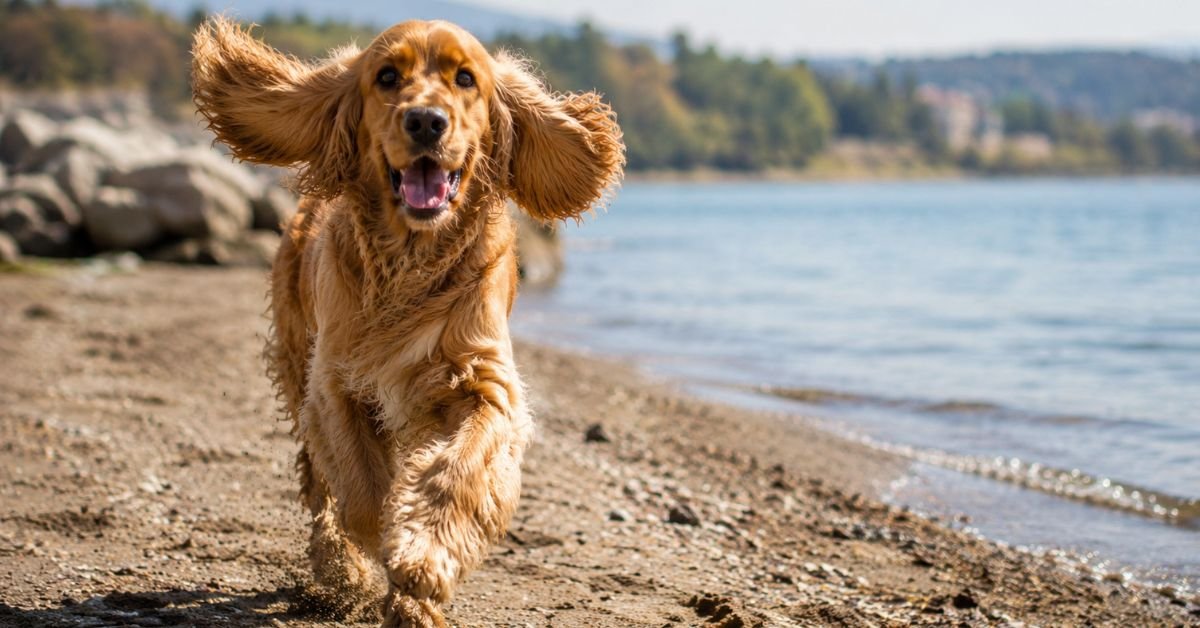
Let’s be honest: there’s nothing quite like watching your Cocker Spaniel’s ears flap in the wind as they bound toward a lake. That goofy grin, the full-body wiggle, the sheer joy it’s one of the best parts of owning this breed.
But here’s what most “experts” won’t tell you. Despite their gun-dog heritage, plenty of Cockers either freeze up at the water’s edge or paddle like they’re auditioning for a slapstick comedy. That’s exactly why a real cocker spaniel swimming guide matters one that goes beyond “dogs can swim” and actually addresses the coat, the ears, the anxiety, and the gear that 2026 has made smarter than ever.
We’ve spent years around Cockers show coats, working coats, rescues, puppies, the whole spectrum. This guide is everything we wish someone had told us before our first lake trip ended in a sopping wet, sneezing, slightly traumatized spaniel.
Understanding the Cocker Spaniel’s Relationship with Water
A Working Dog’s DNA
Cocker Spaniels were bred to flush and retrieve game, often near marshes and wetlands. Somewhere in that DNA is a dog built for water work webbed feet, a water-resistant undercoat, and a body shape designed for paddling.
That’s the history. Here’s the reality.
Modern Cockers Aren’t All Built the Same

Decades of selective breeding for show rings have changed the game. Today’s show-coat Cockers carry longer, silkier fur that soaks up water like a sponge. Working-type Cockers, on the other hand, retain a tighter, more water-shedding coat closer to their field roots.
Translation: instinct alone isn’t a swimming guarantee anymore. Your dog’s coat type, body condition, and personal confidence all matter more than breed history.
The “Instinct vs. Reality” Gap
This is the part nobody talks about enough.
Myth: “Gun dogs swim instantly.”
Reality? Many Cockers especially rescues, puppies, and anxious adults need real coaching. Fear of water is common, and forcing a scared dog into a lake doesn’t “snap them into instinct.” It often creates lasting water aversion.
The Psychology of Water Confidence
Water anxiety in Cockers usually stems from one of three things:
- Lack of early exposure (most common in rescues)
- A startling first experience (sudden dunking, cold shock, slipping)
- Sensory overwhelm (waves, current, unfamiliar smells)
The fix isn’t bravado. It’s patience, positive association, and tiny wins stacked over time.
Step-by-Step Training Guide: From Splash to Swim

Think of this as a slow climb, not a leap. Skipping steps is the #1 reason dogs develop fear instead of confidence.
Step 1: Poolside Comfort (Days 1–3)
- Let your Cocker explore the water’s edge off-leash in a safe, enclosed area.
- Toss high-value treats near (not in) the water.
- No pressure to get wet. The goal is curiosity, not contact.
Step 2: Paws-In, Shallow Wading (Days 3–7)
- Walk into ankle-deep water yourself, treats in hand.
- Encourage your dog to follow at their own pace.
- Celebrate even one paw getting wet. Seriously.
Step 3: Belly-Deep Confidence (Week 2)
- Move to water deep enough to touch their belly, not float them.
- Use a favorite floating toy to build motivation.
- Keep sessions under 10 minutes confidence fades fast once a dog gets tired or cold.
Step 4: Guided First Swim (Week 2–3)
- Support their belly gently with one hand as their back legs start paddling.
- Stay beside them, not in front many dogs panic if they can’t see you.
- End the session the moment they show real swimming, not exhaustion.
Step 5: Independent Swimming (Week 3+)
- Let them swim short distances to you or a toy.
- Keep every session positive short, fun, and ending before fatigue sets in.
Pro tip: Never use a pool ladder as the only exit point during training. Dogs that can’t find an exit panic, and panic erases progress fast.
The Ultimate 2026 Cocker Swim Safety Checklist

Swimming safety has genuinely evolved. Here’s what matters most right now.
| Safety Factor | What to Check | Why It Matters |
| Water temperature | Above 60°F (15°C) for swimming | Cockers chill fast due to lower body fat |
| Life jacket fit | Snug, no gaps at neck/belly | Prevents flipping or slipping out |
| GPS-tracked vests | Built-in location tracker | Critical for open water or boat trips |
| Session duration | 10–15 minutes max for beginners | Prevents fatigue-related drowning risk |
| Current/tide check | Calm, slow-moving water only | Strong current overwhelms short legs |
| Sun exposure | Shade breaks every 15–20 minutes | Light-coated Cockers burn easily |
| Post-swim hydration | Fresh water available immediately | Prevents accidental saltwater/pool water drinking |
| Paw protection | Eco-friendly paw wax before rocky entries | Reduces cuts and chemical irritation |
2026 Gear Worth Actually Buying
- Ultra-buoyant, GPS-tracked life jackets newer foam cores keep dogs higher in the water with less drag, and the tracking feature is a genuine lifesaver near open water or boats.
- Eco-friendly paw waxes plant-based barriers that protect paw pads from saltwater drying, chlorine irritation, and hot sand, without the petroleum residue older waxes left behind.
- Quick-dry, UV-protective vests useful for light-coated Cockers prone to sunburn on exposed skin around the belly and ears.
The Coat & Water Matrix: What Your Cocker’s Coat Type Actually Needs
This is where most swimming guides stop short. Coat type changes everything about how water affects your dog.
Show Coat Cockers
Longer, silkier fur absorbs water rather than repelling it.
- Chlorinated pools: Strip natural oils fast rinse thoroughly within 10 minutes of exiting.
- Saltwater: Dries out skin and coat; always follow with a fresh-water rinse.
- Natural lakes: Lower chemical risk, but higher bacteria exposure towel-dry promptly to avoid hot spots.
Working Coat Cockers
Tighter, water-resistant fur sheds water more efficiently.
- Chlorinated pools: Less oil-stripping, but still rinse to avoid skin dryness.
- Saltwater: Generally tolerated well; monitor for salt crystallization in the undercoat.
- Natural lakes: Best overall match for this coat type closest to their working environment.
Bottom line: Know your Cocker’s coat type before assuming “swimming is swimming.” It isn’t.
Advanced Post-Swim Care (The Unique Stuff)
This is the part that actually prevents vet visits.
The Post-Swim Ear Protocol

Cockers’ long, low-set ears trap moisture like nothing else and trapped moisture means yeast and bacteria.
Step-by-step, alcohol-free method:
- Lift the ear flap gently immediately after swimming.
- Use a vet-approved, alcohol-free drying solution (alcohol stings damaged or sensitive ear tissue).
- Apply 2–3 drops into the ear canal, not deep insertion.
- Massage the base of the ear for 20–30 seconds you’ll hear a soft squelch, that’s normal.
- Let your dog shake it out (step back, it’s messy).
- Wipe the visible ear flap with a soft, dry cloth never a cotton swab inside the canal.
- Check for redness, odor, or excess wax 24 hours later.
Frequency: Every single swim session, no exceptions.
Coat & Skin Aftercare
- Rinse with fresh water within 10 to 15 minutes of any pool or saltwater swim.
- Use a moisturizing, sulfate-free shampoo once a week during heavy swim season.
- Towel-dry thoroughly, then air-dry in a warm space trapped damp undercoat invites hot spots.
- Apply a light, vet-recommended skin balm if you notice dryness or flaking.
Quick Post-Swim Checklist
- Ears dried and treated Full-body rinse completed
- Paws checked for cuts or wax buildup
- Fresh water offered
- Coat fully dry before bedtime
Conclusion
Your Cocker Spaniel doesn’t need to be a natural-born water dog to become a confident, happy swimmer. They need patience, the right gear, a little science, and you in the water beside them, cheering them on.
Take it slow. Protect those ears. Know your dog’s coat type. And when that first real swim happens that proud, paddling, ear-flapping moment you’ll know every step was worth it.
FAQs
1. At what age can a Cocker Spaniel puppy start swimming?
Most vets recommend waiting until 12–16 weeks, once core vaccinations are complete and the puppy has better body coordination. Always start in warm, shallow, calm water.
2. How often should I clean my Cocker’s ears after swimming?
After every single swim, no exceptions. Even one missed cleaning can lead to moisture buildup and infection within 24 to 48 hours in this breed.
3. Can Cocker Spaniels swim in saltwater safely?
Yes, but rinse thoroughly with fresh water afterward. Saltwater dries out skin and coat fast, especially in show-coat Cockers, and can irritate sensitive ears if not rinsed from the outer flap.
4. How long can a Cocker Spaniel safely swim per session?
Beginners should stick to 10 to 15 minutes. Even confident swimmers should rest every 15 to 20 minutes, since Cockers fatigue faster than larger breeds due to body composition.
5. Why does my Cocker Spaniel seem scared of water despite being a “water breed”?
Breed history doesn’t guarantee individual confidence. Lack of early exposure, a bad first experience, or general anxiety can all override instinct gradual, positive training almost always resolves it.