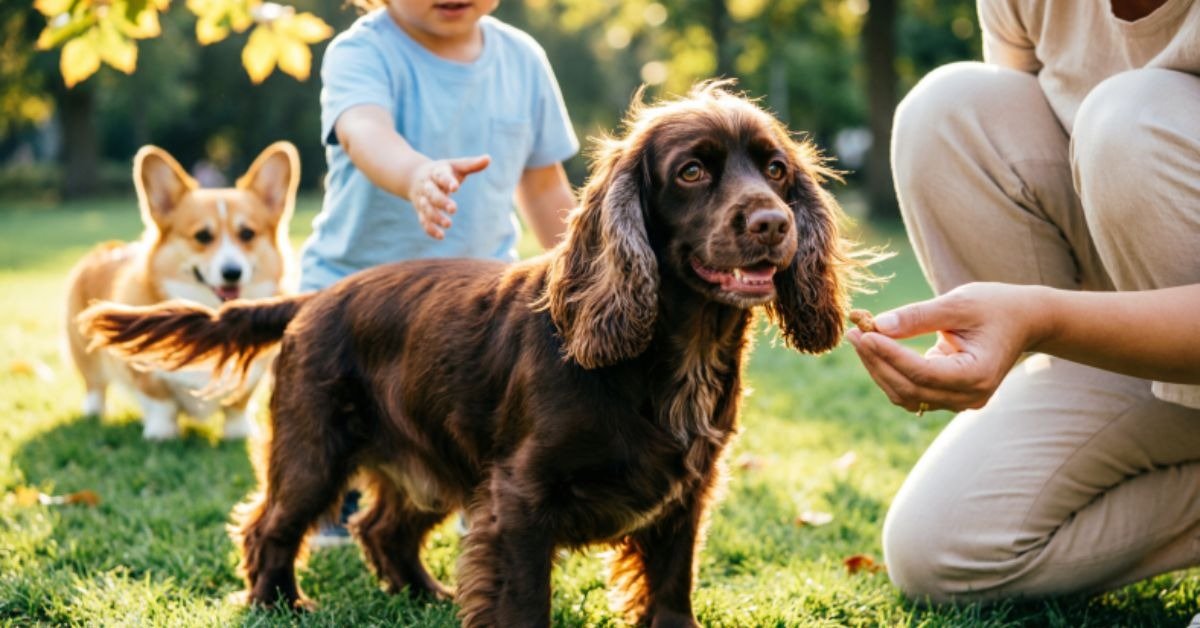
The Cocker Spaniel is globally celebrated as the “Merry” dog, a nickname earned through their wagging tails, soulful eyes, and joyful disposition. The socialization of Cocker Spaniel dog is a nuanced journey because this breed sits at a sensitive intersection: they are highly intelligent hunting dogs, yet they possess a “soft” temperament that can easily shatter under pressure.
Unlike bolder breeds, a poorly socialized Cocker Spaniel doesn’t just become “naughty”; they often become “spooky,” prone to separation anxiety, submissive urination, and fear based reactivity.
This guide is designed to take you beyond the basics, providing a deep dive into the developmental psychology and practical steps required to ensure your Cocker Spaniel remains the confident, happy go lucky companion they were bred to be.
Understanding the Cocker Spaniel Temperament

The Cocker Spaniel temperament is defined by extreme sensitivity and a deep seated desire for human companionship. Originally bred to work closely with hunters in the field, they are “velcro dogs” by nature. They don’t just want to be in the same room as you; they want to be part of your every move.
This sensitivity is a double edged sword. While it makes them incredibly responsive to training, it also means they perceive the world more intensely. A loud vacuum cleaner or a sudden thunderclap isn’t just a noise to a Cocker Spaniel; it is a sensory event. Therefore, the goal of socialization is Positive Association. We aren’t just “showing” them the world; we are “pairing” the world with rewards to build an unshakable core of confidence.
The Golden Socialization Timeline (8 to 16 Weeks)

The most critical period for a Cocker Spaniel is the first 16 weeks of life. This is when the “fear response” is least developed and the “curiosity drive” is at its peak.
| Week | Focus Area | Detailed Exposure Tasks |
| 8–9 | The Safe Harbor | Handling of ears/paws, introduction to household scents, and meeting immediate family members. |
| 10–11 | Sensory Foundations | Exposure to different floor types (grass, tile, gravel), recorded storm sounds (low volume), and grooming tools. |
| 12–13 | Social Expansion | Meeting “safe” strangers (different ages/outfits), calm vaccinated adult dogs, and short car rides. |
| 14–16 | Urban Neutrality | Visiting parks (distanced), observing traffic, independence training (being alone), and “Happy Vet Visits.” |
The “Ear & Paw” Protocol: Medical Socialization

Socialization of Cocker Spaniel dog must prioritize medical handling. Because of their long, heavy “pendulous” ears, this breed is prone to chronic ear infections. If your dog isn’t socialized to ear handling as a puppy, a simple ear cleaning in adulthood can become a traumatic struggle for both you and your vet.
The Ear Desensitization Drill
- Level 1: While the puppy is calm, gently lift the ear flap. Give a treat. Repeat 10 times.
- Level 2: Lift the flap and gently rub the base of the ear. Give a high-value treat.
- Level 3: Introduce a cotton ball. Touch the ear with it. Reward.
- Level 4: Let the puppy sniff the ear cleaning solution. Give a “jackpot” reward.
The Paw and Coat Challenge
Cocker Spaniels have “feathered” coats that trap burrs, mud, and tangles. They also have thick paw pads that need regular trimming. Spend 5 minutes every day massaging each individual toe and running a comb through their fur (even if they don’t have tangles yet). This prevents “grooming aggression” later in life.
Managing Sensitivity: Submissive Urination and “Soft” Responses

One of the most misunderstood aspects of Cocker Spaniel socialization is submissive urination where a dog peals slightly when meeting new people or during a greeting. This is not a house-training failure; it is a physical manifestation of social anxiety.
How to Socialize a Sensitive Greeter:
- The “No Touch, No Talk, No Eye Contact” Rule: Instruct guests to ignore the puppy completely for the first 5-10 minutes.
- Low Level Greetings: Instead of leaning over the puppy (which is threatening), ask guests to sit on the floor and let the puppy approach them.
- Redirected Focus: Give the puppy a toy to hold during greetings. A dog with a mouth full of toys is less likely to feel overwhelmed by social pressure.
Independence Training: The Antidote to Separation Anxiety

Because Cocker Spaniels are social “velcro” dogs, part of their socialization must include being alone. If a puppy is never left alone during the 8-16 week window, they will never develop the coping mechanisms needed for adulthood.
The “Quiet Departure” Exercise: Start by leaving the room for just 60 seconds. Reward the puppy for staying quiet. Gradually increase this to 5, 10, and 30 minutes. Use a specific “independence cue” like a stuffed treat toy that they only get when you are gone. This teaches them that “Human Gone = Good Treat.”
Resource Guarding Prevention

Cocker Spaniels are highly intelligent, affectionate dogs, and because of that intelligence, they can sometimes develop a tendency to become a little “protective” over things they value most. These high value items might be something simple like a favorite chew bone, a beloved toy, or even a specific cozy spot on the couch where they like to relax. It’s not usually aggression in the beginning, it’s more about attachment and the instinct to guard what feels rewarding or comforting to them.
One very effective and gentle way to prevent this behavior from turning into resource guarding is what trainers often call the “bonus strategy.” The idea behind it is to completely change how your puppy feels about human presence around their valued items.
Here’s how it works in practice: when your puppy is calmly eating their food, chewing on a toy, or fully engaged in something they enjoy, you simply walk past them in a relaxed way. As you pass by, you casually drop a high value treat on something even better than what they already have, like a small piece of chicken or a tasty reward near them, without taking anything away from them.
Advanced Socialization: The Field vs. The City

Depending on your Cocker Spaniel’s lineage (Working/Field vs. Show), their socialization needs may vary.
- Field Bred Spaniels: These dogs have higher energy and “prey drive.” Socialization must focus on “impulse control” around birds, squirrels, and fast-moving objects.
- Show Bred Spaniels: These dogs often have more profuse coats and may be more sensitive to touch. Socialization must focus heavily on grooming table manners and tactile desensitization.
Common Socialization Mistakes to Avoid
- Forced Interaction: Never drag a Cocker Spaniel toward something they are afraid of. This causes “flooding” and creates a lifelong phobia.
- Neglecting the Groomer: Waiting until 6 months for the first professional groom is a disaster. Start with “Puppy Intros” at 12 weeks.
- Over-Protection: Because they are “pretty,” owners often pick them up when a larger dog approaches. This teaches the Spaniel that big dogs are a reason to panic. Keep them on the ground and let them learn social cues.
- Inconsistency: Socialization is a “use it or lose it” skill. Aim for three novel experiences every week until they are two years old.
Final Thought: The Mastery of the Merry
The true magic of the “Merry Cocker” doesn’t come from training tricks or perfect obedience, it comes from a deep sense of emotional security. A Cocker Spaniel that feels safe in its world naturally expresses that famous sparkle: the wagging tail, the bright eyes, and the joyful, curious energy they’re known for.
But that confidence doesn’t happen by accident. It’s built slowly and thoughtfully through consistent socialization and care that respects the breed’s unique sensitivities. Their ears need regular attention, not just for health but to keep them comfortable and irritation free. Their grooming routine should be calm and positive, turning what could be stressful handling into moments of trust. And most importantly, their emotional sensitivity must be understood not rushed, corrected, or ignored.
FAQ Socialization of Cocker Spaniel Dog
Q: My Cocker Spaniel is 6 months old and terrified of the car. Is it too late?
No. It requires “Counter Conditioning.” Feed them their meals in a parked car with the engine off. Once they are happy, turn the engine on. Then, drive just to the end of the street and back. Build up slowly.
Q: How do I socialize my Spaniel with children?
Always supervise. Cocker Spaniels are sturdy but have sensitive ears that children love to pull. Teach the child to pet the dog under the chin rather than on top of the head.
Q: Why does my Cocker Spaniel bark at strangers?
Usually, this is “Alert Barking” caused by insecurity. Work on a “Watch Me” command so the dog looks at you for guidance instead of focusing on the stranger.