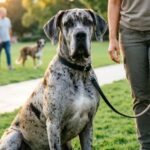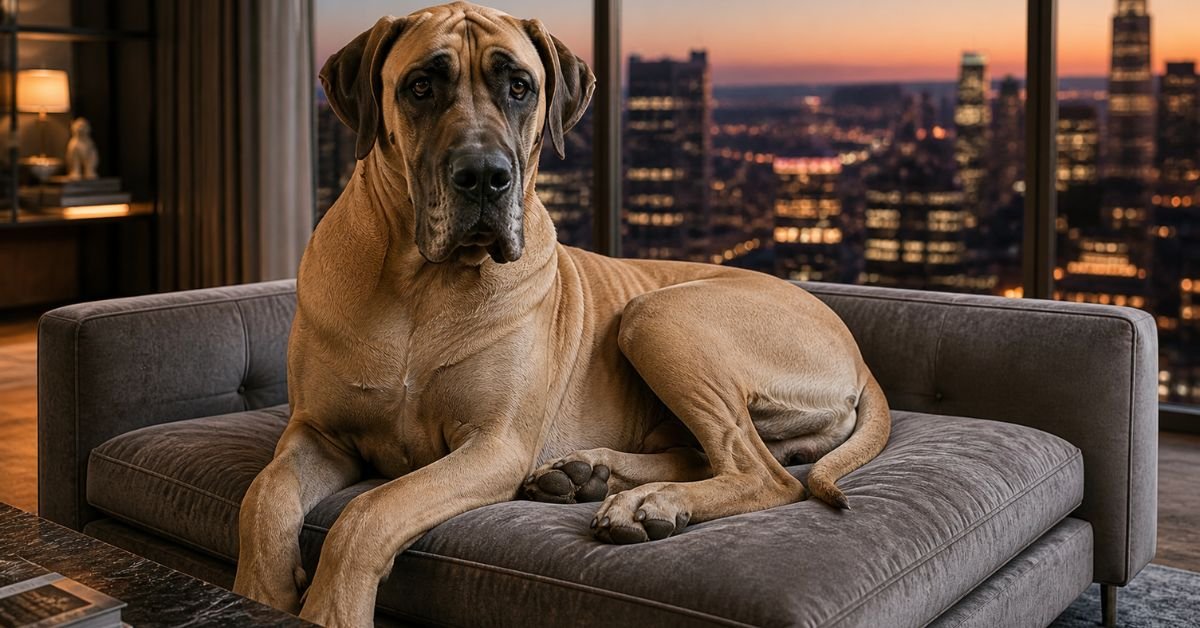
Owning a great-dane-dog breed is less about having a pet and more about welcoming a majestic, sentient horse into your living room. Often hailed as the “Apollo of Dogs,” this German giant standing up to 34 inches tall is a paradox of nature: a massive working dog that is genuinely convinced it is a tiny lapdog. In 2026, as we navigate high-tech urban living, the dog has emerged as the ultimate “Velcro” companion, offering a calm indoor presence that belies its intimidating scale. However, before you fall for those soulful eyes, you
must understand that this breed isn’t just a size upgrade;
it is a full-scale lifestyle transformation. From managing their unique “leaner” psychology to navigating the latest 2026 veterinary health protocols, becoming a Dane parent means committing to a giant responsibility that is only matched by an even more giant reward.
Quick Stats:
| Trait | Detail |
| Height | 28–34 inches (at shoulder) |
| Weight | 110–175 lbs |
| Lifespan (2026) | 8–12 years (with modern protocols) |
| Energy Level | Low–Moderate |
| Apartment Suitable | Yes, with daily walks |
| Monthly Cost | $410–$730 |
Owning a Great Dane dog is a full lifestyle commitment not just a size upgrade from a Labrador. This guide covers what competitors don’t: real ownership costs, 2026 health protocols, and the logistics most first-time owners discover too late.
Section 1: Real Ownership Costs & Logistics What No One Tells You

Why this section comes first: AKC and other top-ranking guides bury cost data. We surface it immediately because it’s the #1 deciding factor for prospective owners.
How Much Does a Great Dane Cost Per Month?
A Great Dane costs $410–$730/month in routine expenses roughly 2 to 3x the cost of owning a medium-breed dog. The primary driver is weight-based dosing on all medications and size-based pricing at grooming and boarding facilities.
2026 Monthly Cost Breakdown:
| Expense Category | Estimated Monthly Cost (USD) |
| Food (giant breed formula) | $120 – $200 |
| Preventative medications | $60 – $100 |
| Pet insurance (giant breed plan) | $80 – $150 |
| Grooming (basic) | $50 – $80 |
| Vet visits (averaged monthly) | $100 – $200 |
| Total Estimated Monthly | $410 – $730 |
First-year startup costs crate, orthopedic bed, bowls, initial vet workup add another $800–$1,500.
Does Your Car Fit a Great Dane?

Most standard vehicles cannot safely transport a fully grown Great Dane. This is one of the most overlooked logistical realities of giant breed ownership, with a direct impact on vet access and travel.
| Vehicle Type | Compatibility | Notes |
| Sedan (standard) | Not recommended | Cannot fit comfortably, even folded |
| Standard SUV | Marginal | Workable for younger/smaller Danes only |
| Large SUV / Minivan | Good | Toyota Sequoia, Honda Odyssey |
| Pickup Truck (rear cab) | Excellent | Spacious and accessible |
| Cargo Van | Ideal | Gold standard for giant breed transport |
Before adopting, physically test your vehicle with a large dog. If it doesn’t work, factor a vehicle upgrade into your ownership budget from day one.
The “Double-Dosage” Medication Reality
Great Danes require weight-calibrated medication doses that cost 2 to 3x more than doses for average-sized dogs. This applies to flea/tick prevention, heartworm medication, anesthesia for surgical procedures, and boarding facilities that charge by weight. This is a fixed, recurring cost not an emergency one.
Happy Tail Syndrome: The Hidden Home Damage Problem
Happy Tail Syndrome is a chronic injury caused by a Great Dane’s whip-like tail repeatedly striking walls, furniture, and door frames. The tail tip splits open, bleeds heavily, and re-injures before it can heal. Severe cases require partial tail amputation.
Tail-proofing checklist:
- Clear all surfaces within tail-height range (roughly 30–36 inches from floor)
- Add foam edge guards to sharp furniture corners
- Use vet-approved tail wraps during high-excitement indoor play
- Keep feeding areas away from narrow corridors
Section 2: The 2026 Great Dane Temperament Blueprint
What Is “Velcro Dog Syndrome” in Great Danes?

Velcro Dog Syndrome is a behavioral trait in which a Great Dane maintains near-constant physical proximity to its owner following them room to room, sitting on their feet, and pressing body weight against their legs when stationary. It is rooted in the breed’s historical close-working companion role, not separation anxiety.
Expect your Great Dane to:
- Follow you into every room, including bathrooms
- Sit on or against your feet while you work
- Show genuine distress when left alone for extended periods
- Seek physical contact during any stress or overstimulation
r/greatdanes community: “I can’t go to the bathroom alone. Haven’t in three years.” Verified owner, 2025
What Does the Great Dane “Lean” Mean?
The Great Dane lean is a deliberate stress-regulation and social bonding behavior in which the dog presses its full body weight into a human’s legs or torso. It signals trust and comfort-seeking not dominance. In unfamiliar environments, the lean intensifies as a grounding mechanism. Correcting or ignoring it does not build independence; it builds anxiety.
Can Great Danes Live in Apartments?
Yes Great Danes are well-suited to apartment living due to their low indoor energy and 14 to 16 hours of daily sleep. The limiting factors are not square footage but elevator access, building weight restrictions, and neighbor tolerance during zoomie episodes. A daily 30–45 minute moderate walk meets the breed’s full exercise requirement.
Ideal Great Dane owner profile in 2026:
- Work-from-home professional or family with daytime presence
- Moderate-to-high pet care budget ($500+/month)
- Values a calm, high-presence companion over an athletic breed
- Owns or has reliable access to a large vehicle
Section 3: Community Pain Points What Reddit Owners Wish They’d Known
The Drool Factor

Great Dane drool is structural, not occasional. The breed’s jowl anatomy produces consistent saliva trails across floors, up walls, and onto guests especially post-drinking. It cannot be trained away.
Community-tested solutions:
- Dedicated drool towel at every water station
- Leather or performance-fabric upholstery only (avoid microfiber)
- Dark clothing ban within 6 feet of feeding areas
The Zoomies Problem
A Great Dane zoomie episode in an enclosed space is a furniture-clearing event. At 140+ lbs of full-speed momentum, a single indoor zoomie run can topple furniture, crack walls, and create slip-and-fall injury risk for both dog and humans. Most community members report at least one significant furniture casualty per year.
Damage mitigation:
- Designate a dedicated outdoor or cleared large-room zoomie zone
- Remove all fragile items from surfaces below 4 feet
- Avoid tile and hardwood floors during zoomie sessions (hip injury risk)
The Giant Bed Problem
Standard XL dog beds are insufficient for a Great Dane. The r/greatdanes consensus: a twin or full-size orthopedic human mattress placed directly on the floor ($200–$400) is more effective and cost-efficient than purpose-built giant-breed beds. Beyond comfort, this is a medical necessity hard sleeping surfaces directly accelerate hip and elbow dysplasia progression.
Section 4: Great Dane Health & Longevity in 2026
What Is the Great Dane Lifespan in 2026?

The average Great Dane lifespan is 8 to 12 years in 2026, up from the historical 7 to10 year average. The improvement is driven by three advances: prophylactic gastropexy for GDV prevention, AI-assisted cardiac monitoring for early DCM detection, and refined giant-breed nutritional standards.
The two leading causes of premature death remain:
- Dilated Cardiomyopathy (DCM) progressive heart muscle disease
- Gastric Dilatation-Volvulus (GDV / Bloat) fatal stomach rotation
What Is GDV Prevention Gastropexy in 2026?
Prophylactic gastropexy is a minimally invasive surgical procedure that permanently anchors the stomach to the abdominal wall, preventing the fatal rotation that defines GDV. It is now the standard of care for all Great Danes, recommended before 18 months of age.
Key 2026 advancements:
- Single-port laparoscopic technique: Recovery reduced to 48 to 72 hours
- Pre-surgical genetic screening: Identifies high-risk stomach conformation early
- AI bloat risk tools: Apps like GiantGuard calculate real-time GDV risk from weight, meal patterns, and activity data
2026 Vet Protocol: Discuss gastropexy at the 6-month appointment not after the first bloat scare.
How Is DCM Detected Early in Great Danes?
Dilated Cardiomyopathy (DCM) in Great Danes is now detectable years before clinical symptoms through AI-powered wearable cardiac monitors. Devices like PetPatch™ and CardioK9™ transmit continuous heart rhythm data to remote veterinary cardiologists, flagging irregularities in real time.
2026 standard DCM protocol:
- Annual echocardiograms from age 2
- Continuous wearable heart monitors for home use
- Genetic panel testing for DCM-linked variants (mail-in kits widely available)
Orthopedic Health: The 2026 Prevention Protocol
Hip and elbow dysplasia prevention in Great Danes begins at 16 weeks with PennHIP screening to assess joint laxity. High-impact exercise is strictly restricted before 18 months. UC-II collagen and omega-3 joint supplements are integrated from puppyhood as standard preventive care.
Section 5: Great Dane Nutrition Feeding a Giant Correctly
Why Giant Breed Puppy Food Is Non-Negotiable

Feeding a Great Dane puppy standard high-protein puppy food directly causes bone development disorders. Uncontrolled rapid growth triggers hypertrophic osteodystrophy (HOD) and osteochondrosis dissecans (OCD) painful, sometimes permanently crippling skeletal conditions. Giant or large breed puppy formulas with controlled calcium are required from weaning onward.
2026 Nutritional Standards for Great Danes:
| Life Stage | Protein % (DM) | Fat % (DM) | Calcium % | Key Requirement |
| Puppy (0–18 mo) | 22–26% | 12–16% | 1.0–1.6% | Giant breed puppy formula ONLY |
| Adult (18 mo–6 yr) | 18–24% | 10–15% | 0.5–1.0% | Lean body condition maintenance |
| Senior (6+ yr) | 20–25% | 10–14% | 0.6–1.0% | Joint support + cardiac-safe formula |
GDV-Safe Feeding Practices
The most effective dietary GDV prevention is splitting daily intake into 2 to 3 smaller meals rather than one large feeding. Use a slow-feeder bowl to reduce air ingestion. Restrict vigorous exercise for 1 hour before and 2 hours after meals. Elevated food bowls show no consistent GDV risk reduction per 2024 clinical review confirmed with your vet before using one.
Essential Daily Supplements
- Fish oil (EPA/DHA): 2,000–3,000mg joint lubrication, coat health, cardiac support
- Glucosamine/Chondroitin: From age 1 onward joint preservation
- Taurine: DCM prevention support dosage confirmed by veterinary cardiologist
- Probiotics: Gut motility support, critical in deep-chested GDV-prone breeds
Conclusion: The Giant Responsibility. The Giant Reward.
A Great Dane will cost more, take more space, and demand more of your daily presence than any other breed. The drool, the zoomies, the tail damage, the vet bills none of it is overstated.
However, the 2026 health landscape has genuinely shifted. Non-invasive gastropexy, AI cardiac monitoring, and refined nutritional science mean lifespan extension is now a protocol not just a hope.
Go in fully prepared financially, logistically, and emotionally and the Great Dane delivers something no other breed can: a companion of almost gravity-defying loyalty, in the most improbable body, with the softest heart you’ll ever be trusted to hold.
Frequently Asked Questions (FAQs)
Q1: What is the average lifespan of a Great Dane in 2026?
Great Danes live 8–12 years in 2026 with modern protocols including prophylactic gastropexy and AI cardiac monitoring up from the historical 7 to 10 year average.
Q2: Can a Great Dane live in an apartment?
Yes. Great Danes are low-energy indoors and sleep 14 to 16 hours daily. Key requirements: a daily 30–45 minute walk, elevator access, and a building without size/weight pet restrictions.
Q3: How much does it cost to own a Great Dane per month?
$410–$730/month for routine expenses. First-year startup costs add $800–$1,500. All medication doses are weight-calibrated, making ongoing costs 2 to 3x higher than average-sized breeds.
Q4: What is GDV (Bloat) and how do I prevent it in Great Danes?
GDV is a life-threatening condition where the stomach fills with gas and twists. Prevention: prophylactic laparoscopic gastropexy before 18 months, 2 to 3 small meals daily, slow-feeder bowl, no exercise within 1 to 2 hours of feeding.
Q5: Are Great Danes good with children?
Yes, with supervision. They are gentle and non-aggressive, but their size creates accidental knockover risk for toddlers. Always supervise interactions with children under age 6.
Q6: Do Great Danes shed a lot?
Moderate, consistent shedding year-round. Weekly brushing with a rubber curry brush manages it effectively. They are not hypoallergenic.
Q7: What food should I feed a Great Dane puppy?
Giant or large breed puppy formula only never standard puppy food. Target: 22–26% protein, 1.0–1.6% calcium (DM). Use WSAVA-compliant brands and confirm with your vet before switching formulas.