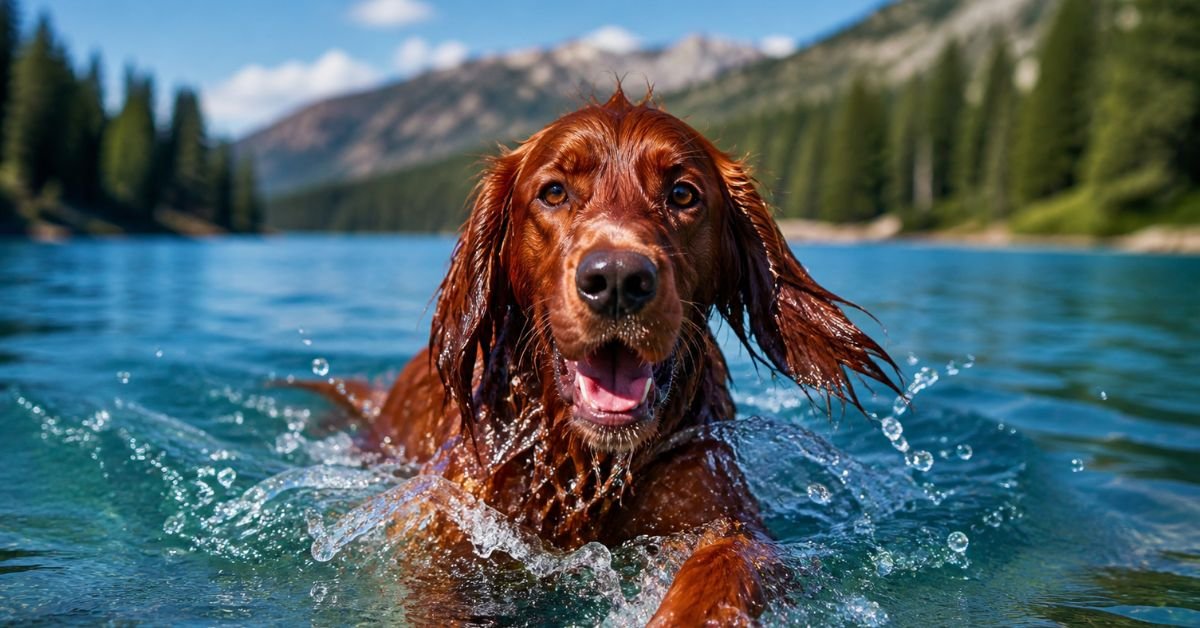
rish Setters are renowned for their striking mahogany coats and boundless energy, but transitioning that athleticism into the water requires a thoughtful approach. While they are naturally adventurous, successful Irish Setter swimming guideon a gradual introduction, the right safety gear, and consistent positive reinforcement.
It isn’t just about the splash; it’s about ensuring your dog feels secure, balanced, and confident in a completely new environment. This comprehensive guide walks you through everything from essential gear selection to step-by-step training phases and vital post-swim care routines. By following these safety-first principles, you can transform a potentially nervous encounter into a joyful, high-energy bonding experience that strengthens your relationship for years to come.
Do Irish Setters Like Water?

Irish Setters are not natural swimmers, but most can learn to enjoy water with patient, positive training. They were bred as upland bird dogs in 18th-century Ireland built for fields and forests, not lakes. Unlike Labrador Retrievers, they were never selected for aquatic work.
That said, their physical traits give them a strong advantage:
- Athletic, lean build long legs generate good paddling power
- High stamina they can sustain effort in water for extended periods
- Eager-to-please temperament respond quickly to reward-based training
- Curious nature most will investigate water if introduced calmly
One challenge: Their long, silky coat absorbs water and becomes heavy, which feels unfamiliar at first. This is why a slow introduction matters.
Essential Swimming Gear for Irish Setters

Before your dog enters any water, have the right gear ready. These items directly affect safety and comfort on every swim.
| Gear | Why You Need It |
| Dog life jacket | Keeps beginners afloat; provides a handle for rescue |
| Floating fetch toy | Motivates entry into deeper water; easy to spot |
| Absorbent dog towel | Speeds drying; reduces risk of skin irritation |
| Ear cleaning solution | Prevents yeast and bacterial infections post-swim |
| Fresh water bottle | Stops your dog drinking lake, pool, or ocean water |
| Rinse spray bottle | Removes chlorine or salt on the go |
Choosing the Right Dog Life Jacket
A properly fitted dog life jacket is the single most important piece of canine swimming gear. Choose one with:
- A top-mounted rescue handle to lift your dog out fast
- Adjustable straps Irish Setters have long torsos; fit matters
- High-visibility color orange or yellow for easy spotting in open water
- Buoyancy panels on both sides for stable, upright floating
Even confident swimmers should wear a life jacket on boats, in open water, or in any unfamiliar location.
Physical Benefits of Swimming for Irish Setters
Swimming is the most joint-friendly form of canine fitness available. It delivers a full-body workout without the impact stress of running making it ideal for Irish Setters at every life stage.
Key benefits include:
- Low-impact exercise protects joints; critical for a breed prone to hip dysplasia
- High calorie burn 15 minutes of swimming equals roughly one hour of walking
- Cardiovascular conditioning strengthens the heart and improves lung capacity
- Muscle engagement works core, shoulder, and hindquarter muscles rarely used on land
- Cooling effect prevents dangerous overheating in warm weather
- Mental stimulation novel environment reduces anxiety and boredom
Swimming is especially valuable for aging Irish Setters. It maintains mobility and muscle mass without joint strain.
Step-by-Step Guide: Introducing Your Irish Setter to Water
To introduce an Irish Setter to swimming, start in shallow, calm water and build confidence over multiple short sessions never force entry. Follow these six steps in order.
Step 1 Pick the Right Location
Choose calm, shallow water with a gradual entry: a quiet lake shore, a gentle stream, or a pool with steps. Avoid fast rivers, crowded beaches, and any water with no clear shallow zone.
Step 2 Let Your Dog Lead
Walk to the water’s edge together. Do not push, carry, or throw your dog in. Let them sniff and explore at their own pace. Wade in yourself to demonstrate it is safe.
Step 3 Reward Every Step Forward
Use high-value treats the moment your dog steps into shallow water. Keep sessions to 5–10 minutes maximum in early stages. End while they are still engaged and happy never at the point of stress.
Step 4 Increase Depth Gradually
Over several sessions, encourage deeper wading. Most Irish Setters begin paddling naturally once water reaches chest height. Do not rush this transition let buoyancy trigger the instinct.
Step 5 Introduce a Floating Toy
Toss a brightly colored floating toy just beyond where your dog can stand. This motivates the first deliberate swim stroke. Keep the throw short enough that failure is not possible.
Step 6 Teach Exit Points Every Time
Always show your dog how to exit before swimming begins especially in pools, where ledges are disorienting. Walk them to the steps or ramp first, every single session.
Water Safety: Pools vs. Lakes vs. Oceans

The biggest water safety rule for Irish Setters: never leave a swimming dog unsupervised, regardless of location or skill level. Specific risks vary by environment.
Pools
- Teach exit points at every visit pool walls disorient dogs
- Install a pool alarm or fence for unsupervised yard access
- Rinse your dog immediately after chlorine damages skin and coat over time
Lakes and Rivers
- Check for blue-green algae before every visit it is toxic and can kill dogs within hours
- Avoid stagnant water (risk of Giardia, Leptospira)
- Use a long leash near riverbanks until swimming is fully established
Oceans and Beaches
- Do not let your dog swallow salt water bring fresh water and offer it frequently
- Keep your dog close to shore; rip currents affect dogs the same as humans
- Rinse coat and paws immediately after salt dries out skin and causes itching
Post-Swim Care for Irish Setters
Post-swim care for Irish Setters has four steps: rinse the coat, clean the ears, dry thoroughly, and check the paws. Skipping any step raises the risk of infection, matting, and skin irritation.
1. Full-Body Rinse

Rinse from head to tail with clean, fresh water. Focus on the underbelly, armpits, and groin areas that stay wet longest. This removes chlorine, salt, algae, and bacteria.
2. Ear Cleaning (Most Important Step)
Irish Setters’ long, floppy ears trap moisture creating ideal conditions for otitis externa (ear infection). After every swim:
- Dry the outer ear gently with a soft towel
- Apply a vet-approved ear cleaning solution to the ear canal
- Allow your dog to shake their head to clear residue
- Watch for redness, odor, or repeated head shaking these signal infection
3. Coat Drying
Pat (do not rub) the coat with an absorbent towel. Use a low-heat pet dryer on thick areas. Brush through the coat once fully dry to prevent matting in the feathering.
4. Paw Check
Inspect between all toes for cuts, swelling, or embedded debris. Prolonged swimming softens paw pads, making them temporarily more vulnerable to abrasion.
7 Common Mistakes Irish Setter Owners Make
- Forcing the first entry creates water phobia that can last for life
- Skipping the life jacket even breed-fit dogs tire, panic, or get caught in currents
- Ignoring ears after every swim the leading cause of repeated vet visits in water-active dogs
- Allowing lake or ocean water drinking causes vomiting, diarrhea, and in algae cases, rapid organ failure
- Swimming in unchecked water always verify blue-green algae status before arrival
- Ending on exhaustion always stop before your dog is tired; fatigued dogs make dangerous decisions near water
- Over-generalizing the breed not every Irish Setter enjoys swimming; respect your individual dog’s limits
Conclusion
Irish Setter swimming, done right, is one of the most rewarding activities you can share with your dog. It builds fitness, strengthens your bond, and gives their high-drive temperament a healthy, joyful outlet.
Start slow. Use the right gear. Protect the ears. And let your dog set the pace. Whether they become a confident open-water swimmer or simply enjoy wading at the edge make every session safe, positive, and worth coming back for.
Frequently Asked Questions
1. Are Irish Setters good swimmers?
Irish Setters can become capable swimmers, but they are not natural water dogs. Their athletic build and stamina work in their favor, but they need a patient, gradual introduction. Most will enjoy swimming once confidence is built through positive reinforcement over several sessions.
2. What age can Irish Setter puppies start swimming?
Puppies can be introduced to shallow water from 10–12 weeks, after core vaccinations are complete. Keep early sessions brief, warm, and positive. Avoid deep water until the dog is physically mature typically 12–18 months.
3. How do I prevent ear infections after swimming?
Clean your Irish Setter’s ears after every swim using a vet-approved ear cleaning solution. Dry the outer ear first, apply the solution, then let your dog shake. Check weekly for redness, odor, or head shaking all signs of infection requiring vet attention.
4. Does my Irish Setter need a life jacket if they can already swim?
Yes. A dog life jacket is recommended in open water, on boats, and in any unfamiliar location regardless of swimming ability. Strong swimmers still tire, get caught in currents, or panic. The rescue handle on a jacket allows you to lift your dog to safety instantly.
5. How often should an Irish Setter swim?
Healthy adult Irish Setters can swim several times per week. Always perform full post-swim care rinse, ear clean, dry, paw check after each session. Watch for signs of fatigue or soreness, which indicate the dog needs more recovery time between swims.