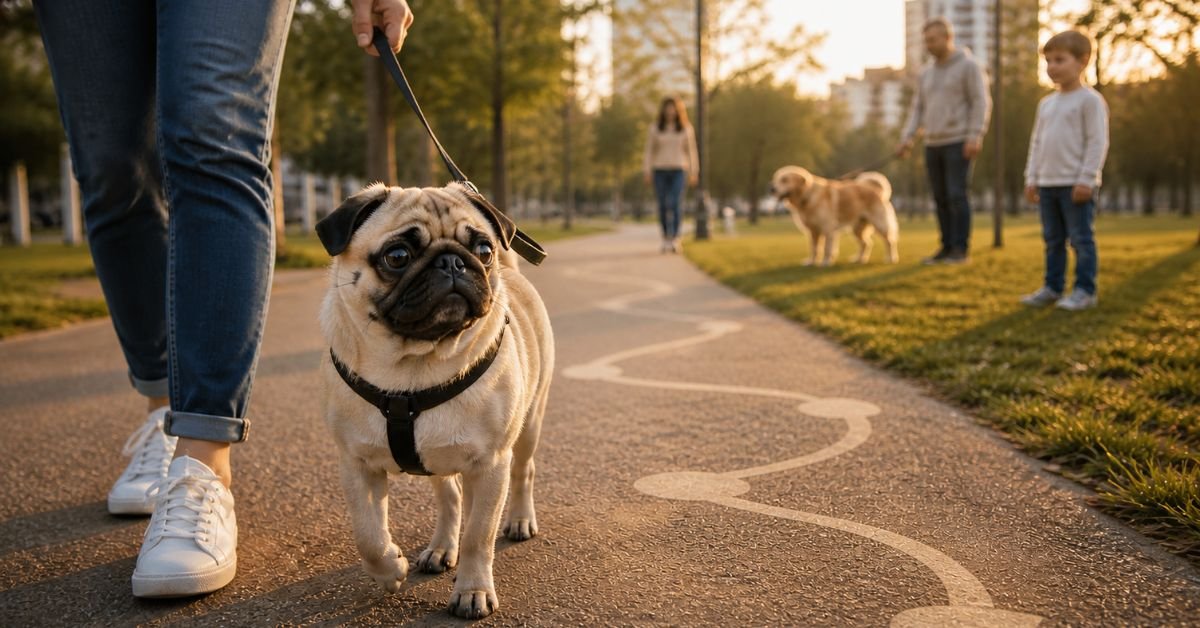
They call it “Multum in Parvo” , a whole lot of dog in a very little package. If you own a Pug, you know exactly what this means. Your Pug arrived in this world with the social ambition of a Golden Retriever, packed into a body where every single breath is a complex engineering challenge. This fundamental contradiction is why the socialization of Pug dogs is not merely a behavioral checkbox on a puppy raising to-do list; it is, in the truest sense, a medical priority.
In the 2026 pet care landscape, we have moved beyond “just taking the dog to the park.” For a brachycephalic (flat faced) breed, socialization is a delicate balance of emotional exposure and physical risk management. Done wrong, it can trigger respiratory crises, irreversible eye injuries, and lifelong “Velcro dog” anxiety. Done right, it produces that iconic, swaggering, wrinkle faced companion who charms every room they waddle into. This guide is your definitive, safe first roadmap to raising a socially brilliant Pug.
The ‘Snort’ Barrier: Why Other Dogs Misread Your Pug

Here is a psychological truth that generic training guides completely miss: your Pug’s normal, everyday breathing sounds like a low grade growl to almost every other breed of dog.
The narrowed nostrils (stenotic nares) and elongated soft palate associated with Brachycephalic Obstructive Airway Syndrome (BOAS) produce a constant, resonant snorting. While we find it cute, working dogs and herding breeds are hardwired to interpret these guttural sounds as a threat or a challenge. We have seen countless Pugs labeled “dog aggressive” or “reactive” when the reality is simply that their anatomy startled a German Shepherd or a Border Collie who misinterpreted a “hello” snuffle for a warning growl.
How to Break the Snort Barrier:
- The Parallel Path Protocol: Never introduce a Pug to a new dog face to face. Start by walking both dogs in the same direction, side by side, at a distance of 10 feet. This “parallel walk” allows the other dog to get used to the Pug’s unique sounds without the confrontational pressure of eye contact.
- Curating the Peer Group: Choose gentle, low reactivity breeds as first playmates. Cavalier King Charles Spaniels, Basset Hounds, and size matched French Bulldogs often share the Pug’s calm, forward play style. Avoid high drive breeds like Jack Russell Terriers or Australian Shepherds in the early stages, as they are most likely to misread Pug breathing.
- Monitoring the “Other” Dog: Your Pug is often blissfully unaware of the tension they cause. Your job is to ignore your Pug for a moment and watch the other dog’s body language. Are they showing “whale eye” (whites of the eyes)? Is their tail stiff? If you see these signs, remove your Pug immediately.
PRO TIP The 5-Second Rule: Limit every initial greeting to exactly 5 seconds. Count silently: sniff, assess, separate, reward. After three successful “mini-meets,” you can gradually extend to off leash play in a controlled area.
The Golden Window (8–16 Weeks): Quality Over Quantity

The classic socialization of Pug dogs closes around 16 weeks, but for Pug puppies, we must apply the “Quality over Quantity” rule. Flooding a BOAS prone puppy with too many sights, sounds, and dogs can create a cortisol spike that negatively imprints on their respiratory system.
The 2026 Pug Socialization Schedule
| Age | Primary Activity | Safety Goal |
| 8–10 Weeks | Human Bonding & Handling | Touch paws, ears, and wrinkles. Stop if puppy begins to pant. |
| 10–12 Weeks | Calm Dog Introductions | One-on-one sessions with a vaccinated, “bomb-proof” adult dog. |
| 12–14 Weeks | Sensory Enrichment | Textured surfaces (grass, tile, sand) and low-volume household noises. |
| 14–16 Weeks | Structured Indoor Class | Air-conditioned puppy kindergarten. Bring a cooling mat. |
The 3-3-3 Rule for Pug Puppies:
To prevent overstimulation, follow this framework:
- 3 New Experiences per Week: No more.
- 3 Minutes of Active Interaction: Keep sessions extremely short to prevent overheating.
- 3 Minutes of Calm Decompression: After every new experience, the puppy must sit quietly with you to lower their heart rate.
Eye Safety: Choosing the Right Playmates

Pug eyes are not just an adorable feature; they are a significant medical vulnerability. Because they are large, shallow set, and essentially unprotected by a prominent orbital bone, they are at constant risk of proptosis (the eyeball displacing from the socket) and corneal ulcers.
A single “friendly” swat from a Labrador puppy’s heavy paw can cause a deep ulcer in a split second. A rough-and-tumble session with a bouncy Boxer can result in a proptosis emergency.
The Level Rule for Play
Never allow your Pug to engage in face level play with a dog whose standing head height is significantly higher than your Pug’s eye level. Height mismatches lead to “paw-to-eye” contact, which is the leading cause of socialization injuries in small, flat-faced breeds.
- Safe Partners: Shih Tzus, size-matched Bulldogs, elderly Beagles, and other Pugs.
- Use Caution: Poodles and Labs (they tend to play “handsy” with their paws).
- Avoid: Dogs with a history of facial targeting or high prey drive terriers.
Socializing Your Pug with Children: A Guide for Parents

Pugs are legendary family dogs because they are remarkably tolerant and people oriented. However, because of their fragile eyes and restricted airways, children must be taught “Pug Manners” before the puppy even arrives.
The Three Pillars of Child-Pug Interaction:
- The “No Neck Hug” Rule: Children love to hug dogs around the neck. For a Pug, this is dangerous. Squeezing the throat even gently compresses an already narrow airway. Teach children to pet the “saddle” (the back) or the chest instead.
- The “Ground Level” Policy: Most Pug injuries in family homes occur from being dropped. Children should only play with the Pug while sitting on the floor. If the child wants to “cuddle,” the Pug comes to their lap on the rug not into their arms while standing.
- Eye Boundary Education: Teach children that a Pug’s face is “Look, Don’t Touch.” Accidental finger pokes or toys swung near the face are the primary causes of household corneal scratches.
Indoor Socialization: The 2026 Climate Mandate

As global temperatures rise, the way we socialize Pugs must change. In 2026, outdoor socialization is no longer the default, it is the exception. Pugs have virtually no ability to cool themselves through panting because their airways cannot move enough air volume.
Heat Safe Framework:
- The 75°F (24°C) Ceiling: If the temperature is above 75°F, outdoor socialization is cancelled. Move the session to a pet-friendly hardware store, an air-conditioned training center, or your living room.
- Pet Store “Safaris”: Use local pet-supply stores as your training ground. They are climate controlled, full of new smells, and provide a safe environment for your Pug to see other dogs from the safety of a shopping cart or a short leash.
- The Tongue Check: During any social interaction, monitor your Pug’s tongue. If it becomes wide, flat (the “spatula” tongue), and bright red, your Pug is overheating and stressed. End the session immediately.
Preventing ‘Velcro Dog’ Syndrome: Independence Training

Pugs were bred for one purpose: to be your shadow. While this is endearing, it makes them highly susceptible to severe separation anxiety. Socialization isn’t just about meeting others; it’s about learning to be okay without you.
- The “Out of Sight” Game: During socialization sessions, have a friend hold your Pug’s leash while you step out of the room for 30 seconds. Reward the Pug for staying calm.
- The Pug Station: Create a “safe zone” (a pen or crate) where the Pug gets their highest value treats (like a frozen, unsalted chicken broth Kong). This teaches them that being alone is a rewarding, low stress event.
- Social Independence: Encourage your Pug to greet guests at the door without you standing directly over them. Let them build their own confidence.
5 Common Socialization Mistakes Pug Owners Make
1. The Collar Trap
Using a collar during socialization is an SEO and health failure. Any tension on the neck during a “scary” moment compresses the trachea. A Y-front harness is non-negotiable for Pugs to keep their airway clear during high excitement social events.
2. Treat Induced Obesity
Pugs are the most food motivated breed on the planet. During socialization, owners often provide too many treats, leading to rapid weight gain. Even one extra pound increases the fat tissue around the throat, making it harder for the Pug to breathe. Use tiny, pea-sized pieces of boiled chicken or blueberries.
3. Flooding at Dog Parks
Taking a Pug to a crowded Saturday morning dog park is “flooding” a psychological term for overwhelming an animal with stimulus. For a Pug, this is a respiratory emergency waiting to happen. Stick to “Playdates” rather than “Parks.”
4. Pushing Through Reverse Sneezing
Many owners see their Pug “honking” (reverse sneezing) and assume they are just excited. This is a sign of pharyngeal irritation and stress. If your Pug starts reverse sneezing, gently cover their nostrils for two seconds to trigger a swallow, then take them to a quiet area for 10 minutes.
5. Ignoring the BOAS Grade
Not every Pug is physically capable of the same social intensity. Before starting a group puppy class, get a vet to assess your Pug’s BOAS Grade (1-3). A Grade 3 Pug may need surgical correction before they can safely handle the excitement of a high energy socialization environment.
Quick FAQ for Modern Pug Owners
Q: Is reverse sneezing dangerous during play?
A: Not immediately, but it is a “Yellow Light.” It signals that the airway is under stress. If it happens more than twice in one session, your Pug is over-stimulated.
Q: Can I socialize a 3-year-old rescue Pug?
A: Absolutely. Use the 3-3-3 Rescue Protocol: 3 days of total quiet, 3 weeks of routine building, and 3 months of gradual, slow-motion exposure to one new dog at a time.
Q: How do I know my Pug is actually having fun?
A: Look for “Green Light” signals: a loose, wiggly body, the “play bow,” and relaxed forehead wrinkles. If the wrinkles look tight or the tail is tucked, they are just tolerating the session, not enjoying it.
The Bottom Line
The socialization of Pug dogs is a journey of precision over power. It requires you to be a guardian of their airway and their eyes as much as a teacher of their manners. By focusing on indoor, climate controlled environments and choosing size appropriate playmates, you ensure that your Pug’s big personality isn’t sidelined by their small package physical limits.
Want to Go Deeper?
This guide covers the core framework. For full protocols on specific Pug challenges, explore our topic cluster:
- Heat-Safe Socialization: The 2026 Climate Guide for Pug Owners
- Stopping Separation Anxiety: The Pug Independence Ladder
- Eye Injury Prevention: A Vet Backed Guide to Safe Playmates
- Rescue Pug Roadmap: Re socializing the Adult Pug