I still remember the exact moment I realized how much I didn’t know about Collie health. My Rough Collie, Barnaby, was about eighteen months old, and our regular vet had just left the practice. The fill-in vet reached for a routine dose of a common anti-diarrheal, and something in my gut made me stop her hand. “Wait is that safe for his MDR1 status?” She paused. She hadn’t seen his chart yet.
That five-second pause is probably why Barnaby is still here, snoring on my kitchen floor as I write this.
If you’re researching collie dog health issues right now, you’re probably doing exactly what I did back then trying to get ahead of problems before they become emergencies. Collies (Rough and Smooth alike) are some of the most soulful, devoted dogs you’ll ever share a home with. They also carry a specific set of genetic and structural vulnerabilities that most generic “top 10 dog health issues” articles gloss over. Let’s actually dig into what’s changed, what’s new for 2026, and what you can do starting today.
The MDR1 Gene Mutation: The Silent Threat Hiding in Plain Sight

Most Collie owners have heard the word “Ivermectin” whispered as something dangerous. Far fewer understand why, or how deep this problem actually runs.
What it is: MDR1 (also called ABCB1) is a gene responsible for producing P-glycoprotein, a pump that normally keeps certain drugs out of your dog’s brain. In Collies with the mutation, that pump is broken. Drugs that would be perfectly safe in a Labrador can cause severe neurological toxicity in your Collie sedation, tremors, seizures, even coma.
Here’s the part that shocks new owners: this isn’t a rare fluke. Depending on the population studied, 55 to 70% of Collies carry at least one copy of this mutation, and it’s dominant meaning even one copy puts your dog at risk, not just two.
Warning signs owners miss:
- Unexplained wobbliness or drooling after a new medication
- Extreme lethargy that gets written off as “just tired”
- Assuming a “natural” or over-the-counter product is automatically safer
The 2026 update that matters most: The danger isn’t limited to the obvious culprits anymore. Recent case work has documented severe neurotoxic reactions in MDR1-affected Collies from drugs owners would never suspect including the common injectable pain and anti-nausea medications butorphanol, metoclopramide, and maropitant, which are frequently combined during routine sedation or surgery. One documented case involved a Collie who needed nearly 40 hours of continuous reversal treatment after a single standard dose of butorphanol.
There’s also growing recognition that MDR1 status may affect how your dog metabolizes cortisol, with researchers now investigating a possible link to Addison’s disease in affected dogs a connection that wasn’t on anyone’s radar a few years ago.
Proactive protocol for 2026:
| Action | Why It Matters |
| Get a cheek-swab MDR1 test before your Collie’s first vaccine visit | Costs under $70, and it changes every future prescription decision |
| Carry a physical MDR1 card in your dog’s vet folder AND your wallet | Emergency vets and locums won’t automatically know your dog’s history |
| Ask specifically about butorphanol, acepromazine, and loperamide before any sedation or surgery | These are commonly used but genuinely dangerous for MDR1-positive dogs |
| Confirm generic parasite preventatives with your vet, don’t assume equivalence | Pharmacy substitutions can carry different concentrations or inactive ingredients than the brand your vet actually vetted |
I laminate Barnaby’s MDR1 test result and clip it right to his leash bag. It sounds excessive until a weekend emergency vet who’s never met your dog is reaching for a syringe.
Vision and Eye Issues: CEA, PRA, and Where Genetic Testing Actually Stands

Collies have this incredible, expressive gaze it’s part of what makes the breed so magnetic. Unfortunately, their eyes are also where two serious inherited conditions tend to show up.
Collie Eye Anomaly (CEA), sometimes called choroidal hypoplasia, affects the development of the choroid, the blood-vessel-rich layer that nourishes the retina. It’s shockingly common in the breed historically affecting a large share of the collie gene pool.
Progressive Retinal Atrophy (PRA) is a separate, later-onset degeneration of retinal cells that gradually erodes night vision and, eventually, daytime sight.
Warning signs owners miss:
- A puppy that seems clumsy around furniture only at dusk (early night-vision loss)
- The “go normal” phenomenon mildly affected CEA puppies can appear to have normal-looking eyes by 3 months old as pigment develops, masking the underlying defect from casual observation
What’s actually reliable in 2026: Genetic testing for CEA has become the gold standard, and for good reason it identifies affected, carrier, and clear dogs with roughly 95% accuracy from a simple blood or cheek swab, and it can be done at any age, not just during that narrow 6-to-8-week diagnostic window ophthalmologists rely on for a direct eye exam.
I want to be straight with you about one thing: you’ll see claims online about “AI-powered retinal screening” being widely available in general practice clinics. In reality, AI-assisted fundus image analysis is an active area of veterinary ophthalmology research, but it is not yet a standard tool sitting in your local vet’s exam room. The dependable, accessible options right now are genetic testing through an accredited lab and a dilated eye exam by a veterinary ophthalmologist, ideally done early and then repeated if anything changes.
Proactive protocol:
- Genetic test before breeding decisions or, honestly, just for your own peace of mind
- Schedule a veterinary ophthalmologist exam in the puppy’s first 8 weeks if possible
- Re-check vision annually starting around age 5, since PRA is typically progressive and later-onset
Joint and Structural Vulnerabilities: Hip Dysplasia and Dermatomyositis

Collies aren’t as notorious for hip dysplasia as, say, German Shepherds, but it absolutely happens, and their long-legged, athletic build means joint problems can sneak up quietly.
What owners miss: Collies are stoic. They don’t limp dramatically the way some breeds do they compensate. Watch for a “bunny hopping” gait when running, reluctance to take stairs they used to bound up, or a slight change in how they sit (sitting off to one side rather than squarely).
The 2026 monoclonal antibody conversation: Bedinvetmab (brand name Librela) has genuinely changed pain management for older dogs with osteoarthritis, and many Collie owners have seen real quality-of-life improvements from it. But I’d be doing you a disservice if I didn’t mention the honest, current picture.
As of early 2026, regulators including the UK’s Veterinary Medicines Directorate completed an in-depth safety review after reports of rapidly progressive osteoarthritis and joint deterioration in a subset of treated dogs. The official label guidance now specifically states that if your dog develops new or worsening joint swelling or pain after a Librela injection, your vet should consider further diagnostics and possibly discontinuing treatment. Researchers still debate how strongly these cases are linked to the drug itself versus underlying disease being “unmasked” once pain relief allows a dog to move more but it’s a real enough concern that the label changed. Ask your vet directly about current monitoring recommendations before starting or continuing this therapy.
Dermatomyositis deserves its own mention because it’s genuinely a Collie-and-Sheltie signature disease an inherited inflammatory condition affecting skin and sometimes muscle, usually showing up in puppies under six months as small crusty or bald patches around the face, ear tips, and legs, occasionally progressing to muscle wasting in more severe cases.
Modern management strategies:
- Targeted hydrotherapy (underwater treadmill work) is one of the best low-impact ways to maintain muscle mass around vulnerable joints without pounding pavement
- Weight management is your single most controllable lever extra pounds translate directly to joint stress
- For dermatomyositis, early dermatology referral matters far more than “wait and see,” since early intervention limits scarring and muscle involvement
Gastric Torsion (Bloat) and the Surprising Nervous System Link

Bloat is the health issue that terrifies experienced owners most, because it can go from “dog seems restless” to life-threatening in under an hour. Collies, being deep-chested, are at elevated risk compared to barrel-chested breeds.
What it is: The stomach fills with gas and can twist on itself (volvulus), cutting off blood supply. Without emergency surgery, it’s frequently fatal.
Warning signs owners miss:
- Unproductive retching your dog looks like they’re trying to vomit but nothing comes up
- Restlessness and pacing that doesn’t match the situation
- A distended, drum-tight abdomen (sometimes subtle in a fluffy-coated Rough Collie, easy to miss under all that fur)
The nervous system connection worth understanding: This is genuinely one of the more fascinating threads in current research. There’s growing evidence that anxious, high-strung temperaments and gut dysregulation are linked, and Collies bred for generations to be hyper-alert and reactive to their environment may carry some inherited wiring that predisposes them toward this kind of gut sensitivity. A 2025 study analyzing dog fecal microbiomes found measurable compositional differences between higher-anxiety and lower-anxiety dogs, strong enough that machine-learning models could predict a dog’s behavioral group from its gut bacteria alone. That doesn’t mean anxiety causes bloat directly, but chronic stress does affect gut motility and vagal tone, both of which matter to gastric function.
Proactive protocol:
- Feed two or three smaller meals daily rather than one large one
- Avoid vigorous exercise for at least an hour before and after meals
- Consider a slow-feeder bowl if your Collie inhales food (air-gulping is a real contributing factor)
- Talk to your vet about prophylactic gastropexy if you’re already having your dog spayed or neutered it’s a simple additional step during that surgery that essentially prevents the stomach from twisting later
- Address underlying anxiety through structured routine, decompression walks, and increasingly supported by research attention to gut health through diet and, where appropriate, veterinarian-guided probiotic support
The Collie Care Checklist: Puppyhood to Senior Years

<br>
| Life Stage | Screenings & Actions |
| 8–12 weeks | MDR1 cheek swab test; first ophthalmologist eye exam for CEA (within the diagnostic window) |
| 6 months | Watch skin/coat closely for early dermatomyositis signs; discuss gastropexy timing if spaying/neutering |
| 1 year | Baseline hip X-rays if any gait irregularities noted; confirm MDR1 status is documented in permanent vet file |
| 2–4 years | Annual weight and joint mobility check; monitor for early bloat risk factors (eating speed, stress levels) |
| 5–7 years | Annual vision recheck for PRA onset; begin discussing joint-support diet and hydrotherapy if any stiffness appears |
| 8+ years (senior) | Twice-yearly vet visits; osteoarthritis pain management conversation (including honest risk/benefit talk on monoclonal antibody therapy); continued vision monitoring; gut-health support for comfort and mobility |
Looking Ahead with Your Collie
None of this is meant to scare you. If anything, it’s the opposite Collies are wired to be resilient, loyal, endlessly patient companions, and most of what threatens their health is genuinely manageable when you catch it early.
Watching Barnaby move through his senior years has taught me that the owners who worry least in the long run are the ones who did the unglamorous groundwork early: the MDR1 test, the puppy eye exam, the honest conversation with a vet about what’s actually in his file. Knowledge doesn’t just reduce anxiety with this breed, it genuinely changes outcomes.
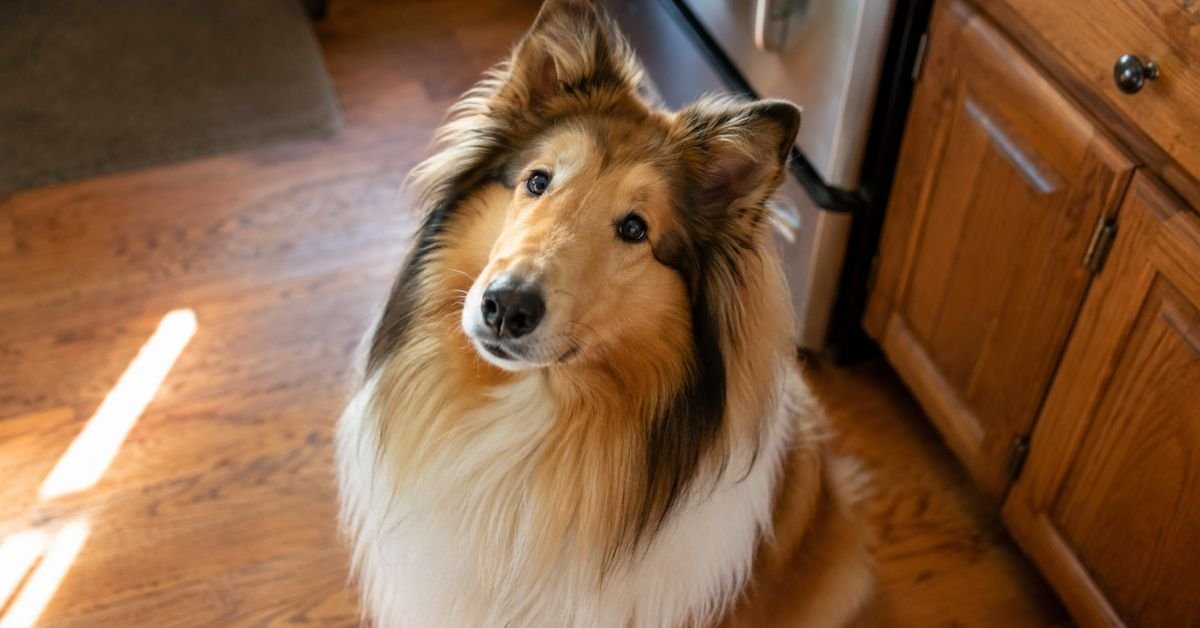
Your Collie is watching you right now, probably with that unmistakable tilted-head expression, completely unaware of any of this. That’s exactly why it’s on us to stay a step ahead.
Frequently Asked Questions
Is my Collie automatically MDR1 positive just because of the breed?
No not every Collie carries the mutation, but the odds are high enough (over half the breed population in most studies) that testing is worth it regardless of how your dog has reacted to medications so far. A dog can carry the gene and never have had an obvious reaction yet.
Can a Collie with CEA still live a normal, happy life?
In many cases, yes. CEA severity varies enormously some affected dogs have barely noticeable vision differences and live full, active lives, while more severely affected dogs need environmental adjustments like consistent furniture placement and caution around stairs or pools.
How fast does bloat actually progress, and when do I go to the ER?
It can escalate from mild restlessness to critical within one to two hours. If you see unproductive retching combined with a visibly swollen belly, don’t wait to “see if it passes” this is always an emergency vet visit, not a wait-and-watch situation.
Should I be worried about giving my Collie flea and tick prevention if they’re MDR1 positive?
Standard preventive doses of the most common preventatives are generally considered safe even for MDR1-affected dogs the danger typically arises at the much higher doses used to treat conditions like mange, not routine monthly prevention. Still, always confirm the specific product and dose with your vet rather than assuming, especially with generic substitutions.
Is Librela safe for my senior Collie with hip dysplasia?
It has helped a lot of dogs, but it isn’t risk-free, and regulators have flagged a subset of cases involving rapid joint deterioration closely enough to update official safety guidance in 2026. This is a conversation to have directly with your vet, weighing your dog’s specific joint history and current mobility rather than a blanket yes-or-no answer.