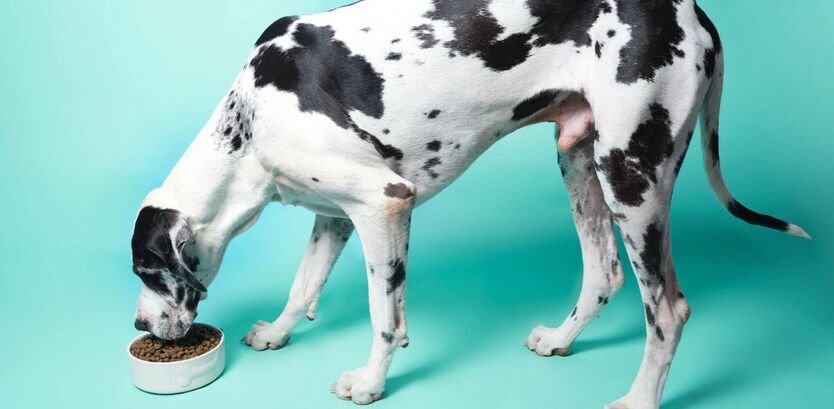
Great Danes are often described as gentle giants, and anyone who has lived with one knows just how fitting that phrase is. Despite their imposing size, they’re affectionate, sensitive, and surprisingly delicate when it comes to their nutritional needs. What you feed a Great Dane plays a major role in their growth, joint health, digestion, weight stability, and even their longevity.
Feeding your Great Dane well isn’t just about filling their bowl; it’s about fueling their body, supporting their health, and giving them the best chance to thrive. You more than likely already know this, which is why you’re here. Whether you’re raising a pup and need a Great Dane puppy feeding guide, wondering what to feed a Great Dane, or comparing diets, you’re probably looking for more than just convenience; you want to do the very best for your dog.
We’ve broken down everything you need to know, from the special nutritional requirements of a growing Great Dane puppy to the crucial feeding methods that can help prevent the life-threatening condition known as bloat. Let’s get started on giving your gentle giant the optimal diet.
Great Dane Nutrition Requirements: The Building Blocks of a Giant
Because of their immense size and rapid growth period, Great Danes have very specific and non-negotiable nutritional requirements. Getting the balance wrong, especially during puppyhood, can lead to serious skeletal and joint issues. Here is a breakdown of the key nutrients your Great Dane needs.
Protein: Essential for Muscle Development and Repair
Protein is crucial for building the powerful muscles that support a Dane’s massive frame. Look for high-quality, animal-based protein sources like chicken, beef, lamb, or fish listed as the first ingredients in their food.
For adult Danes, a moderate protein content of around 23% to 25% on a dry matter basis is generally recommended. For puppies, the focus should be on the overall balance of the formula, not just a high percentage number, to ensure controlled growth. High-quality protein is always necessary, but it must be paired with controlled calorie and mineral levels.
Fats: Provide Energy and Support a Healthy Coat
Fats are a dense source of energy for your active Dane. More importantly, healthy fats play a vital role in protecting their skin, keeping their short coat glossy and silky, and supporting brain function.
For adult Great Danes, a fat content of about 12% to 14% is usually appropriate. Keep in mind that foods with fat listed as one of the first four ingredients can sometimes be a bloat risk, so balance is key here.
Controlled Calcium and Phosphorus: The Joint Health Secret
This is perhaps the single most important nutritional consideration for a Great Dane puppy. Great Danes grow incredibly fast, reaching adult height in about 18 months, which is a process that takes humans around 14 years!
If a puppy absorbs too much calcium too quickly, it can disrupt proper bone mineralization, leading to developmental orthopedic diseases like osteochondrosis dissecans (OCD) and hypertrophic osteodystrophy (HOD).
- The Golden Rule: You must feed a food specifically labeled for Large or Giant Breed Puppies until they reach 18 to 24 months of age. These formulas have carefully controlled calcium levels and an ideal calcium-to-phosphorus ratio, typically between 1.1:1 and 1.4:1.
- A Warning: Never supplement a large breed puppy’s diet with extra calcium, as this can be extremely dangerous and can cause severe growth issues.
Carbohydrates: Offer a Source of Energy and Aid in Digestion
Complex carbohydrates like whole grains, brown rice, barley, or sweet potatoes provide a steady source of energy. They also offer fiber, which supports healthy digestion.
Digestible carbohydrate sources are important for energy but should not be the main component of the diet. Avoid excessive fillers and focus on whole, recognizable grain or vegetable sources.
Omega-3 Fatty Acids: Support Brain Health and Reduce Inflammation
Omega-3s, particularly EPA and DHA (eicosapentaenoic acid and docosahexaenoic acid), are crucial. DHA supports healthy brain and eye development in puppies, while EPA is vital for reducing inflammation.
These fatty acids, often sourced from fish oil or flaxseed, help maintain healthy joints, which is essential for a breed prone to joint stress. They also contribute significantly to that famously smooth, shiny Great Dane coat.
Vitamins and Minerals: Essential Support
A complete and balanced food formulated to meet AAFCO (Association of American Feed Control Officials) standards for the appropriate life stage should contain all the necessary vitamins and minerals.
Key minerals like zinc and manganese support healthy joints and bones. Taurine is another important component, often added to dog food to support healthy heart function, a concern for giant breeds like the Great Dane.
Fiber and Water
Fiber, found in complex carbs and vegetables, promotes healthy digestion and prevents constipation. Water is, of course, absolutely necessary for overall hydration and every bodily function. Always ensure your Great Dane has access to fresh, cool water, especially after any light exercise.
Great Dane Food Amounts: How Much is Just Right?
Feeding amounts for a Great Dane are not a one-size-fits-all answer. They depend heavily on the dog’s age, weight, activity level, and the specific calorie density of the food you choose. Precision is key for this breed, both to ensure they get enough nutrients and to prevent the dangerous consequences of overfeeding, such as accelerated growth or excessive weight gain, which stresses joints.
The Golden Rule for Measuring
Always use a standard measuring cup or, even better, a digital kitchen scale to weigh out food portions in grams. Do not guess or simply “eyeball” the amount.
Adult Great Dane Feeding Guidelines
An average adult Great Dane (weighing 110–175 pounds) may require anywhere from 2,500 to 3,500 calories per day, or roughly 6 to 10 cups of high-quality kibble, depending on activity.
- Low Activity: Closer to 6 cups per day.
- High Activity/Working Dog: Closer to 10 cups per day.
The Best Method: Do not rely solely on the bag’s instructions. Start with the recommended feeding amount for their weight and then adjust based on your dog’s Body Condition Score (BCS). You should be able to easily feel, but not prominently see, their ribs when you run your hands along their side. They should also have a distinct waist tuck behind the ribcage.
Great Dane Puppy Feeding Schedule
Puppies have higher caloric needs per pound than adults, but the type of growth matters more than the speed.
- Age 8 to 16 Weeks: Feed 3 to 4 times per day.
- Age 4 to 12 Months: Feed 3 times per day.
- Age 12+ Months (until 18–24 months): Transition to 2 meals per day.
Portion Note: A Great Dane puppy’s daily food intake can range from 3 cups at two months up to 8 cups during the peak growth period, but this must be divided into multiple smaller meals (three is common) to manage digestion and prevent bloat. Consult your veterinarian regularly to adjust portions as your puppy grows, aiming for slow, steady growth.
What is the Best Diet for a Great Dane? Comparing Your Options

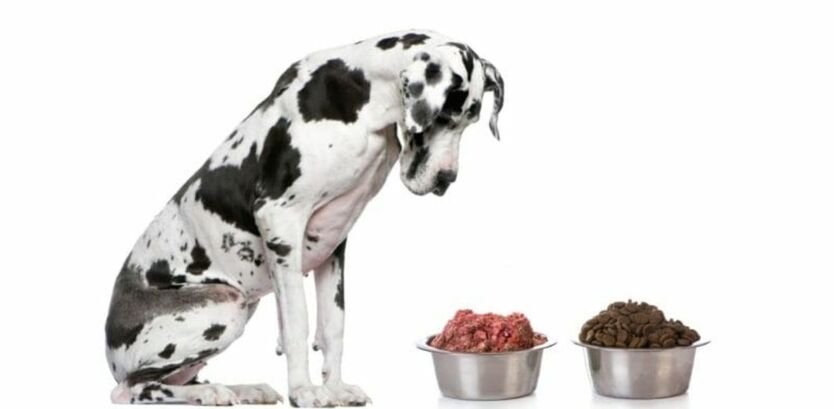
Choosing the “best” diet often comes down to what works for your dog’s specific health needs and what you can manage consistently. Here, we compare the three main options.
1. High-Quality Dry Kibble (The Most Common Choice)
What it is: Convenient, affordable, and often the most scientifically controlled diet.
Pros for Danes:
- Guaranteed Complete and Balanced: Reputable brands formulated by veterinary nutritionists (DACVN) provide precise, tested nutrient ratios. This is critical for controlling calcium and phosphorus in puppies.
- Digestibility: High-quality kibbles use easily digestible ingredients, which is important for a breed with sensitive stomachs.
- Bloat Research: Certain kibble ingredients (like calcium-rich meat meal listed in the first four ingredients) may be associated with a lower risk of bloat.
Cons for Danes:
- Requires a slow-feeder bowl to prevent fast eating and air gulping.
- May contain ingredients that trigger sensitivities in some dogs.
Tip: Look for brands that have conducted feeding trials and have formulas specifically designated for Large or Giant Breed Puppies and Adults.
2. Fresh/Lightly Cooked Diets
What it is: Pre-portioned, human-grade food delivered fresh or frozen.
Pros for Danes:
- Highly Digestible: The whole, less-processed ingredients are often easier on a sensitive Great Dane stomach.
- Appetite Appeal: Very enticing for picky eaters.
- High Moisture: Supports overall hydration.
Cons for Danes:
- Portion Control: Must be carefully monitored to ensure caloric and nutrient density matches a Dane’s massive needs.
- Cost: Feeding a giant breed this type of food can be significantly more expensive.
3. Raw or Home-Prepared Diets
What it is: Feeding raw meat, bones, and organs, or preparing cooked meals from scratch.
Pros for Danes:
- Allows the owner complete control over ingredients, which is useful for dogs with severe allergies or sensitivities.
- Often promotes excellent coat and muscle tone.
Cons for Danes:
- The Biggest Risk: It is extremely difficult to formulate a raw or home-cooked diet that is completely nutritionally balanced, especially for a rapidly growing giant breed puppy. Small imbalances in calcium and phosphorus can lead to irreversible bone damage.
- Pathogen Risk: Handling raw meat carries a risk of bacterial contamination (like Salmonella), affecting both the dog and the family.
Conclusion: If you choose a raw or home-prepared diet, you must consult with a Board-Certified Veterinary Nutritionist (DACVN) to ensure the diet is 100% complete and safe for your Great Dane’s specific life stage.
Great Dane Food Requirements by Life Stage
A Great Dane’s dietary needs change dramatically from puppy to senior, mirroring their intense, rapid development and eventual slowing down.
Puppy Stage (Weaning to 18–24 Months)
This is the most critical feeding period. The goal is slow, steady growth, not maximum size, to prevent orthopedic problems.
- Focus: A Giant Breed Puppy Formula with controlled levels of protein, calories, and, most importantly, calcium (aiming for ∼1.0−1.2% on a dry matter basis).
- Feeding Frequency: 3 to 4 meals per day.
Adult Stage (18–24 Months to 5–7 Years)
Once growth plates have closed (usually around 18–24 months), the Dane can transition to an adult formula.
- Focus: Maintenance. A moderate-calorie, moderate-protein (23–25%) diet that supports muscle mass without encouraging weight gain.
- Feeding Frequency: 2 small meals per day.
Senior Stage (5–7+ Years)
Great Danes have a shorter lifespan than many smaller dogs, so they are considered seniors relatively early.
- Focus: Joint support, weight management, and organ health. Look for diets lower in calories (to prevent weight gain as activity slows) but enriched with supplements like glucosamine, chondroitin, and Omega-3s (EPA/DHA) for joint comfort and mobility.
- Feeding Frequency: 2 small meals per day.
Vet Recommended Dog Food for Great Danes
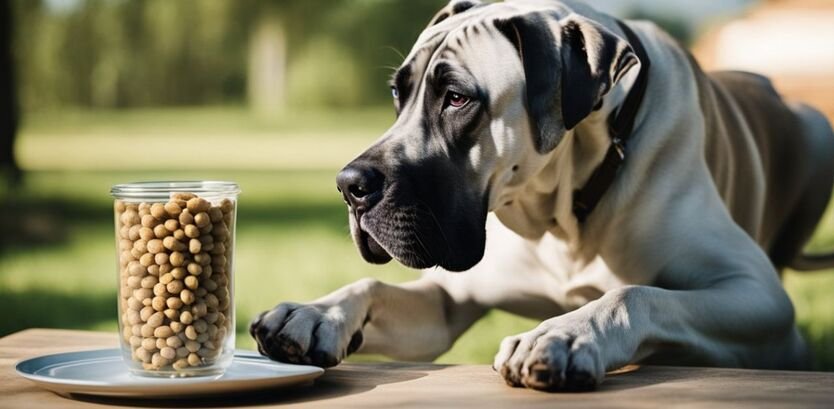
When a veterinarian or a board-certified nutritionist recommends a food, they look beyond the flashy packaging and focus on the science and research behind the product. They prioritize:
- Formulation Expertise: Foods developed by PhD-level nutritionists or DACVNs.
- Quality Control and Research: Brands that own their manufacturing plants and conduct actual AAFCO feeding trials.
- Life Stage Specificity: Formulas designed specifically for large or giant breed puppies.
The Importance of AAFCO Statements
When evaluating a food, look for the AAFCO nutritional adequacy statement on the bag. It should say:
- “[Product Name] is formulated to meet the nutritional levels established by the AAFCO Dog Food Nutrient Profiles for Growth of Large Size Dogs (70 lbs. or more as an adult).”
or
- “[Product Name] is formulated to meet the nutritional levels established by the AAFCO Dog Food Nutrient Profiles for All Life Stages (including growth of large size dogs).”
If it doesn’t specify large size dogs for a puppy, do not feed it to your Great Dane puppy.
Conclusion:
Caring for a Great Dane is a grand adventure, and providing them with a highly tailored diet is one of the biggest commitments you will make to their health and happiness.
From the first days of controlled calcium intake as a puppy to the crucial bloat-prevention strategies of adulthood, every meal matters. By choosing the correct large or giant breed formula, accurately measuring portions, and following the essential feeding rules to minimize bloat risk, you are actively securing your gentle giant’s well-being. A well-fed Great Dane is a happy, healthy Great Dane, ready to shower you with boundless, loving companionship for years to come.
Frequently Asked Questions (FAQs)
1. Should I feed my Great Dane puppy an all-life-stages food or a large-breed specific food?
You must choose a food labeled specifically for Large or Giant Breed Puppies. Standard puppy food has calcium levels that are too high, risking permanent joint and bone problems. The goal is slow, steady growth.
2. How many times a day should I feed my adult Great Dane?
Adult Great Danes should be fed a minimum of two times per day (splitting the total daily amount). This twice-daily feeding schedule is a key preventative measure against bloat (GDV). Never feed one large meal.
3. What kind of treats are best for a Great Dane?
Use small pieces of their regular kibble or safe, low-calorie options like carrots or cooked chicken. Treats should not exceed 10% of their daily calories. Avoid large, hard chews like rawhides that could be gulped and pose a bloat risk.
4. Is it okay if my Great Dane is a picky eater?
While frustrating, resist constant food switching or adding high-fat toppings. Stick to consistent, high-quality food. If pickiness is paired with weight loss or digestive upset, consult your veterinarian to rule out any underlying medical issues.