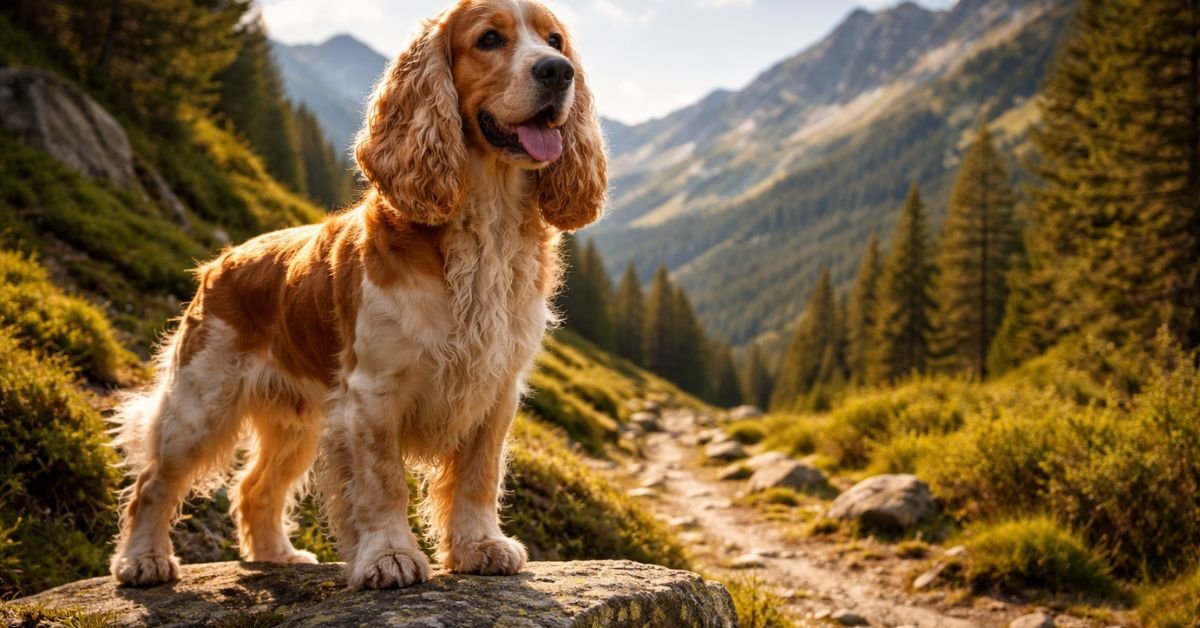
Here’s a delicious irony: the dog currently snoring on your sofa was specifically engineered to flush game birds from dense, unforgiving brush. The Cocker Spaniel carries the DNA of a tireless field athlete, fast-twitch muscles, a nose calibrated for scent-tracking, and a coat designed to repel bracken and bramble. Yet somehow, we’ve turned this magnificent trail machine into a creature with a Netflix subscription and a preference for memory-foam beds.
That’s fine. We love them that way. But when the weekend arrives and you clip that leash for a proper trail adventure, understanding your Spaniel’s hidden wiring makes the difference between a glorious romp and a muddy, tick-riddled disaster that ends with you tweezering burrs from a very unimpressed dog at 11pm.
This guide skips the generic “bring water” advice entirely. What follows are seven pro-level insights built from years of working with Spaniel owners on trail-ready conditioning, grooming strategy, and behaviour management, the kind of knowledge that usually lives only in field trial communities and specialist grooming circles.
Quick Answer: Are Cocker Spaniels Good for Hiking?
Yes Cocker Spaniels are excellent hiking companions, thanks to their hunting heritage and athletic endurance. However, three precautions are non-negotiable: (1) protect those iconic ears with a mesh snood to block ticks and burrs; (2) manage prey drive with a long-line leash near wildlife; and (3) perform a full coat-and-ear scan within minutes of returning to the trailhead. Do these three things, and the trail is your Spaniel’s oyster.
What Cocker Spaniel Owners Actually Struggle With on the Trail
A scan of r/CockerSpaniel and Quora reveals three recurring nightmares that other hiking guides almost never address:
Pain Point 1: The Disappearing Dog Problem
Cocker Spaniels are scent-hounds at heart. The moment a rabbit trail cuts across your path, your dog’s nose goes down, their brain goes offline, and they physically cannot hear your recall command. Multiple Reddit users describe their Cockers vanishing into thickets following a scent tunnel through dense undergrowth, completely oblivious to frantic shouting. This isn’t disobedience. It’s biology. Prey drive management on trails is a skill, not a punishment.
Pain Point 2: The Post-Hike Grooming Nightmare
Ask any Cocker owner about their first muddy trail experience and watch their eye twitch. The Cocker’s feathered coat, those gorgeous flowing furnishings on ears, chest, belly, and legs acts like a Velcro strip for every seed, burr, twig, and clump of mud on the planet. One Quora member described spending three hours detangling after a two-mile walk through tall grass. Three hours. For two miles.
Pain Point 3: Ear Infections The Silent Aftermath
Those long, pendulous ears that make Cocker Spaniels irresistible are anatomically problematic in wet environments. The ear canal traps moisture and debris, creating a warm, dark breeding ground for bacteria and yeast. Hikers frequently report noticing the telltale head-shaking and odour two to three days after a wet trail outing well after the culprit moisture has done its damage.
7 Pro Secrets for a Safe, Burr-Free Cocker Spaniel Hike
Secret 1: The Snood Secret Your Ear’s Best Friend on the Trail

Most Cocker owners have never heard of a hiking snood, and that’s a genuine shame. A snood is a lightweight, tubular fabric cover think a soft neck gaiter that slips over your Spaniel’s ears and holds them against the neck while they move. Mesh or breathable jersey versions allow airflow while physically blocking ticks, fox-tails, grass seeds, and burrs from entering the ear canal.
The difference is dramatic. Owners who’ve adopted the snood habit consistently report near-zero ear debris after trail sessions compared to weeks of seed-picking without one.
- Best use case: Any trail with tall grasses, seed-bearing plants, or heavy autumn leaf litter
- Pro upgrade: Apply a thin layer of coconut oil to ear tips before the snood it lubricates the fur and dramatically reduces burr adhesion
- What to buy: Look for a dedicated spaniel snood from field sport suppliers, or a hiking harness for spaniels that includes integrated ear loops
Secret 2: Scent Fatigue vs. Physical Fatigue Why Distance Is Misleading
This is the insight that changes everything for Cocker Spaniel owners, and almost no hiking blog mentions it. A two-mile sniff-heavy hike through varied terrain is cognitively and physically more exhausting for your Spaniel than a five-mile run on a paved path.
Processing scent is metabolically expensive. Every time your dog stops to investigate a scent mark and Cockers will do this dozens of times per mile on interesting terrain their brain burns significant energy mapping, cataloguing, and responding to olfactory information. English Cocker Spaniel endurance is genuinely impressive, but it’s fuel-matched to athletic output, not cognitive processing.
Practical takeaways:
- On a sniff-rich trail, cut your planned distance by 40%
- Watch for these Spaniel-specific fatigue signals: slower tail movement (normally a helicopter rotor), lingering at scent spots rather than actively investigating, and reduced enthusiasm for recall
- A tired Spaniel + active prey drive near a cliff edge = a very bad day. Recognise fatigue early
Secret 3: The Coat Strategy Field Cut vs. Show Cut

This is a conversation that divides Cocker communities, but for hikers the answer is clear. If you regularly hit trails, the traditional Show Cut is working against you. Those long, sweeping furnishings are beautiful in the ring and catastrophic in bramble country.
The Field Cut (also called a working or sporting trim) takes the furnishing length down to approximately 1–2 inches while retaining the breed’s characteristic shape. The practical benefits are enormous:
| Show Cut | Field Cut | |
| Post-hike grooming time | 15–20 minutes | 5–8 minutes |
| Burr adhesion | High | Reduced by ~70% |
| Drying time after wet trail | Long | Halved |
| Matting risk | High | Low |
Ask your groomer specifically for a “sporting spaniel trim” or “working cocker cut” most professionals will know exactly what you mean. You’re not sacrificing your dog’s looks; you’re giving them freedom of movement and a fighting chance against the undergrowth.
Secret 4: Micro-Climb Mechanics Know Your Dog’s Terrain Limits
A Cocker Spaniel is built low and long relative to breeds like Border Collies or Vizslas. This compact, powerful frame gives them excellent agility in dense cover but creates specific challenges on rocky, stepped, or technically steep terrain. Their front-heavy build means repeated scrambles over large boulders put disproportionate strain on shoulder and elbow joints.
Rules for rocky terrain:
- Avoid repetitive boulder-hopping on strenuous trails fine as an occasional adventure, terrible as a weekly routine
- Watch for toe-dragging on descents an early sign of fatigue-related coordination loss
- Build rocky-terrain fitness gradually, especially for dogs under three years whose joint cartilage is still developing
- On scrambles, never haul a Cocker up by the harness from above support from below and let them power their own ascent
Secret 5: Pre-Hike Paw Wax The Barrier Technique
Most owners apply paw wax reactively (after noticing soreness) rather than proactively. Apply wax 10to 15 minutes before hitting the trail, not after.
The technique:
- Clean and dry paws completely
- Apply a pea-sized amount of musher’s wax or trail-paw balm to each pad, working it into the grooves and between the toes
- Let absorb for 10 minutes before walking on rough surfaces
This creates a genuine moisture and abrasion barrier critical for rocky, icy, or chemically treated trails. For Cockers specifically, also apply a thin layer to the fur between the toes, which is notorious for harbouring grass seeds and developing painful interdigital abscesses if ignored.
Secret 6: The 3-Minute Post-Hike Scan Sequence

Every hike should end with this routine before your dog gets back in the car. Do it in this exact order:
Step 1 Ears (60 seconds): Lift each ear flap and inspect the canal entrance for debris, seeds, or unusual redness. Gently wipe the inner flap with a clean, dry cloth. Never insert anything into the canal.
Step 2 Armpits & Groin (60 seconds): These warm, hidden skin folds are tick paradise. Run fingertips along armpit creases, the groin area, and under the collar. Ticks attach in warm, concealed spots within 2–4 hours of exposure.
Step 3 Paws (60 seconds): Check between every toe for seeds, mud balls, or cracked pads. Press gently on each pad for soreness. Remove embedded debris with blunt-ended tweezers never sharp points.
This 3-minute scan catches 90% of post-hike problems before they become veterinary emergencies.
Secret 7: Hydration Hacks for Long-Eared Dogs

Long-eared dogs have a hydration challenge that upright-eared breeds don’t: their ears trail into standard water bowls, emerging wet and debris-covered. On the trail, every drink risks soaking your hard-won, snood-protected ear furnishings.
The solution: Carry a collapsible silicone bottle-top dog waterer, a narrow, shallow trough design that lets a Cocker drink with their ears falling to the sides, not into the water. Alternatively, train your dog to accept a gentle hand-pour directly into the mouth. Messy at first; they adapt within three or four hikes.
Hydration frequency:
- Offer water every 20–25 minutes on moderate terrain
- In heat above 25°C or on climbs, increase frequency
- A Cocker at full trot in warm conditions needs approximately 60ml of water per kilogram of body weight per hour of active exercise
The Trail Is Where They Come Alive
There’s a moment, usually about fifteen minutes into a good trail, when something shifts in a Cocker Spaniel. The suburban pet persona falls away. The nose drops, the tail goes into overdrive, and you catch a glimpse of the animal they were always supposed to be alert, joyful, and completely present in the landscape around them.
Hiking with a Cocker Spaniel requires more preparation than hiking with lower-maintenance breeds. But owners who master the snood, the field cut, the scan sequence, and the nuances of scent fatigue consistently describe the trail as the best bonding experience they share with their dogs. The preparation is an act of respect and acknowledgment that your companion deserves to enjoy the outdoors safely, comfortably, and on their own instinctive terms.
Your Cocker was born for this. Give them the gear and the knowledge to do it properly, and the trails you share will become the stories you tell for years.
Frequently Asked Questions
Q1: At what age can a Cocker Spaniel puppy start hiking?
Wait until your puppy is fully grown typically 12–14 months before attempting trail hikes with elevation gain or technical terrain. Before that, gentle nature walks on flat, soft surfaces are fine from 12–16 weeks onward (once vaccinations are complete). The concern is growth plate damage: cartilaginous bone ends are vulnerable to repetitive impact stress before they fully ossify around 12 months.
Q2: How do I stop my Cocker from chasing squirrels on a cliff edge?
This is a safety issue, not just an obedience one. In high-risk terrain, keep your Cocker on a 3–5 metre long-line attached to a well-fitted harness never a collar near drop-offs. For recall proofing, build a high-value recall cue trained exclusively with exceptional rewards (boiled chicken, real cheese) and never used for any other purpose. When that cue fires, it should mean “the best thing in the universe is happening right now with my human.” This takes months to build, but it genuinely saves lives.
Q3: My Cocker gets muddy on every hike. What’s the best cleaning strategy?
Never brush a muddy coat mud acts as an abrasive and causes breakage. Allow the coat to dry completely first (a towel-dry followed by a cool blow-dry helps), then brush out the dried mud in sections using a slicker brush followed by a steel comb. For stubborn mud in ear furnishings, a light spritz of detangling spray before brushing dramatically reduces pulling and matting. A monthly waterproofing spray application adds a layer of protection against heavy soiling.
Q4: Can my Cocker Spaniel handle multi-day backpacking trips?
A fit, conditioned adult Cocker can absolutely handle multi-day trips; they were bred for full days in the field. Key considerations: carry a dog-specific first aid kit including ear cleaning solution; plan daily ear checks; pack 10–15% more food than normal to account for increased caloric burn; and bring a lightweight sleeping pad a Cocker sleeping on cold, damp ground risks joint stiffness that degrades performance on day two.
Q5: What harness works best for a Cocker Spaniel on rugged terrain?
Look for a Y-front design (not a straight-across chest strap), which allows natural shoulder movement without restricting the Cocker’s characteristic front-leg reach. For technical terrain, a harness with a top handle allows you to assist your dog over obstacles without strain on the neck. Critically, ensure the belly strap sits well clear of the elbow joint a misplaced strap on a Cocker’s low-slung build causes chafing and gait interference within a single long hike.