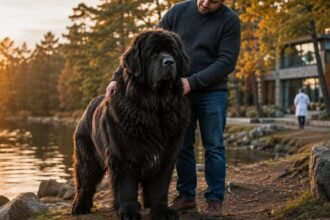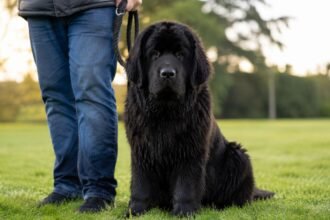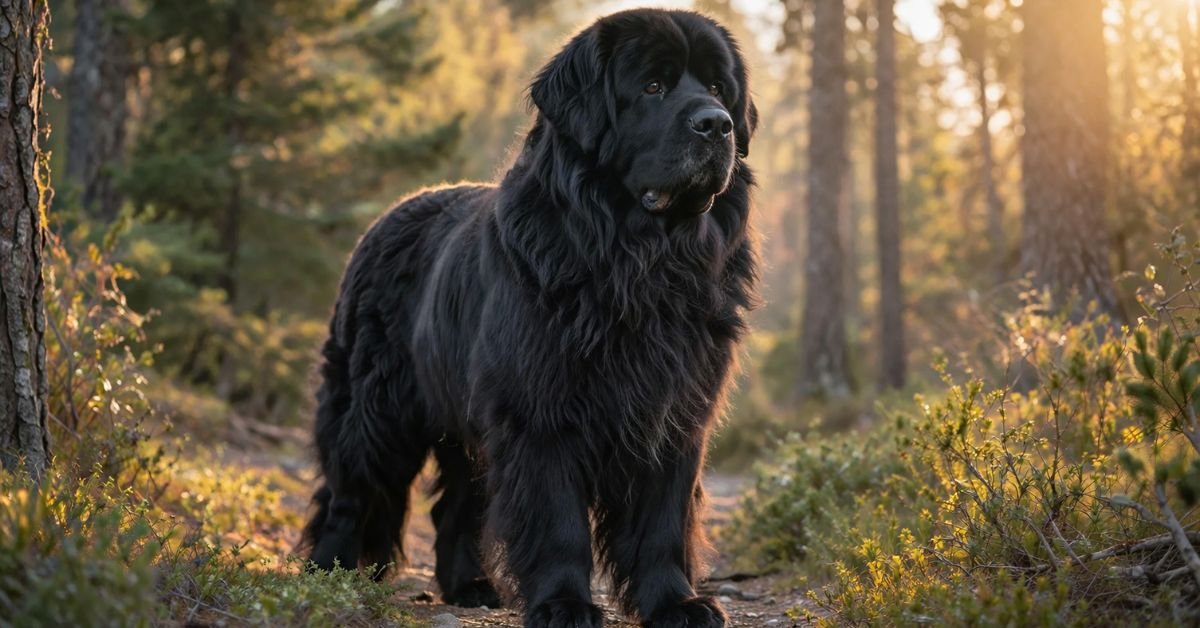
You’ve got 130 pounds of enthusiasm, a coat designed for the North Atlantic, and paws the size of a small frying pan. Welcome to hiking with a Newfoundland.
Newfies are incredible trail companions calm, loyal, and surprisingly agile on uneven terrain. But the same physique that makes them look like a bear on a leash also makes them uniquely vulnerable to heat, joint strain, and trail hazards that wouldn’t even slow down a Labrador.
This guide goes deep. We’re talking Newfie-specific physiology, giant breed hiking gear, and the kind of hard-won knowledge that doesn’t make it into generic dog hiking lists.
Quick Answer:
Newfoundland dogs can absolutely hike but they need special care. Keep temperatures below 60°F (15°C), use a proper giant-breed harness, carry extra water, and always pack an emergency sling. Limit hikes to 4 6 miles max, avoid midday sun, and check their paws and thick coat after every trail.
Section 1: The Heat Factor Why 60°F Might Already Be Too Hot
The Double Coat Problem
Newfoundlands carry a dense, water-resistant double coat built to repel icy Atlantic waves. On the trail, that same coat becomes a thermal trap.
Most dogs begin struggling with heat above 75°F (24°C). For a Newfie on a moderate uphill trail, 60°F (15°C) can already push them into the danger zone especially in direct sun or high humidity.
Newfie heat stroke prevention starts before you leave the trailhead:
- Check the forecast. If the temperature will exceed 60°F during your hike, go early in the morning or skip it.
- Humidity matters as much as temperature. A 55°F day with 90% humidity is far more dangerous than a 65°F day with dry air.
- Always choose shaded, forested trails over exposed ridgelines.
The Wet-Coat Cooling Paradox A Hidden Danger

Here’s something most hiking guides miss entirely: a wet Newfoundland in high humidity can actually overheat faster than a dry one.
When your Newfie jumps in a stream on a muggy day, the water saturates their thick undercoat. In low-humidity conditions, that moisture evaporates and cools the skin — exactly like sweating. But in high humidity, evaporation stalls. The wet coat then acts as insulation, trapping body heat against the skin with no escape route.
The rule: Let your Newfie play in water only when the humidity is low or when you’re near the end of the hike and heading home soon. Don’t let a soaking wet dog continue hiking hard in humid weather.
Signs of Overheating in a Newfoundland
- Heavy, frothy panting (more than normal dog panting)
- Bright red gums
- Glazed or disoriented eyes
- Stumbling or reluctance to move
If you see these signs, stop immediately. Pour cool (not ice cold) water on the paw pads, belly, and groin. Fan them. Get to a vet.
Section 2: Joint Longevity Protecting Those Hips and Elbows on the Trail
The Downhill Problem for Giant Breeds

Newfoundland dogs are genetically predisposed to hip dysplasia and elbow dysplasia. On flat terrain, a healthy Newfie distributes weight well. On downhill slopes, everything changes.
Descending a trail puts 2–3x the normal load on the front elbows and hip joints compared to flat walking. For a 130-pound dog, that’s a significant cumulative stress especially over miles of rocky, uneven descent.
Canine Orthopedics on Trails: Practical Strategies
- Choose loop trails over out-and-back when possible. If you hike up 1,000 feet of elevation, an out-and-back means 1,000 feet down on tired joints. A loop distributes the terrain type.
- Slow your pace on descents. Let your Newfie pick their footing. Don’t let them gallop downhill.
- Use joint supplements strategically. Omega-3s and glucosamine chondroitin, when given consistently, can support joint cartilage over time. Talk to your vet about timing — some studies suggest dosing 30–60 minutes before high-activity events may help acute inflammation response. This is not a substitute for trail-appropriate conditioning.
- Start with shorter hikes. If your Newfie is new to trails, begin with 1–2 mile flat walks before attempting elevation. Newfoundland dog endurance builds gradually, just like in humans.
- Watch for post-hike limping. Any limp lasting more than 24 hours after a hike warrants a vet call.
Section 3: The Newfie First Aid Kit Including the Emergency You Haven’t Thought Of
Standard Canine Trail Kit

Most hiking guides cover the basics. Here’s what’s actually relevant for giant breeds:
- Dog-specific antiseptic wipes (for paw cuts Newfie paws are large but not invincible)
- Elastic cohesive bandage (for wrapping paw injuries)
- Tick key or tick remover tool (because thick fur = finding ticks later)
- Instant cold packs (for acute joint swelling or suspected heat issues)
- Dog-safe pain relief —have your vet prescribe appropriate NSAIDs before the hike, not after
The Emergency You Must Plan For: The 150-Pound Carry Problem
Here is the scenario no one prepares for until it happens: your Newfoundland sprains a leg two miles from the trailhead. You cannot carry 130 150 pounds in your arms. Period.
This is why every Newfie hiker needs an emergency sling or drag harness.
Options worth researching:
- Ruffwear Doubleback Harness designed for giant breeds with reinforced lift points. Can be used as a carry assist with two people.
- DIY Emergency Sling a large tarp or emergency blanket folded lengthwise creates a stretcher-style drag sling for two-person carry on flatter terrain.
- Canine stretcher/drag mat lightweight folded options exist that weigh under a pound and fit in a pack pocket.
The rule: Never hike more than 2 miles from your car with a Newfie unless you’ve thought through the “injured dog” scenario and have a planand ideally, equipment.
Pro tip: Hike with a buddy when taking a Newfie on serious trails. Not just for safety you’ll need the second pair of hands.
Section 4: Water Management It’s More Complex Than Bringing a Bowl
How Much Water Does a Hiking Newfie Need?

The general guideline is 1 ounce of water per pound of body weight per day for dogs at rest. On a moderate hiking day in cool weather, a 130-pound Newfie may need 1–1.5 gallons of water across the hike.
That’s heavy. Distribute the carrying load between packs, or use a collapsible dog water backpack designed for giant breeds.
Offer water every 20–30 minutes on the trail, not just when your dog seems thirsty. Newfies are stoic — they will often not signal thirst until they’re already behind on hydration.
The Leptospirosis Threat vs. Newfies’ Love of Water
Here’s the conflict: Newfoundlands are water dogs. They were literally bred to swim in the North Atlantic. Passing a stream without letting them in is an act against their entire evolutionary history.
However, natural water sources lakes, streams, ponds are common vectors for Leptospirosis, a bacterial infection spread through the urine of infected wildlife. It’s transmissible to both dogs and humans.
Practical strategy:
- Vaccinate against Leptospirosis before hiking season. Talk to your vet it’s a non-core vaccine that’s very relevant for outdoor dogs.
- Allow swimming in fast-moving streams with clear water rather than stagnant ponds.
- After any swim, rinse your dog’s coat with clean water before they lick themselves extensively.
- Carry filtered or bottled water for drinking. Never let your Newfie drink directly from still water sources.
Paw Boots: Protection vs. Overheating
Sharp rocks, hot pavement approaches to trailheads, and salt/de-icing chemicals in shoulder seasons all make paw protection valuable. But boots create a real heat problem for Newfoundlands.
Dogs release significant heat through their paw pads. Boots reduce that heat dissipation. In warm conditions, this can meaningfully contribute to overheating.
The compromise:
- Use boots on hot pavement or in winter salt conditions (brief use)
- Apply paw wax (Musher’s Secret or equivalent) instead of boots on rocky trails in moderate temperatures
- Check pads before and after every hike cuts in thick-padded paws can be easy to miss
Section 5: Post-Hike Recovery Where the Work Isn’t Over
Grooming for Tick Detection in Thick Fur

A Newfoundland’s double coat is extraordinary at hiding ticks. A tick that would be found immediately on a short-haired dog can burrow into a Newfie’s undercoat and stay hidden for days.
Post-hike tick check protocol:
- Start at the head check around eyes, ears (inside the flap), under the chin, and neck folds.
- Work methodically down the body: armpits, chest, groin, between toes, and base of the tail.
- Use a fine-tooth comb or slicker brush to part the topcoat and expose the undercoat.
- Check yourself before you check the dog ticks transfer.
Do this within 2 hours of returning from the trail. Lyme disease transmission risk increases significantly after 24 hours of tick attachment.
Muscle Recovery After a Long Trail
Newfoundland dogs, like athletes, benefit from a cool-down period. After a hike:
- Slow walk for 5–10 minutes before stopping completely abrupt stops can cause blood pooling in tired muscles.
- Offer water in small amounts over 20 minutes (avoid gulping large amounts, especially in deep-chested breeds due to bloat risk).
- Check all four legs for swelling, cuts, or heat. Run your hands along their limbs swelling and heat are easier to feel than to see.
- Allow rest. A post-hike Newfie who sleeps for 12 hours is normal. One who is lethargic or reluctant to eat the next morning warrants attention.
Joint Supplement Timing for Active Hiking Dogs
If your vet has recommended joint supplements for your Newfie, timing matters on hike days. Many practitioners suggest:
- Omega-3 fatty acids (fish oil): Given consistently daily, not just on hike days
- Glucosamine/chondroitin: Daily, long-term these build up in joint tissue over weeks and months
- Anti-inflammatory support on hike day: Ask your vet about whether a vet-approved NSAID on high-exertion days is appropriate for your individual dog
Never add supplements or medications without veterinary guidance especially for giant breeds, where dosing is different.
Trail Etiquette for Giant Dogs: The Courtesy Rules That Matter
A 140-pound dog on a narrow trail changes trail dynamics completely. Trail etiquette for giant dogs isn’t just politeness it’s safety.
- Yield to everyone. Other hikers, cyclists, horses. Step off the trail, ask your Newfie to sit, and let them pass. Some people have a significant fear of large dogs.
- Keep them leashed in mixed-use areas, even if your Newfie is perfectly trained. The issue isn’t behavior, it’s the startled reaction of strangers who see what looks like a small bear approaching.
- Pick up waste. Giant dog, giant consequence. Always.
- Announce yourself on blind turns with a verbal “large dog coming through” it helps nervous hikers prepare.
Conclusion: The Trail Bond of the Gentle Giant
There is something genuinely extraordinary about hiking with a Newfoundland. They move through the backcountry with this ancient, unhurried confidence unbothered by steep terrain, unfazed by streams, completely in their element.
The extra planning, the heavier pack, the early morning starts to avoid the heat it’s all worth it for the moment your Newfie crests a ridge and surveys a valley below, tongue lolling, completely at peace.
Hike smart. Hike safe. And give that giant, drool-soaked face a good scratch from us.
Frequently Asked Questions
Q: How far can a Newfoundland dog hike?
A healthy, conditioned adult Newfie can typically handle 4–6 miles on moderate terrain in cool conditions. Build up to this gradually, and always monitor for signs of fatigue or joint stress. Puppies under 18 months should be kept to short, flat walks their growth plates are still developing.
Q: What is the best hiking harness for Newfies?
Look for harnesses specifically designed for giant breeds with wide chest panels and reinforced lifting handles. The Ruffwear Doubleback and similar giant-breed harnesses offer both trail control and emergency lift capability. Measure your Newfie’s chest girth carefully standard “large” sizing is usually too small.
Q: Can Newfoundland dogs hike in summer?
Very limited summer hiking is possible early morning (before 8 AM), on shaded trails, with temperatures below 60°F and low humidity. In most climates, summer hiking with a Newfie carries significant heat stroke risk. Fall, early spring, and winter (in appropriate conditions) are the ideal Newfie hiking seasons.
Q: Do Newfoundland dogs need paw protection on trails?
Paw wax is preferable to boots for trail use, as boots can impede heat dissipation through the paw pads. Use wax for rocky terrain protection. Reserve boots for hot pavement, ice, or chemical salt exposure, and limit duration.
Q: How do I know if my Newfie is tired on the trail?
Newfoundlands are stoic; they often won’t complain until they’re exhausted. Watch for: pace slowing dramatically, frequent sitting or lying down, panting that won’t settle, and reluctance to move forward. These are signs to stop, water, and rest. If rest doesn’t help within 15 minutes, turn back.