I still remember the first time I unrolled a Pug’s nose wrinkle to clean underneath it and got hit with a smell I can only describe as “wet sock left in a gym bag for a week.” After grooming Pugs professionally for years and living with two of my own, I’ve learned that most pug grooming guides online repeat the same surface-level tips: wipe the face, brush weekly, trim nails without explaining the why or the how that actually keeps these dogs healthy.
This is the guide I wish someone had handed me a decade ago. It’s built on real mistakes, real vet visits, and real trial-and-error with a breed that looks simple to groom but absolutely is not.
Why Pug Grooming Is Trickier Than It Looks
Pug grooming is harder than it looks because the breed combines a deeply folded face, a shedding double coat, and bulging eyes in a single small body. This means routine care must address wrinkle infections, year-round shedding, ear moisture, and eye sensitivity simultaneously not just brushing and bathing like a typical short-haired dog.
Pugs seem low-maintenance because they’re short-haired. That’s the trap.
Their flat face, deep skin folds, and double coat create a perfect storm for problems that long-haired breeds rarely deal with:
- Trapped moisture in wrinkles → yeast and bacterial infections
- A double coat that sheds constantly, not seasonally
- Bulging eyes that are easily irritated during baths
- Tiny ear canals prone to wax buildup and infection
- A stubborn, dramatic personality during nail trims
Get the basics wrong, and you’re not just dealing with a messy dog you’re dealing with vet bills.
The Wrinkle Strategy (This Is the Part Most Guides Get Wrong)

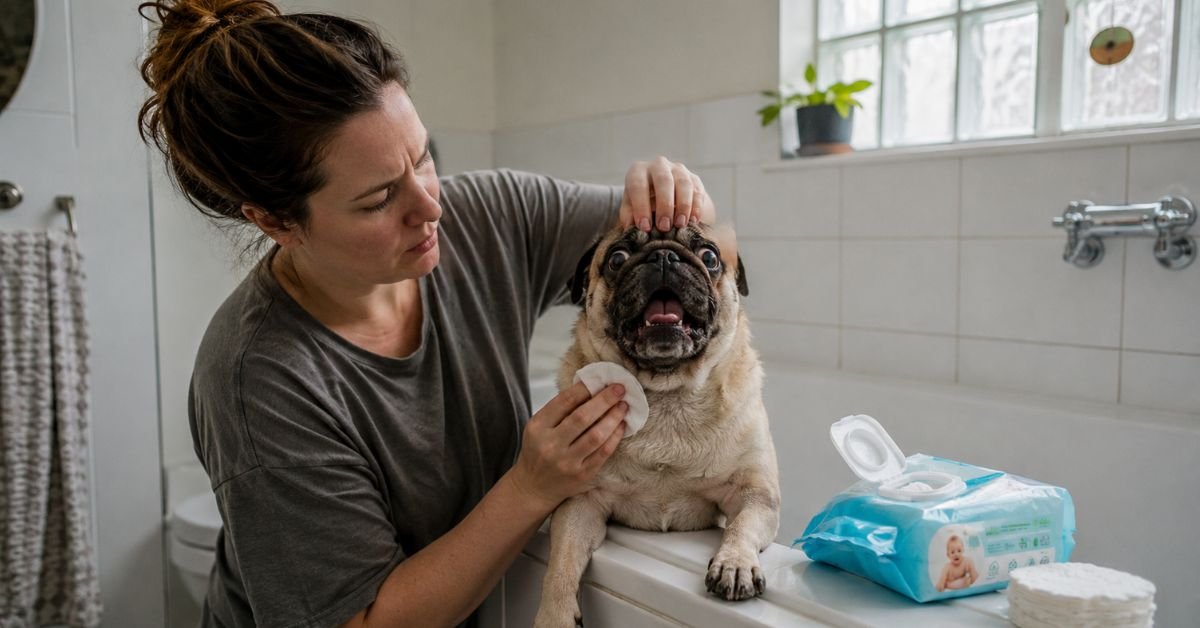
The Pug wrinkle cleaning system has three non-negotiable steps: lift and wipe the fold daily, dry it completely with a cotton round, then apply a thin antifungal barrier balm or coconut oil. Skipping the drying step is the single most common owner mistake, and it’s what triggers yeast dermatitis in folded skin..
What’s actually happening in there
The fold above a Pug’s nose traps moisture, food debris, drool, and dead skin cells. Left unchecked, it turns into a condition groomers and vets call yeast dermatitis red, smelly, sometimes oozing skin that genuinely causes the dog pain.
I learned this the hard way with my first Pug, Bubbles, who developed a wrinkle infection so bad it spread to the surrounding skin before I caught it. The smell is your first warning sign if it smells “off,” it’s already past the early stage.
My actual wrinkle routine
- Clean daily, not weekly. I use a soft, damp cloth or unscented baby wipes (no alcohol, no fragrance).
- Lift the fold gently and wipe inside it don’t just swipe over the top.
- Dry it completely. This is the step everyone skips. I gently pat with a dry cotton round, then let it air for a minute before letting the dog go about their day. A damp wrinkle is a problem waiting to happen.
- Apply a thin layer of barrier balm. Specialized wrinkle balms (or plain organic coconut oil in a pinch) create a light moisture barrier and have natural antifungal properties.
- Check weekly for redness, odor, or stickiness catching irritation early means a balm fixes it; catching it late means a vet visit and medicated cream.
Pro tip: Avoid baby powder or cornstarch in wrinkles. It clumps when wet and can actually make infections worse, despite being recommended on a lot of older grooming sites.
The Double-Coat Shedding Reality (AKA the “Pug Shedding Cyclone”)
Pugs shed year-round because of a dense double coat, not seasonally like single-coated breeds. The fix is a rubber curry brush used daily, a rounded-tooth deshedding tool used weekly, and a high-velocity dryer after every bath blade-style deshedding tools made for thick-coated breeds will irritate a Pug’s short, close-to-skin coat.
If you own a Pug, you already know the phenomenon I call the Pug Shedding Cyclone that moment you vacuum the couch, turn around, and there’s already a fresh layer of hair on it.
Why it’s worse than people expect
Pugs have a double coat: a short, dense undercoat and a coarser topcoat. Unlike single-coated breeds, this means they shed year-round, with intense blowouts during seasonal coat changes (spring and fall).
A lesser-known detail: fawn Pugs and black Pugs shed differently.
- Fawn Pugs shed less visibly on light furniture but tend to have a denser undercoat overall.
- Black Pugs shed just as much, but it shows up on every couch, carpet, and black shirt you own and their coat can look duller faster if de-shedding isn’t done correctly.
Tools that actually work (and the ones that don’t)

Skip the standard slicker brush it mostly moves surface hair around and can irritate short-haired skin.
What actually pulls loose undercoat without damaging the topcoat:
- Rubber curry brush my single most-used tool; it massages while pulling loose fur, and Pugs generally enjoy the sensation
- Deshedding tool with rounded teeth (not blade-style for long coats) used gently and briefly, since Pug coats are short and skin is close to the surface
- Grooming gloves for daily maintenance between full sessions
- High-velocity dryer after bathing this alone removes a shocking amount of loose undercoat before it ever hits your floor
What I avoid: aggressive blade-style deshedding tools made for thick-coated breeds like Huskies. On a Pug’s short, sensitive coat, these can cause micro-irritation and bald patches over time.
Nail Care Drama (Yes, It’s a Real Thing)

Pugs react dramatically to nail trims mostly due to unfamiliarity and dark nails that hide the quick, not actual pain. The practical fix is gradual paw-touch desensitization, switching to a dremel for gentler vibration over clipper pressure, and trimming only one or two nails per short session instead of all eighteen at once.
Pugs are dramatically, theatrically opposed to nail trims. I’ve groomed Huskies who sit calmer for nail clipping than the average Pug.
Why they react so badly
Part of it is genuine Pugs have thick, often dark nails where the quick (blood vessel) is hard to see, making both owners and dogs nervous. Part of it is pure personality; Pugs are notorious for performing distress even when nothing hurts.
What actually works
Desensitize before you ever pick up a clipper.
- Touch their paws daily during calm moments while they’re relaxing on the couch, not during a grooming session
- Reward with a treat every single time, even if you don’t trim anything that day
- Let them hear the dremel running nearby (off their paw) while eating, so the sound stops being scary
Use a dremel over clippers if your Pug tolerates noise better than pressure. Most Pugs find the vibration less alarming than the “snap” of a clipper, and a dremel lets you grind gradually, lowering the risk of hitting the quick.
My real-world trick: trim or grind just one or two nails per session, especially at first. A 10-minute “fight” over all 18 nails creates a lasting negative association. Five short, calm sessions a week beat one dramatic battle.
Trim every 2-3 weeks. If you can hear nails clicking on hardwood, they’re already too long.
Eye and Ear Sensitivity During Bath Time

Protect a Pug’s eyes during baths with a damp washcloth instead of direct spray, and protect ears by loosely placing a cotton ball in the canal before water touches the head. Both areas are structurally vulnerable bulging eyes scratch easily, and tight ear canals trap moisture that leads to infection.
Pugs’ bulging, prominent eyes are gorgeous but genuinely vulnerable. Their eye structure means they’re prone to corneal scratches and irritation, and bath time is a common opportunity for problems if you’re not careful.
Protecting their eyes
- Never spray water directly at the face
- Use a damp washcloth for the face area instead of pouring water
- Choose a tear-free, pH-balanced shampoo formulated for dogs human shampoo or harsh formulas can sting sensitive eyes badly
- If shampoo does get near the eye, flush gently with sterile saline (the kind made for dogs, not human eye drops)
Protecting their ears
Pugs have small, tight ear canals that trap moisture easily, making ear infections common in the breed.
- Place a cotton ball loosely in the outer ear before bathing (remove it right after)
- Tilt the head slightly away from direct water flow
- After the bath, use a vet-approved ear cleaner with a cotton round never a cotton swab inside the canal
- Check weekly for odor, redness, or excessive wax these are early infection signs, not just “normal Pug ear gunk”
A Realistic Weekly Pug Grooming Schedule
Here’s the routine I actually use, mapped out so nothing gets missed:
| Action | Frequency | Tool Required | Danger Sign to Watch For |
| Wipe and dry nose wrinkle | Daily | Soft cloth or unscented wipe + dry cotton round | Odor, stickiness, or redness in the fold |
| Quick coat brush-out | Daily | Rubber curry brush | Bald patches or flaky skin under the coat |
| Ear check and wipe | 2-3x per week | Vet-approved ear cleaner + cotton round | Strong odor, dark discharge, or head shaking |
| Paw handling practice | 2-3x per week | Treats only (no tools yet) | Pulling away or growling at touch |
| Full brush-out + skin check | Weekly | Rubber curry brush + deshedding tool | New redness, lumps, or hair thinning |
| Eye check | Weekly | Damp cloth | Excess tearing, cloudiness, or squinting |
| Full bath | Every 2-4 weeks | Tear-free shampoo + high-velocity dryer | Skin still damp under wrinkles after drying |
| Nail trim or dremel | Every 2-3 weeks | Dremel or guillotine clipper | Audible clicking on hard floors |
Wrap Up: The Short Version
Pug grooming isn’t hard once you know the actual risk points. Focus on these non-negotiables:
- Dry wrinkles completely after every cleaning moisture is the enemy
- Use the right tools for double-coat shedding, not generic brushes
- Desensitize nail handling gradually instead of forcing trims
- Protect eyes and ears specifically during baths, not just “be gentle”
Stick to a consistent routine and you’ll catch problems early instead of discovering them at the vet’s office.
FAQs
How often should I clean my Pug’s wrinkles?
Daily is ideal, especially the nose fold. Skipping more than a couple of days increases the risk of yeast buildup, particularly in humid climates or if your Pug drools a lot.
Why does my Pug shed so much even though they have short hair?
Short hair doesn’t mean less shedding it means less visible hair clumps. Pugs have a dense double coat that sheds year-round, with heavier shedding during seasonal coat changes in spring and fall.
Is coconut oil safe for Pug wrinkles?
Yes, in small amounts. Organic, unrefined coconut oil has natural antifungal properties and works as a light moisture barrier, but it should be applied thinly to clean, fully dry skin never on top of existing irritation without checking with a vet first.
My Pug screams during nail trims even though I’m not hurting them is that normal?
It’s extremely common in the breed. Many Pugs vocalize from stress or unfamiliarity rather than pain. Gradual desensitization and shorter, more frequent trimming sessions usually reduce this over a few weeks.
How do I know if my Pug has a wrinkle infection versus normal dirt?
Normal buildup wipes away easily and doesn’t smell strong. An infection typically comes with a noticeable odor, redness, sticky discharge, or the dog reacting to touch at that point, a vet visit for medicated cream is worth it rather than waiting it out.
If