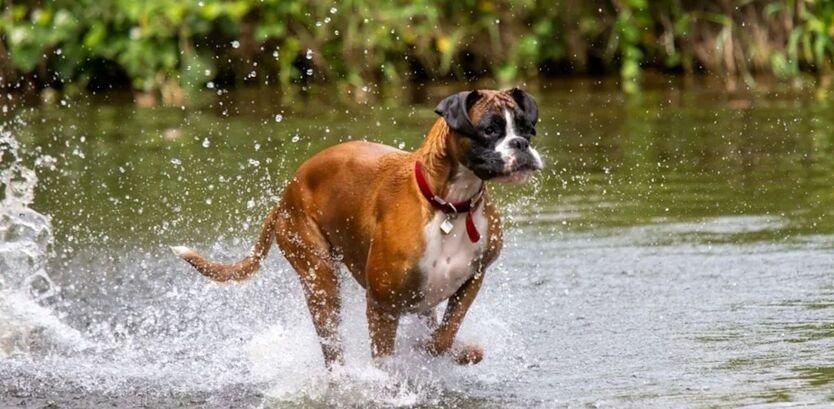
Want to soak in the sun and make a splash with your fur pal? Swimming provides both you and your dog a chance to exercise while cooling off and having fun on a warm day! Whether you’re in the backyard pool, visiting the lake, or playing in the ocean at a dog-friendly beach, learn how to keep your pup safe before taking your dog swimming.
Whilst we may never solve the mystery of why dogs seem to hate bath time, we can shed some light on why some dogs love to swim and how you can help bring out their inner water puppy in a safe way. When it comes to exercising our dogs we immediately think of walking, running or playing with them, but swimming is a fantastic option when it comes to doggy exercise.
It’s a fantastic cardio workout. Just like adding some cardio into our exercise routines is good for us humans, it has similar benefits for your dog too. It helps to burn fat and strengthen their heart and lungs, all very important for keeping your pup healthy.
It’s also low impact. Swimming is non-weight bearing, which means your dog can enjoy strengthening their muscles without putting stress on their joints and tendons. This makes it a great option for older dogs or those who are needing to take things a little easier. It also gets your dog moving in a different way than they would on solid ground, helping to improve their range of motion too.
Despite a swimming style named the doggy paddle, our four-legged friends require training to navigate waters safely. Once your pooch feels comfortable swimming, imagine the joy you both can have at doggie pools, beaches, and on hikes to your favourite swimming holes. If your dog needs to lose some extra pounds or rehabilitate from an injury, this low-impact exercise can prove helpful.
Can Boxer Dogs Swim?
The short answer is yes, Boxers can swim, but they are not natural-born Olympians in the water like a Labrador or a Golden Retriever. Most Boxers have the heart of an adventurer and will happily jump into a lake to chase a toy, but their physical build makes the actual “swimming” part a bit of a challenge.
Boxers have a very unique anatomy. They are often described as “top-heavy” because they have deep, muscular chests and a high center of gravity. When you put a Boxer in the water, their heavy front end tends to tilt downward. This makes it harder for them to keep their nose and mouth above the surface compared to other breeds.
Another factor is their breathing. Boxers are a brachycephalic-leaning breed, meaning they have shorter snouts. When they exert themselves in the water, they can get winded more quickly. Because of this, while they can swim, they usually need a little extra help from you to make sure they stay safe and level.
Boxer Dog Puppies Swimming
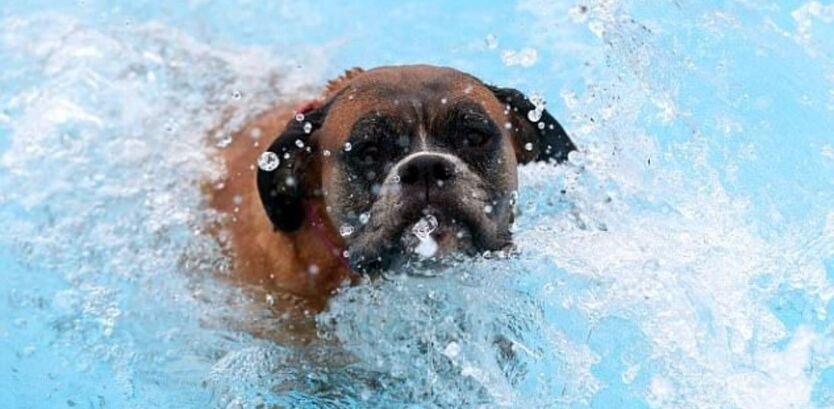
Introducing your Boxer puppy to the water is one of the best things you can do for their future confidence. The “golden window” for water introduction is usually between 10 weeks and 5 months old. At this age, puppies are like little sponges, soaking up new experiences without much fear.
Start very small. You don’t need a massive lake for a puppy’s first lesson. A plastic kiddie pool in the backyard with just an inch or two of lukewarm water is perfect. Let them splash around and realize that water on their paws is actually a fun game. Once they are comfortable, you can slowly increase the water level over a few days.
Always use a life jacket, even for a puppy in shallow water. It builds their confidence because they feel the “lift” immediately. Keep these sessions very short about 5 to 10 minutes max. Puppies tire out much faster than adult dogs, and a tired puppy in the water can lose their technique and start to panic.
Are Boxer Dogs Good Swimmers?
Whether a Boxer is a “good” swimmer depends heavily on their individual personality and how they were trained. In the world of doggy swimming, Boxers are often ranked as “average” or “struggling” swimmers if left to their own devices. They don’t have the webbed feet or the water-resistant coats of true water dogs.
However, a Boxer who has been taught properly and wears a life jacket can be an incredible water companion. Their high energy and play drive mean they will often keep going until they are exhausted. This is why you have to be the coach. You need to watch for signs that they are getting tired, such as their back end sinking lower in the water or their splashing becoming more frantic.
They might not be the fastest swimmers, but they are certainly some of the most enthusiastic! A Boxer will usually try their best to reach a floating toy, showing off that famous “Boxer burn” spirit even in the waves.
Boxer Dog Swimming Ability
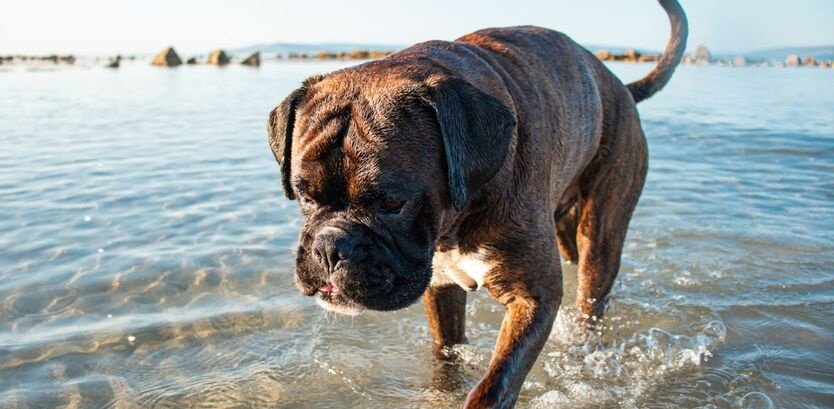
A Boxer’s swimming ability is limited by their “sinker” status. Because they have a high muscle-to-fat ratio, they are less buoyant than many other dogs. Muscle is denser than fat, so a fit, muscular Boxer will naturally sink faster than a fluffier breed.
Their “doggy paddle” also tends to be very front-heavy. You might notice your Boxer splashing wildly with their front paws while their back legs just dangle. This is a very inefficient way to swim and burns energy fast. To help them improve, you can place your hand under their belly or use the handle on their life jacket to level them out.
Once they feel their back legs kick, they often “click” into a more rhythmic, efficient stroke. Their ability is best suited for short bursts of play rather than long-distance endurance swimming. Think of them as sprinters of the water, not marathon runners.
Boxer Dog Swimming Facts
To truly understand your Boxer’s relationship with the water, here are some essential facts that every owner should know:
- Top-Heavy Anatomy: Their deep chests make them naturally prone to tipping forward in the water.
- The “Dry Drowning” Risk: Because of their short snouts, Boxers can accidentally inhale more water than other dogs. Always monitor them for coughing or lethargy after a swim.
- Heat Sensitivity: While swimming is a great way to cool off, Boxers can overheat quickly even in water if they are working too hard in the sun.
- Life Jacket Requirement: For this breed, a life jacket isn’t an “optional” accessory; it is a vital safety tool that compensates for their lack of natural buoyancy.
- Post-Swim Ear Care: Their floppy ears can trap moisture, which leads to infections. Always dry their ears thoroughly after they’ve been in the water.
Conclusion
Swimming with your Boxer is an amazing way to bond and keep your “water-bound dynamo” healthy and happy. By focusing on safety, using the right gear, and having plenty of patience, you can turn your goofy guardian into a confident shoreline superstar!
FAQ
How long can my Boxer stay in the water?
For most Boxers, 10 to 20 minutes is a good session length. Always give them a break on dry land to hydrate and catch their breath. If they start to look tired, end the session on a high note before they get grumpy or exhausted.
Do Boxers need a special kind of life jacket?
Yes! Look for a life jacket that has:
- A sturdy handle on the back (so you can lift them if needed).
- Extra flotation padding under the neck to keep their face above water.
- Bright colors for high visibility in lakes or oceans.
Can my Boxer swim in the ocean?
They can, but you must be very careful with waves and currents. The salt water is also very dehydrating, so make sure they don’t drink the ocean water. Always rinse them off with fresh water afterward to keep their skin from getting itchy.
What should I do if my Boxer is scared of the water?
- Never force them in or throw them. This will create a permanent fear.
- Use high-value treats (like bits of chicken) to lure them to the water’s edge.
- Enter the water yourself first to show them it is safe.
- Keep it fun and let them move at their own pace.