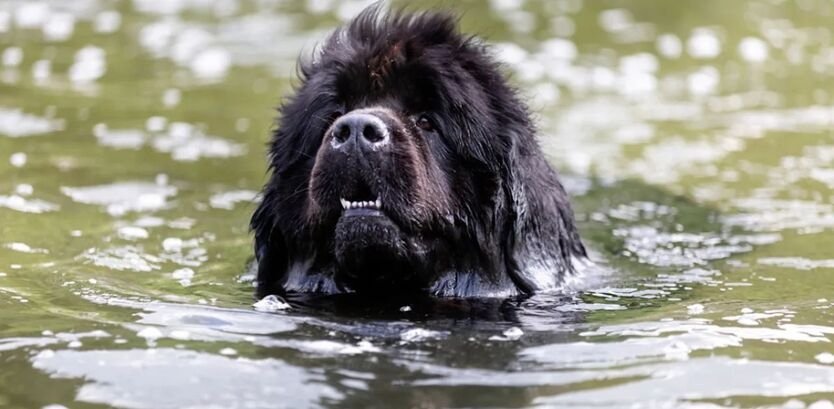
Beneath that massive, ebony-hued coat and powerful, muscular frame beats the heart of a legendary aquatic lifesaver! To master your Newfoundland dog swimming guide, patience is your ultimate power move for channeling their immense strength into steady, majestic glides.
While they are famous for their “gentle giant” personalities and calm devotion, these water-rescue icons possess a natural mastery of the waves, fueled by their unique webbed paws. To keep your brave Newfie safe, a heavy-duty, high-buoyancy life jacket is your essential gear, providing vital lift for their dense, heavy-boned build during deep-water excursions.
Keep a rugged, extra-absorbent towel ready to dry that thick, water-resistant double coat, and you’re ready to transform your noble Newfoundland into the ultimate maritime professional!
Can Newfoundland Dog Swim
Yes, Newfoundland dogs can swim better than almost any other breed on the planet! While many dogs can doggy paddle to stay afloat, the Newfoundland is built like a natural boat. They don’t just swim; they dominate the water with grace and power.
This breed was specifically developed by fishermen in Canada to work in the icy North Atlantic. Their bodies are perfectly tuned for life at sea. From their massive lung capacity to their incredible strength, everything about them screams “lifeguard.”
Historically, these dogs were used to haul fishing nets to shore and even rescue sailors who fell overboard. Their drive to swim is deep in their DNA. It is not just a hobby for them; it is their ancestral calling. This is why you will often see a Newfie “scanning” the water like a professional lifeguard.
Even though they have a natural instinct, it is important to remember that every dog is an individual. Most Newfies will head toward the water the moment they see it, but they still need your guidance to become safe and confident swimmers. You are the captain of their ship, and they look to you for safety and direction.
Newfoundland Dog Puppies Swimming
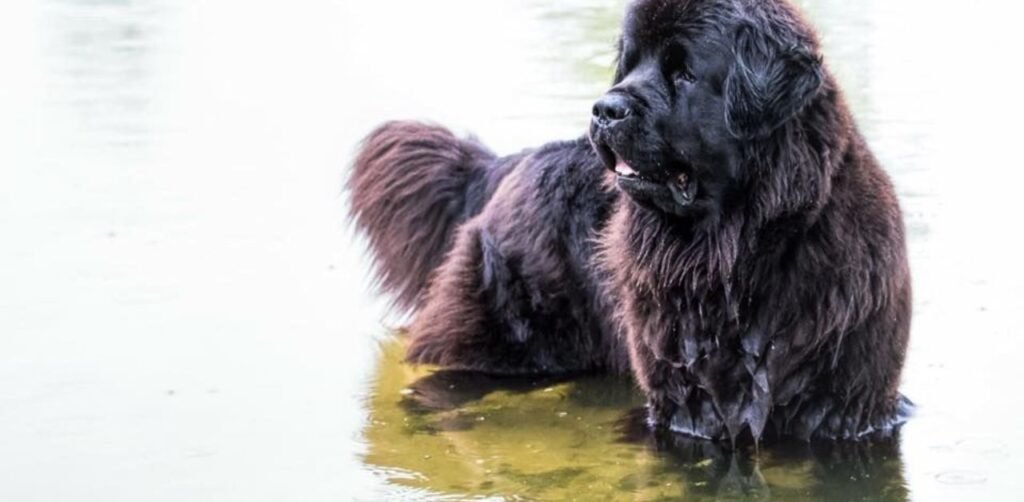
Starting your Newfie pup early is the secret to a lifetime of water fun. You can begin introducing your puppy to very shallow water as early as 8 to 10 weeks old. The goal at this age isn’t long-distance swimming but building “water confidence.”
Always start in a spot where the water only reaches the puppy’s ankles. Let them splash around and explore the sensation of wet paws. Use lots of praise and maybe a few treats to show them that the water is a happy place.
If the water is too cold, your puppy might get a shock. Try to find a warm, shallow pond or even a plastic kiddie pool in the backyard. This helps them get used to the feeling of being wet without the fear of deep water.
Never throw a puppy into the water. This can cause a “panic memory” that might make them afraid of swimming forever. Instead, walk into the water yourself and let them follow you at their own pace.
When they are ready to take those first real swimming strokes, keep the sessions very short. Puppies tire out much faster than adult dogs, and a tired puppy can lose their form and swallow water. Five to ten minutes of splashing is plenty for a young “land bear.”
As they grow, you can slowly increase the depth. By the time they are six months old, most Newfies are ready for short swims in deeper water. Just remember that their bones and joints are still growing, so don’t let them overdo it. Short, happy sessions are better than long, exhausting ones.
Are Newfoundland Dog Good Swimmers
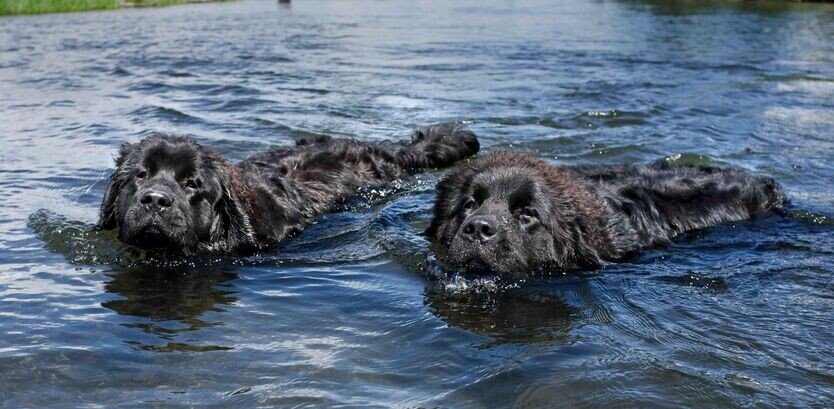
Newfoundlands are not just good swimmers; they are world-class aquatic athletes. In fact, they are often used by search and rescue teams across Europe as professional rescue dogs. They can jump from moving boats or even helicopters to pull several people to safety at once.
One of the coolest things about them is how they swim. Most dogs use a vertical “doggy paddle” that splashes a lot but doesn’t move them very fast. Newfoundlands use a specialized stroke that looks more like a human breaststroke.
They move their legs out to the sides in a wide, sweeping motion. This provides massive power and keeps them stable even in rough waves. This unique movement, combined with their heavy weight and muscle, allows them to tow small boats and lifeboats back to shore with ease.
Because they are so large, they have a lot of momentum. Once they get moving, they are hard to stop. This makes them perfect for swimming against currents or in windy conditions where smaller dogs would struggle.
Their gentle nature also makes them great swimming partners for children. They are patient and steady in the water, often acting as a floating platform for kids to hold onto. However, always supervise any interaction between dogs and children in the water to ensure everyone stays safe.
Newfoundland Dog Swimming Ability
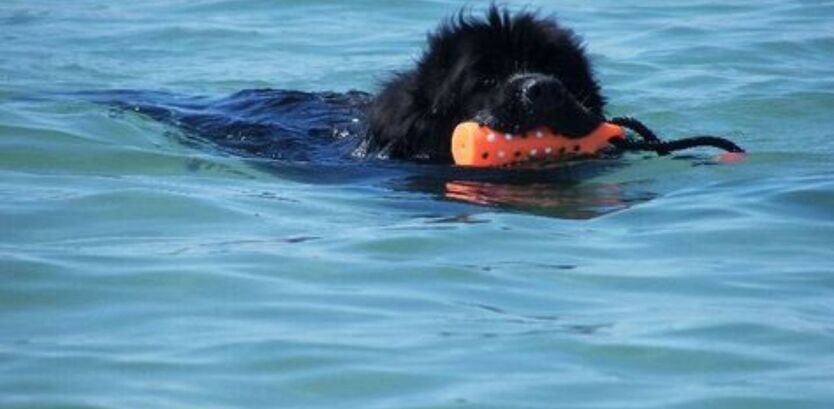
The physical tools of a Newfoundland are what truly set their swimming ability apart. If you look closely at your dog’s paws, you will notice they have “webbed toes.” This extra skin between their digits acts like a set of built-in flippers, pushing more water with every stroke.
Their coat is another superpower. It is a double coat, meaning there is a soft, dense undercoat for warmth and a long, oily outer coat that repels water. This keeps their skin relatively dry and prevents them from getting too cold in freezing lakes or oceans.
Think of their coat like a high-tech wetsuit. It traps a layer of air near the skin, which provides both warmth and buoyancy. This air makes them float much higher in the water than you might expect for such a heavy dog.
Their tails are also very important. It is thick and strong at the base, acting like a rudder on a ship. They use it to steer themselves through the water, making sharp turns to reach a person in distress or a toy you’ve thrown.
Their skeletal structure is also unique. They have a very deep, broad chest which houses large lungs and a powerful heart. This allows them to process oxygen efficiently during long, tiring swims, giving them the stamina of a marathon runner in the water.
Newfoundland Dog Swimming Facts
There are so many amazing things to learn about these water giants. Here are some of the most interesting facts that every Newfie owner should know:
- Natural Lifesavers:
- Newfoundlands have a “rescue instinct.” Many owners find that their dog will try to “save” them by gently grabbing their arm and pulling them toward the shore, even if they are just playing!
- Napoleon’s Hero: Legend has it that a Newfoundland dog once saved Napoleon Bonaparte when he fell overboard into rough seas during his escape from exile.
- Floating Giants: Despite their weight, they are very buoyant. Their thick double coat traps air, which helps them stay high in the water.
- Strong Lungs: They have a massive lung capacity, which allows them to swim for miles without getting winded.
- Cold Water Pros: Because of their oily fur, they are one of the few breeds that can swim in icy water that would be dangerous for other dogs.
- A History of Toil: In the 18th century, they were used to pull heavy lines from ships to the docks so that sailors could tie the ships up safely.
- World Record Holders: They are famous for being able to pull thousands of pounds of weight while swimming.
The Maritime Legend: A History of the Newfoundland at Sea
To truly appreciate a Newfoundland dog swimming guide, you have to look back at where these dogs came from. They are named after the province of Newfoundland in Canada. Life there was incredibly tough for the early settlers. The ocean was freezing, the waves were massive, and the work was dangerous.
Fishermen needed a partner that was strong enough to help with the heavy lifting and brave enough to face the icy Atlantic. Newfoundland was the answer. These dogs weren’t just pets; they were essential crew members.
In the 1800s, it was common to see a Newfie on almost every fishing boat. Their jobs were diverse and difficult. They would leap overboard to retrieve lost fishing gear or floating nets that had broken loose. They carried “hauling lines” from the ship to the shore through the surf so the sailors could pull the boats in safely.
Perhaps most famously, they acted as a living lifebuoy for any sailor who fell into the water. This history is why your dog is so calm in the water today. They aren’t just splashing around; they are performing a task that their ancestors did to survive. When you understand this history, you see that swimming is more than just exercise—it is a connection to their heritage.
The Science of the “Waterproof” Newfie
One of the most amazing Newfoundland dog swimming facts is how their body reacts to being wet. If you have ever tried to bathe a Newfie, you know it takes forever just to get their skin wet! This is because of their highly specialized double coat.
The outer coat is long, coarse, and very oily. This oil acts like a natural shield, causing water to bead up and roll off rather than soaking in. Beneath that is the undercoat, which is so dense that it traps a layer of air against the skin.
This air serves two vital purposes. First, it provides insulation. It keeps the dog’s body heat from escaping into the cold water. This is why they can swim in frozen lakes without shivering. Second, it provides buoyancy. That trapped air acts like thousands of tiny bubbles in a life jacket. It helps a 150-pound dog float with very little effort.
Because their coat is so heavy when wet, it also provides a massive resistance workout. Swimming for a Newfoundland is like a human doing a weighted workout at the gym. This builds incredible muscle tone and cardiovascular health, which is why swimming is often recommended as the best exercise for this breed.
Essential Gear for Your Newfie’s Swim
To make the most of your Newfoundland dog swimming guide, you need the right tools. Because of their size, standard pet store items often won’t fit. You need heavy-duty gear designed for giant breeds.
The High-Buoyancy Life Jacket
Even though they are great swimmers, a life jacket is a must. It helps them stay level in the water and saves them energy during long sessions. Look for one with multiple heavy-duty handles so you can grab them if needed. This is especially important if you are on a boat.
The Long Training Lead
When you are first teaching your dog to stay near you or to practice “returns,” a long, waterproof lead is helpful. It gives them freedom to move but keeps you in control. Make sure the lead is made of a material that won’t get heavy or tangled when wet.
Specialized Towels and
A wet Newfie is like a giant sponge. A regular towel won’t do much. Invest in several “shammy” style towels that can soak up gallons of water. Many owners also use a high-velocity dog dryer to get the moisture out of the deep undercoat to prevent skin infections.
Water-Safe Toys
Not all toys float well under the weight of a Newfie’s mouth. Look for large, bright bumpers or floating balls made of durable foam. These are easier for the dog to see and grab without swallowing too much water.
Safety First: Protecting Your Water Giant
Swimming is fun, but it comes with risks. As a Newfie owner, you need to be aware of a few specific safety concerns to keep your “land bear” happy and healthy.
Watch for Exhaustion Newfoundlands are so dedicated that they might not stop even when they are tired. Watch for their tail dropping low or their head tilting back. If they start splashing more than usual or their movements look sluggish, it is time to come in and rest.
Ear Care Those beautiful floppy ears can trap water, leading to painful ear infections. Always dry the inside of their ears gently after every swim. You can use a vet-approved ear cleaner to help dry out any remaining moisture and keep the bacteria away.
Temperature Regulation While they love the cold, they can struggle in very hot water. If the sun is beating down and the water is lukewarm, they can overheat quickly because of their thick black fur. Try to swim during the cooler parts of the morning or evening during the summer months.
Fresh Water Availability Always bring a bowl and fresh water. Dogs will often try to drink the lake or ocean water, which can make them very sick. Saltwater can cause dehydration, and lake water can contain parasites. Encouraging them to drink fresh water before and after their swim helps keep them safe.
Advanced Water Rescue Training Techniques
If your dog is already a confident swimmer, you might want to try some advanced activities. This is where the “professional” part of the Newfoundland dog swimming guide comes in. Training for water rescue is a great way to bond with your gentle giant.
The “Take a Line” Exercise
This is a classic Newfie skill. You start on the shore and give your dog a thick, floating rope. Have a friend stand about 10 feet away in shallow water and call the dog. When the dog reaches the friend, they take the rope and give the dog a treat. Over time, you increase the distance until they can swim long distances with a line in their mouth.
The “Life Ring” Retrieval
Newfies love to fetch, but fetching a life ring is different. Instead of just bringing it back to you, you can teach them to take the ring to a person who is splashing in the water. This mimics a real-life rescue and gives the dog a huge sense of accomplishment.
The Passive Town
This is the most famous Newfie move. You float on your back and stay still. Your dog swims up to you, and you gently grab the handle on their life jacket or harness. The dog then instinctively turns around and swims back to shore, pulling you along. It is an incredible feeling to be towed by such a powerful animal.
Post-Swim Care: The “Wet Bear” Protocol
A big part of a Newfoundland dog swimming guide is what happens after the swim. A wet Newfoundland can bring a lot of water into your car and home!
First, you must give them a thorough rinse. Even if the lake looks clean, there can be algae, bacteria, or salt that stays in their thick fur. If you don’t rinse it out, it can cause “hot spots.” These are painful skin infections that happen when moisture gets trapped against the skin for too long.
After the rinse, use your high-absorbent towels. You will likely need three or four large towels for one dog. Squeeze the water out of the fur rather than rubbing it, as rubbing can cause tangles and “mats” in their long feathers.
Finally, if you can, use a high-velocity dog dryer. These aren’t like human hair dryers; they don’t use high heat. Instead, they use a powerful blast of air to “push” the water out of the undercoat. This ensures your dog is dry all the way to the skin, keeping them smelling fresh and feeling comfortable.
Conclusion
Newfoundland is truly the king of the water. With their webbed paws, waterproof coats, and hearts of gold, they are the perfect lakeside companions. By starting them young, using the right gear, and following safety rules, you can enjoy years of aquatic adventures together.
Whether they are saving a “drowning” toy or just cooling off on a hot summer day, watching a Newfie swim is a majestic sight. They are a living piece of maritime history, and every swim is a chance for them to express their true nature. So grab a towel, put on your water shoes, and head to the nearest beach with your gentle giant!
Frequently Asked Questions
How long can a Newfoundland dog swim?
Most healthy adult Newfoundlands can swim for 30 to 60 minutes without a break. However, this depends on the water temperature and how fit they are. Always watch for signs of tiredness, like their back end sinking lower in the water.
Do Newfoundlands get cold in the water?
Rarely! Their oily double coat is designed to keep them warm in freezing temperatures. In fact, they usually enjoy cold water more than warm water because they overheat easily on land.
Why does my Newfoundland try to pull me to shore?
That is their natural rescue instinct! They see you in the water and think you might need help. It is a sign of their deep love and protection for their family. Even if you are a great swimmer, they feel it is their duty to keep you safe.
Is swimming good for Newfies with joint pain?
- Yes! Swimming is a low-impact exercise that is perfect for giant breeds.
- It supports their weight so their joints don’t have to carry the load.
- It helps build muscle around the hips and elbows to keep them stable.
- Always check with your vet before starting a swimming routine if your dog has been diagnosed with arthritis or dysplasia.
What should I do if my dog is afraid of the water?
- Never force or throw them in.
- Using a “swimming buddy”, another dog who loves water can show them it’s safe.
- Use high-value treats and favorite toys near the water’s edge to build confidence.
- Be patient, it might take weeks for a shy dog to feel brave, and that’s okay!
Can Newfoundlands swim in the ocean?
Yes, they were originally ocean dogs! However, salt water requires more rinsing afterward, and you must be very careful about strong tides and currents that could pull even a strong dog out to sea.
How do I dry Newfoundland properly?
The best way is a combination of super-absorbent towels and a high-velocity dryer. You must get the moisture out of the undercoat to prevent skin issues. Expect the process to take at least 30 to 45 minutes for a full-grown dog.