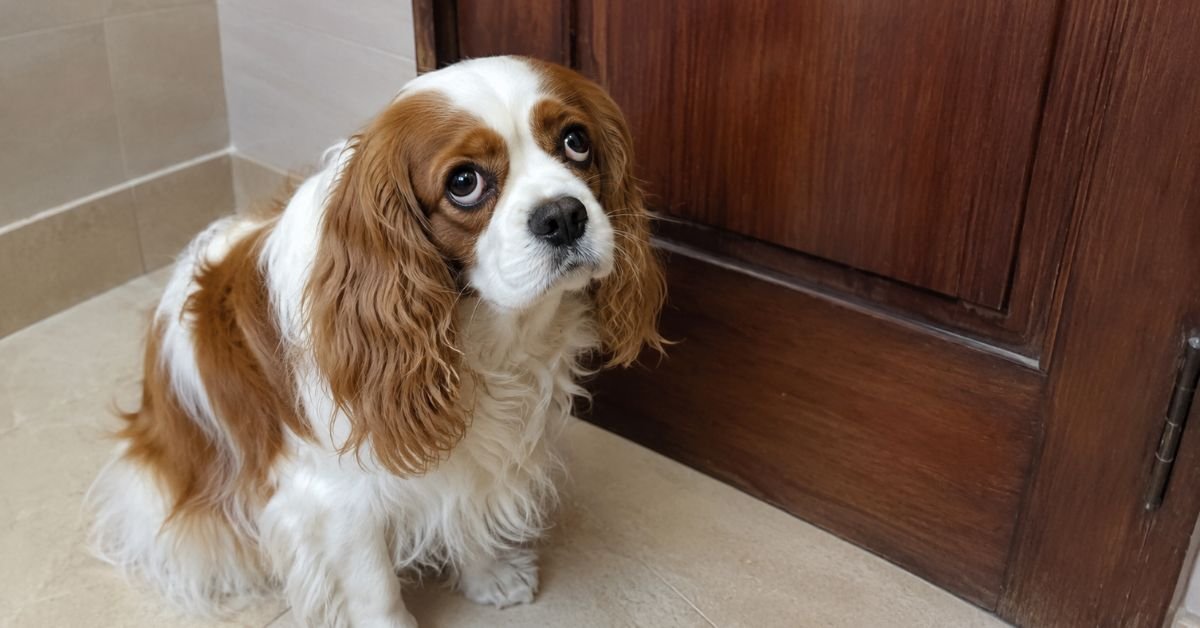
There’s a particular kind of love that comes with owning a Cavalier King Charles Spaniel. It’s the love you feel when you close the bathroom door and hear a small, offended sigh on the other side.
If you’re here, you already know that cavalier spaniel behavior problems rarely look like “bad behavior” in the traditional sense. They look like heartbreak wearing a velvet coat.
I’ve spent decades around these dogs, first as a breeder, then as a behaviorist fielding panicked calls from owners who swear their sweet Cavalier has “changed overnight.” Almost every time, there’s a reason. And almost every time, it’s fixable.
So grab your coffee. Let’s talk honestly about the quirks nobody puts in the puppy brochure.
Why Cavaliers Are So Emotionally “Extra”
Cavaliers were bred for one job: companionship. Not herding, not guarding, not hunting. Just being near you.
That genetic wiring is beautiful. It’s also the root of almost every behavioral challenge you’ll encounter with this breed.
They weren’t built to be independent. When modern life asks them to be, things get complicated.
The “Velcro” Trap & Severe Separation Anxiety

Cavalier King Charles Spaniel separation anxiety is a severe behavioral problem characterized by hyper-attachment to owners, resulting in distress behaviors like non-stop barking, destructive chewing, and indoor elimination within minutes of being left alone. It’s one of the most common and most misunderstood issues in the breed.
Here’s something I didn’t see coming as much a decade ago: “WFH residue.”
Millions of Cavaliers spent 2020 through 2023 with owners home 24/7. Many of these dogs never learned that alone-time is normal, safe, and temporary.
Now owners are back in offices, back at coffee shops, back at gyms. And their Cavaliers are unraveling.
This isn’t drama. True separation anxiety in Cavaliers can include:
- Panting and drooling before you’ve even grabbed your keys
- Destructive scratching at doors
- Non-stop barking or howling within minutes of your exit
- Loss of house-training entirely when left alone
The Step-by-Step Fix: Departure Desensitization
You cannot love your way out of separation anxiety. You have to train your way out, gently.
Week 1: Do your “leaving cues” (grab keys, put on shoes, touch the doorknob) without ever actually leaving. Repeat five to ten times a day, in random order, so your dog can’t predict the sequence and start pre-panicking the moment you pick up your keys. You’ll know you’re ready to move on when these cues no longer trigger pacing, panting, or following you room to room.
Week 2: Step outside the door for 3 seconds. Come back in before any distress starts, and resist the urge to make a big fuss when you walk back in. Gradually stretch to 30 seconds, adding only a few extra seconds at a time rather than jumping straight to minutes. If you notice whining or scratching at any point, that’s a sign to shrink the duration back down, not push through it.
Week 3: Extend absences in small increments 2 minutes, then 5, then 10 always returning calmly, never with a big emotional reunion. Vary the length unpredictably (sometimes 3 minutes, sometimes 7) so your dog learns to relax regardless of how long you’ll actually be gone. This is also the stage to start leaving through different doors or exits, since some Cavaliers fixate anxiety on one specific departure point.
Week 4 onward: Build toward real absences, pairing departures with a long-lasting frozen treat toy that only appears when you leave. Start layering in actual errands a quick 15-minute grocery run, then a 45-minute one while keeping the frozen toy ritual consistent every single time. Over several weeks, most Cavaliers begin to associate your departure with a rewarding, low-stress routine instead of panic, though dogs with severe anxiety may need a certified behaviorist’s guidance alongside this framework.
The golden rule: never push to the next stage until your dog is fully relaxed at the current one. Rushing this is the number one reason owners fail.
Submissive & Excitement Urination: Why “Just Potty Train Harder” Doesn’t Work

Understanding this distinction changes everything about how you respond.
If your Cavalier piddles when guests arrive, when you come home, or when you raise your voice slightly, this is not a house-training issue.
It’s an involuntary emotional response tied to appeasement instincts. Scolding it only confirms to your dog that greetings are dangerous, which often makes the leaking worse.
What actually helps:
- Greet your dog calmly, low energy, no direct eye contact at first
- Ask guests to ignore your dog for the first 60 seconds in the house
- Take your dog outside immediately before excitement-triggering moments (arrivals, playtime)
- Never punish an accident caused by excitement or submission it teaches fear, not control
especially once separation anxiety and reactivity (below) are addressed too. They’re more connected than most owners realize.
The Unexpected “Sassy” Side: Resource Guarding & Demand Barking

Here’s the part that surprises new Cavalier owners the most: these dogs can absolutely be spoiled brats.
Their expressive eyes make it incredibly easy to give in. One sharp bark at dinnertime, you slip them a piece of chicken, and congratulations you’ve just trained a demand barker.
Resource guarding (growling over toys, food bowls, or a favorite spot on the couch) usually isn’t aggression in the “dangerous breed” sense. It’s anxiety about losing something they’ve bonded to intensely, layered on top of learned reinforcement.
Practical resets:
| Behavior | What NOT to Do | What Works |
| Barking at meal times | Feeding immediately to quiet them | Wait for 3 seconds of silence before feeding |
| Growling over toys | Grabbing the toy away | Trading for a higher-value treat, then returning toy later |
| Jumping/pawing for attention | Petting to “calm them down” | Ignoring until four paws are on the floor, then rewarding calm |
Consistency here matters more than intensity. Cavaliers respond beautifully to gentle boundaries they just need someone willing to actually hold them.
Fear-Based Reactivity: When Gentle Flips Into Guarded
Cavaliers are famously friendly, which makes it jarring when one suddenly barks or lunges at a big dog, a skateboard, or a thunderstorm.
This isn’t a personality flaw. It’s a fear response from a breed with a low threshold for overwhelming stimuli and often limited early socialization.
Building confidence, not just compliance:
- Expose your dog to triggers at a distance where they notice but don’t react, then reward calm
- Slowly decrease distance over many sessions, never rushing proximity
- Avoid flooding (forcing close contact “to get it over with”) it almost always backfires
- Let your dog set the pace; confidence can’t be forced, only built
A relaxed, curious dog learns faster than a stressed one. Patience is the entire method.
The Neurological Link Nobody Talks About Enough: Syringomyelia

This is the section I wish every Cavalier owner read before assuming “bad behavior.”
Syringomyelia (SM) is a condition where fluid-filled cavities form in the spinal cord, common in Cavaliers due to a skull shape that doesn’t fully accommodate the brain. It causes significant, often invisible pain.
Here’s why it matters for behavior: dogs in chronic pain don’t always whimper or limp. Many express it through:
- Sudden aggression or snapping when touched near the head, neck, or shoulders
- Excessive scratching at the air near the ear or neck without contact (“phantom scratching”)
- Reluctance to jump, be picked up, or climb stairs
- Unexplained restlessness, especially at night
If your sweet, easygoing Cavalier suddenly becomes snappy, irritable, or resistant to handling please see a vet before assuming it’s a training problem.
By 2026, veterinary neurologists increasingly recommend MRI screening for at-risk lines, along with early pain management protocols (gabapentin, anti-inflammatories, and posture-supportive harnesses) that dramatically improve quality of life and behavior simultaneously.
Behavior and biology are never fully separate in this breed. Ruling out pain first isn’t optional it’s responsible ownership.
A Real-World Daily Framework (Without Encouraging Dependency)
Structure is the antidote to anxiety. Here’s a simple daily rhythm that meets emotional needs without reinforcing hyper-attachment.
| Time | Activity | Purpose |
| Morning | 15-20 min walk before you get busy | Burns energy, prevents restlessness |
| Mid-morning | Independent chew/puzzle toy time (in a different room) | Builds tolerance for alone-time |
| Midday | Short calm-greeting practice if home | Reinforces low-key arrivals/departures |
| Afternoon | Training game (5-10 mins) — sit, stay, recall | Confidence + mental stimulation |
| Evening | Cuddle time, but on a schedule, not on-demand | Affection without reinforcing constant contact |
| Before bed | Settle command on their own bed, not yours | Prevents nighttime separation dependency |
Notice this isn’t about withholding love. It’s about teaching your Cavalier that both closeness and independence are safe.
Loving Your Cavalier, Imperfections and All
Here’s the truth nobody tells you at the breeder’s or in the pet store: the very traits that make Cavaliers occasionally maddening are the same traits that make them extraordinary companions.
The clinginess is devotion. The sensitivity is empathy. The sass is personality finally feeling safe enough to show itself.
Understanding why your Cavalier behaves the way they do doesn’t just solve problems. It deepens the relationship, because you start responding to the dog in front of you instead of the frustration in the moment.
They’re not broken. They’re just deeply, unapologetically feeling creatures who happen to have four legs and unbearably soulful eyes.
Frequently Asked Questions
Can you leave a Cavalier alone for 4 hours?
Yes, most adult Cavaliers can comfortably handle 4 hours alone once properly conditioned. Puppies and dogs with existing separation anxiety need gradual training first, starting with much shorter absences.
Why does my Cavalier suddenly bark at night?
Sudden nighttime barking can stem from anxiety, hearing something outside, or especially in dogs over age 4 discomfort from conditions like syringomyelia. If it’s a new pattern, rule out pain before assuming it’s behavioral.
How do I know if my Cavalier’s behavior is actually caused by pain?
Watch for sudden personality shifts: irritability when touched, reluctance to jump or climb, phantom air-scratching near the neck, or aggression that seems out of character. Any abrupt behavioral change warrants a vet visit before behavioral training.
Is resource guarding a sign my Cavalier is aggressive?
Not typically. In Cavaliers, it’s usually anxiety-driven and reinforced by well-meaning owners giving in. Consistent trading exercises usually resolve it without needing to label the dog as aggressive.
Do Cavaliers grow out of separation anxiety?
Some mild clinginess softens with age and confidence-building, but true separation anxiety rarely resolves on its own. It typically requires structured counter-conditioning to improve.