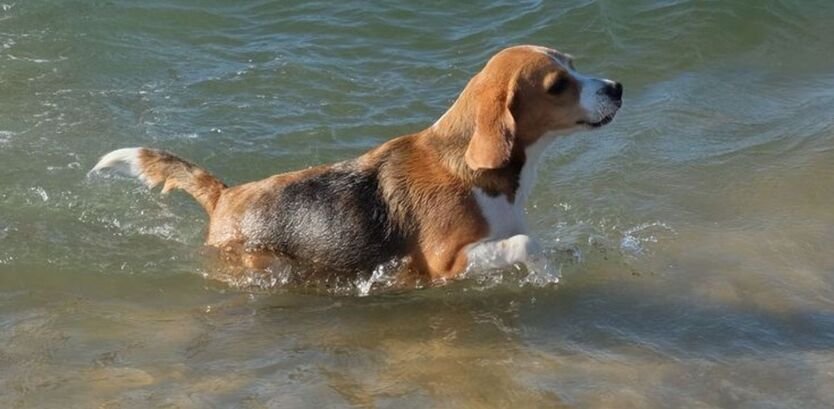
Dogs have so many instinctual behaviours that you may wonder, can all dogs swim? While certain dogs gravitate to water or will swim if coaxed into a pool or lake, others may sink like a stone.
Still, just as you can teach a dog to sit or stay, you can usually teach a dog to swim. This step-by-step process will show you how to handle your scent-driven explorer.
Even if your Beagle swims around like a fish, the breed will never be known for its love of water. They are by no means natural water dogs. They prefer to run around out in the open and through forests rather than wade in the water.
If they can swim, it does not necessarily mean they love it. Beagles can learn how to swim and learn to do it well, but they are certainly not built like Labradors.
Swimming can be a dangerous activity for unaccustomed dogs. It should only be done under close supervision and with the assistance of safety equipment such as a life vest.
Beneath that compact, sturdy frame and legendary nose beats the heart of an adventurous explorer. To master your beagle dog swimming guide, consistency is your ultimate power move. You want to turn those paddle instincts into total aquatic confidence.
Can beagle dog swim
The short answer is yes, Beagles can swim. However, they are not born with an automatic “on” switch for the water. Unlike some breeds that jump into a lake the second they see it, Beagles usually need an invitation.
They are physically capable of performing the doggy paddle. Their legs are strong and their bodies are athletic. But because they were bred to hunt on land, their instincts tell them to keep their paws on solid ground.
If you put a Beagle in water, they will naturally start to paddle their feet. This is a survival instinct. But there is a big difference between swimming to stay afloat and swimming because you enjoy it.
Most Beagles can be taught to be competent swimmers. It takes time, patience, and a lot of positive reinforcement. You cannot just toss them in and expect them to be happy.
Their heavy bones and deep chests can sometimes make it harder for them to stay level in the water. This is why a Beagle needs more help than a typical water retriever might.
Furthermore, Beagles have a very high center of gravity. This means they can tip forward easily if they get excited. When you are teaching them, you have to watch their balance.
If they feel like they are tipping, they might panic. A calm Beagle is a safe Beagle. By keeping the introduction slow, you ensure they learn to balance their weight while moving their legs.
Beagle dog puppies swimming
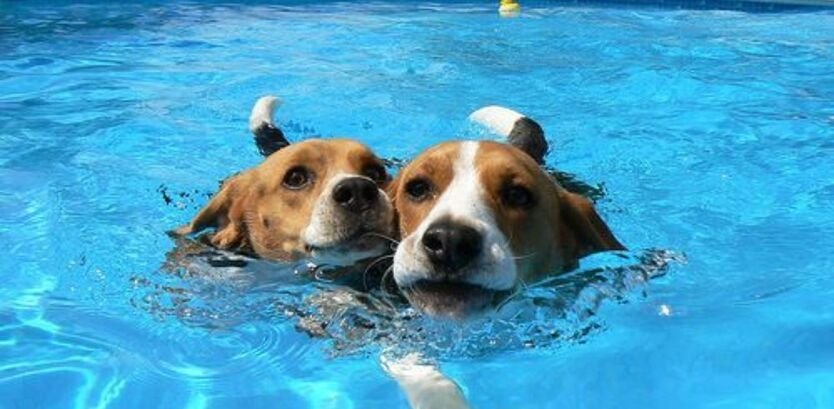
You can really start at any point in your dog’s life if you want to, but experts recommend beginning when your dog is between 6 months and 2 years old.
This is when dogs are developing physically and mentally. It is the prime time for learning new skills and building a foundation of confidence.
Beagle dog puppies swimming for the first time should be introduced to water very slowly. You should start in a shallow area where they can still feel the ground under their paws.
Exposure to swimming at a young age gives their pups the confidence to try other things. Owners often notice that puppies who learn to swim become better at jumping into cars or climbing stairs.
If you want to teach your older dog to swim, do not be afraid to try. They are kind of set in their ways, so it makes it a little more difficult, but it is not impossible.
Old dogs might be more skeptical of the splashing and the wet fur. You will need to move even slower with an adult Beagle to make sure they feel safe.
Always keep the sessions short for puppies. They tire out very quickly and can get cold faster than adult dogs. Five to ten minutes is plenty for a puppy’s first few visits to the water.
Make sure the puppy associates water with fun. Bring their favorite squeaky toy or a handful of small treats. If they only associate water with being cold or scared, they will never want to go back in.
Are beagle dog good swimmers
When people ask, are beagle dogs good swimmers, the answer depends on your definition of “good.” They are not Olympic athletes in the pool, but they are determined.
Beagles are built for endurance. They can walk for miles following a scent trail. This stamina can help them in the water once they get over the initial shock of being wet.
However, they lack the “webbed feet” that many water breeds have. They also have a coat that absorbs water rather than repelling it. This makes them heavier once they are submerged.
They are also very easily distracted. A Beagle might be swimming along just fine until they catch a scent of something on the far bank. They might try to change direction suddenly, which can lead to splashing and panic.
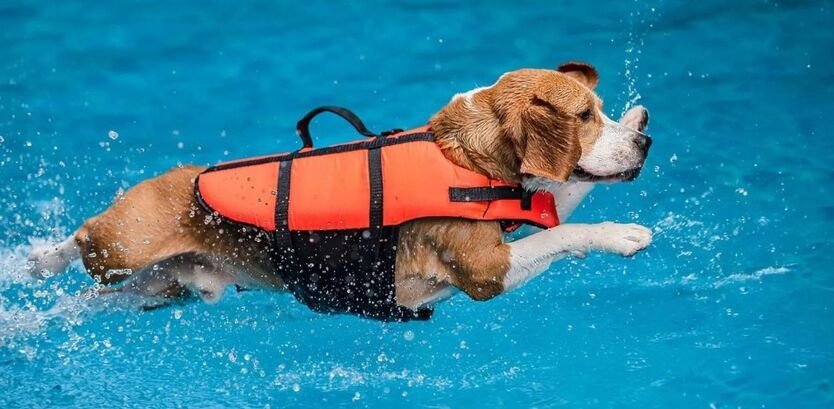
To make them good swimmers, you have to provide the right gear. A high-buoyancy life jacket is your essential gear for every mission. It keeps their heavy back ends from sinking.
With a life jacket, a Beagle goes from being a struggling paddler to a confident “water scout.” It gives them the lift they need to focus on moving forward instead of just staying up.
Another factor is their motivation. Some dogs swim for the sake of swimming. A Beagle usually swims because they are following you or chasing a toy. If there is no “mission,” they might not see the point.
Beagle dog swimming ability
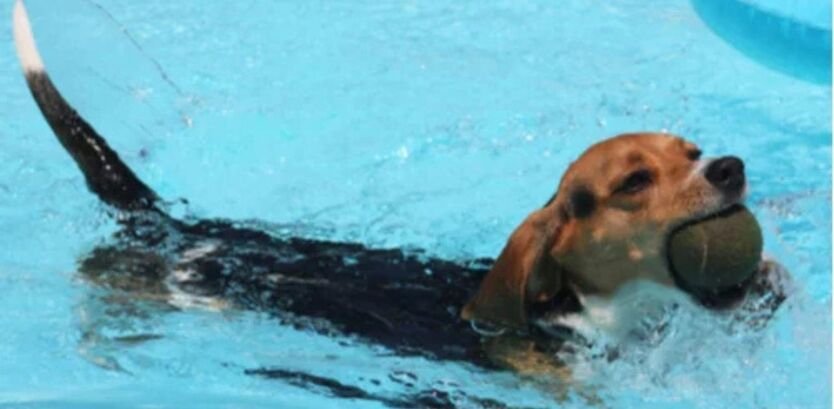
The beagle dog swimming ability is mostly limited by their physical shape. They have a sturdy, compact frame. This makes them great for running through brush but a bit “front-heavy” in the water.
When a Beagle swims, they tend to keep their head very high and their rear end low. This creates a lot of drag. It means they have to work twice as hard as a dog with a more balanced swimming posture.
They also have long, floppy ears. These ears can trap water easily. If water gets deep inside the ear canal, it can lead to infections or discomfort, which might make the dog hate swimming.
Despite these challenges, their athletic nature is a plus. They have a “never give up” attitude. If they see a reason to swim like a toy or their favorite person they will try their hardest to get there.
Their ability is also affected by the temperature of the water. Since they do not have a thick layer of fat or a waterproof coat, they can get chilled easily. Always check the water temperature before letting them in.
You should also look at their tails. Beagles use their tails like a rudder. If they are wagging or moving their tail, it helps them steer. If the tail is tucked, they are scared and their swimming ability will drop.
Beagle dog swimming facts
Understanding the unique traits of this breed will help you keep them safe. Here are some important beagle dog swimming facts that every owner should know.
Beagles are scent-hounds first. This means if they smell a duck or a fish, they might ignore your commands. Always keep them on a long lead or in a fenced area when near water.
They are prone to “dry drowning” if they inhale too much water while splashing. This is why you should always monitor their breathing after a swim session.
Their ears are a major concern. You must dry their ears thoroughly after every single swim. Use a soft towel or a vet-approved ear cleaner to prevent moisture from sitting in the canal.
Beagles can be stubborn. If they decide they do not like the pool today, do not force them. Forcing a Beagle into the water can ruin their confidence for a long time.
They are very food-motivated. If you want to improve their swimming, use high-value treats. A piece of chicken can be a great motivator to get them to move those paws in the water.
Beagles can also be prone to “limber tail.” This is a condition where the tail becomes painful and hangs limp after swimming in cold water or overexertion. It usually heals with rest, but it shows how much they use their tails.
Essential Gear for Your Beagle
Before you head to the lake, you need a few items. These will make the experience better for both you and your dog.
- A high-quality life jacket: Look for one with a handle on the back so you can lift them out easily.
- A heavy-duty drying towel: Beagles have thick coats that hold onto water.
- Fresh water and a bowl: Never let your dog drink pool water or lake water.
- Floating toys: Use toys that stay on the surface so your dog doesn’t have to submerge their head.
- Ear cleaning solution: To help dry out the ear canal after the swim.
- A long training leash: This allows them to swim out a bit while you still have control.
Steps to Teach Your Beagle to Swim
The process of teaching a Beagle is all about building layers of success. Start in your backyard with a very small plastic pool if you have one. This helps them get used to the feeling of wet paws.
Next, move to a quiet beach or a pool with a ramp. Avoid places with loud noises or big waves for the first few sessions. Beagles can be sensitive to loud splashes.
Enter the water first. Your Beagle trusts you more than anyone else. If they see you standing in the water and having a good time, they will be much more likely to follow.
Support their belly with your arm. This gives them the feeling of being “weightless” without the fear of sinking. Encourage them to move all four legs, not just the front ones.
Keep the first few sessions under ten minutes. Even if they seem to be doing well, their muscles are working in a new way. You want them to finish the session feeling strong, not exhausted.
Safety Tips for Different Environments
Swimming in a pool is very different from swimming in a lake or the ocean. In a pool, the main concern is the chemicals and the exit points. Make sure your Beagle knows where the steps are.
In a lake, the biggest risks are underwater plants and sudden drops in depth. Always check the area yourself before letting your dog in. Stagnant water can also contain blue-green algae, which is toxic.
The ocean presents the challenge of waves and salt. Waves can easily knock a small Beagle over. Saltwater can also make them very thirsty, so you must have plenty of fresh water on hand.
Always keep an eye on the weather. If there is a chance of thunder, get out of the water. Dogs can sense changes in air pressure and might become anxious before the storm even arrives.
Caring for Your Beagle After the Swim
The work doesn’t end when your dog gets out of the water. A good post-swim routine is vital for their health. Start with a thorough rinse to get rid of salt, sand, or chlorine.
Next, focus on the drying process. Use your heavy-duty towel to get as much moisture out of their coat as possible. This helps prevent that “wet dog” smell and keeps them from getting chilled.
Clean their ears. This is the most important step for a Beagle. Use a cotton ball dampened with ear cleaner to wipe the outer part of the canal. Never use a deep probing motion.
Check their paw pads. Sometimes sand or small pebbles can get stuck between their toes. This can cause irritation or even small cuts.
Finally, give them a place to rest. Swimming uses a lot of energy. Your Beagle will likely want to take a long nap after their aquatic adventure. Provide a warm, dry bed for them to recover.
Conclusion
Teaching your Beagle to swim is a journey of trust. It strengthens the bond between you and your “water scout.” With the right gear and a lot of patience, you can transform your scent-hound into a confident summer swimmer!
Frequently Asked Questions
Do Beagles like water?
Most Beagles are indifferent to water. They don’t hate it as much as cats do, but they don’t crave it like Golden Retrievers. Every dog is an individual, so some may grow to love it while others just tolerate it.
Can a Beagle drown?
Yes, any dog can drown. Beagles can tire out quickly because of their body shape. This is why a life jacket and constant supervision are mandatory. Never leave your Beagle alone near a pool.
How do I dry my Beagle’s ears after swimming?
Use a soft, dry cloth to wipe the visible part of the inner ear. Do not stick Q-tips deep into the ear. If your dog shakes its head a lot after swimming, they might still have water trapped inside.
Is swimming good exercise for Beagles?
Yes! It is excellent low-impact exercise. It is great for their joints and helps burn off the extra energy that Beagles are famous for. It is especially good for older Beagles with arthritis.
What if my Beagle is terrified of the water?
If your dog shows signs of extreme fear, like shaking or tucking their tail, stop immediately. You can try again another day with better treats, but some dogs may never become swimmers, and that is okay.