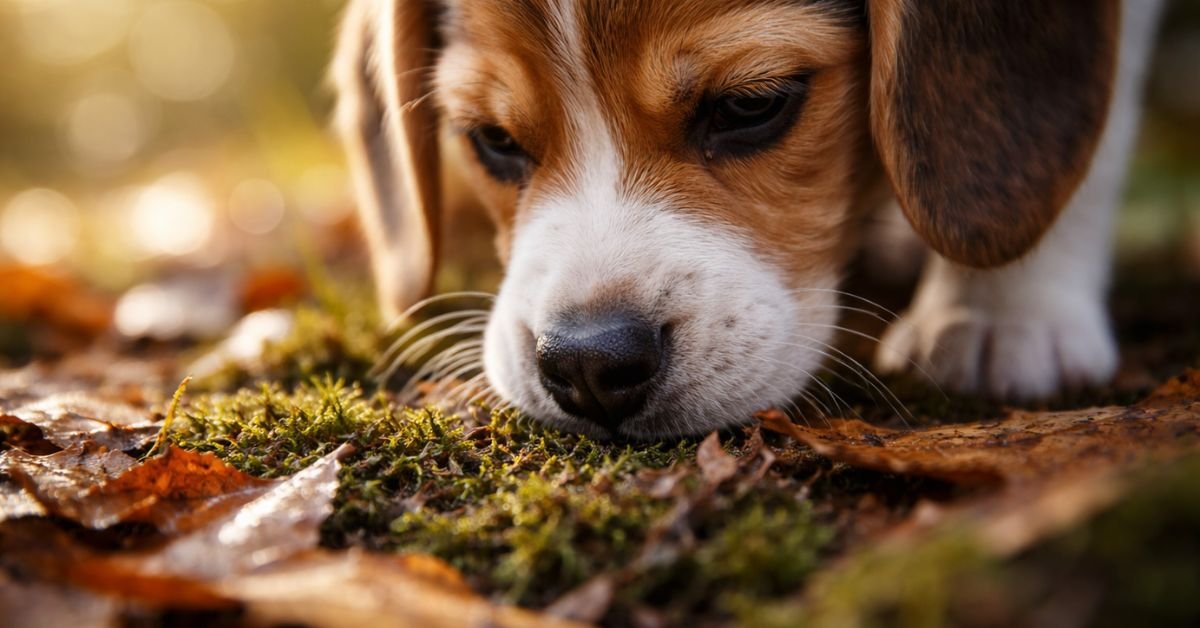
Socializing a Beagle is not the same as socializing a Labrador and treating it that way is exactly why most Beagle parents fail. Beagles are hardwired scent hounds with a 220-million-receptor nose that literally overrides their social brain. Before you can socialize their behavior, you must socialize their nose. This guide cuts through generic dog-training noise and goes straight into the Beagle-specific mechanics that actually work.
Quick Answer Box
How to socialize a Beagle? Socialize a Beagle socialization guide by prioritizing scent exposure over social interaction. Introduce 100+ unique odors in controlled environments, build impulse control before greeting new people or dogs, use a harness (not a collar) for scent-walk safety, and reward calm “sit-and-watch” behavior. Start early, stay consistent, and always respect the nose first.
The Scent Socialization Gap: Why Smelling Matters More Than Meeting
Your Beagle’s Brain is Nose-First, Social Second

Most dog trainers talk about the “100 people rule” expose your puppy to 100 different humans in the first 12 weeks. For a Beagle, this advice is dangerously incomplete. A Beagle processes the world almost entirely through olfaction, meaning a sniff of a stranger’s shoe carries more neurological weight than eye contact with that stranger’s face.
When your Beagle shoves their nose into a bush and “ignores” you, they are not being defiant. They are reading a biological newspaper with more data than you can comprehend. Skipping scent socialization and jumping straight to human interaction is like trying to teach reading without teaching the alphabet.
The Beagle dog socialization guide that works is one that starts underground literally at ground level, nose first.
What “Scent Socialization” Actually Means
Scent socialization means deliberately exposing your Beagle to a diverse range of novel odors in safe, controlled contexts. Think: the smell of a vet’s office, a cat household, wet soil after rain, engine oil, fresh bread from a bakery doorway, livestock, and wildflowers. Each new scent activates the olfactory cortex and builds neurological calm a Beagle who has “processed” an environment through smell is a Beagle who can actually hear you in that environment.
Scent training is not just about tracking games. It is the foundation of every behavioral goal you have for your dog in public.
The Scent-Social Connection
A Beagle that enters a dog park nose-first and gets to sniff the perimeter before meeting any dog is four times less likely to display reactive or overexcited behavior. Do not pull your Beagle away from sniffing at social settings that sniff is their orientation ritual. Denying it creates anxiety, not discipline.
Managing “Baying” Etiquette: How to Socialize a Beagle to Stay Quiet in Public
Understanding Why Beagles Bay

Baying is not barking. It is a long-range communication signal genetically encoded over centuries of pack hunting. When your Beagle bays at the dog across the street, they are not being aggressive they are sending a sonar ping to a potential pack member. Understanding this distinction changes how you respond.
Punishing the bay without addressing the trigger is one of the most common socialization mistakes Beagle parents make. You cannot train away an instinct; you can only redirect it.
The “Scent-Interrupt” Technique
When your Beagle begins to bay, present a novel scent object (a cloth with a new smell: lavender, anise, or a stranger’s worn glove) directly at their nose level. This interrupts the bay mid-signal because the olfactory system and the vocalization system compete for the same neural resources. The nose wins every time.
Practice this at home before using it in public. Pair the scent interrupt with a calm verbal marker like “easy” so it becomes a conditioned cue over time.
Building “Quiet” as a Rewarded Behavior
Do not wait for your Beagle to bay and then try to stop it. Reward the silence that comes before the bay. When you see your Beagle spot a trigger, catch the two-second window of quiet alertness, and immediately mark and reward it. You are paying for the decision not to bay and Beagles, like all hounds, will repeat what pays.
Impulse Control vs. Interaction: Why “Sit and Watch” Beats “Meet and Greet”
The Overstimulation Trap

Most Beagle parents see another dog and immediately encourage their dog to go say hello. This is socialization theater, not socialization training. An overexcited Beagle lunging toward another dog is rehearsing impulsive behaviour, not social skill. Every repetition of that lunging makes the neural pathway stronger.
Impulse control for hounds is the prerequisite to real socialization not the afterthought.
What “Sit and Watch” Looks Like in Practice
Position your Beagle at a threshold distance from the trigger (another dog, a crowd, a busy road). This is the distance at which your dog can notice the trigger without fixating. Ask for a sit. Wait. The moment your Beagle looks at the trigger and then voluntarily looks back at you, that is the behavior you are building.
This “check-in” behavior is the cornerstone of impulse control for hounds. It tells you your dog trusts you to manage the situation and it rewires the default response from lunge to look.
Gradually Shrinking the Threshold Distance
Over days and weeks, you move closer to the trigger only when your Beagle is consistently checking in at the current distance. There is no rush. A Beagle who can sit calmly ten feet from a strange dog has more social skill than a Beagle who has been physically dragged into 500 meet-and-greets.
Real socialization is measured in emotional regulation, not exposure count.
Community Pain Points: The “Leash Tug” and “Scent-Lock” Problems
The Leash Tug: Why Your Beagle Pulls Like a Freight Train

If you have ever searched Reddit for “why does my Beagle pull so hard on leash,” you already know this is the number one Beagle complaint worldwide. The leash tug is not a leash problem it is a scent-priority problem. When a Beagle locks onto a scent trail, their beagle prey drive kicks in and their body follows the nose with the same drive that once kept them on a rabbit’s track for hours.
Pulling on a flat collar during scent-lock can cause tracheal damage and actually reinforces the pulling behavior by creating forward pressure feedback. Switch to a harness immediately (more on this below).
The “Scent-Lock” Behavior Explained
“Scent-lock” is the term used to describe a Beagle who has frozen over a smell and become completely unresponsive to their owner’s voice. This is not selective hearing in the human sense it is a genuine neurological state where the olfactory cortex is processing at maximum capacity and the auditory processing center gets deprioritized.
You are not being ignored. Your Beagle’s brain is simply full.
Breaking Scent-Lock Safely
The worst response to scent-lock is leash-yanking or shouting. Both increase cortisol and make the dog associate your voice with stress. Instead: walk calmly forward to your dog’s side, present a high-value treat at nose level, and wait. The new smell (the treat) will break the lock within seconds. Then calmly redirect.
Practice “nose-off” cues during low-distraction training sessions at home so you have a reliable verbal bridge before you need it in the field.
The Hidden Strategy: The 100-Smell Challenge and Harness Psychology
The 100-Smell Challenge: A Beagle-Specific Socialization Protocol

Forget the 100-person rule. Your Beagle needs a 100-Smell Challenge. The goal is to deliberately expose your Beagle to 100 unique, novel odors across the first 12–16 weeks of life (or within the first month of adoption for rescues). Keep a simple log of categories like food smells, animal smells, chemical/industrial smells, plant smells, and human-linked smells.
Each successful sniff-and-recover (sniffs the object, moves on calmly without fixating) is a socialization win. This builds what behaviorists call olfactory resilience a dog who has processed many scents does not become destabilized by new ones in public.
The 100-Smell Challenge also builds your Beagle’s default curiosity response (approach and explore) over the default alarm response (bay and fixate). This is behavioral architecture at the neurological level.
Harness vs. Collar: The Psychology Behind the Choice
The collar-versus-harness debate is not just about physical safety. It is about behavioral psychology during scent socialization. A flat collar applies pressure to the neck during forward pulls, which creates a push-pull dynamic that actually amplifies drive in scent hounds. The dog learns that neck resistance equals forward momentum the opposite of what you want.
A front-clip harness redirects the dog’s forward momentum toward you when they pull, without triggering the neck-pressure drive response. More importantly, it keeps your Beagle’s head lower and closer to the ground during walks which is exactly where you want it for controlled scent-walk sessions. A harness communicates “explore within range” while a collar communicates “fight for range.”
For advanced scent socialization, use a long line (15–20 ft) attached to a back-clip harness in open safe areas. This gives your Beagle the freedom to follow scent trails to their natural conclusion, building satisfaction and voluntary return behavior. A Beagle who gets to finish the sniff comes back to you more reliably than a Beagle who is constantly interrupted mid-read.
Scaling Up: Rescue Beagles and Multi-Pet Households
Socializing the Rescue Beagle
The question “is it too late to socialize my adult Beagle?” has a clear answer: No but the protocol changes. Rescue Beagles, particularly those from hunting backgrounds or kennel environments, may have missed critical early windows. However, neuroplasticity in dogs does not end at puppyhood. Adult Beagles can absolutely develop new behavioral patterns it simply takes longer and requires more consistency.
Start the 100-Smell Challenge regardless of age. Slow the threshold distance down to ultra-low exposure levels. Prioritize decompression walks (long-line, no commands, full sniff freedom) for the first two to four weeks before introducing any structured socialization. Let the nose do the therapeutic work first.
Multi-Pet Households: Managing Beagle Pack Psychology
Beagles were bred as pack animals and this is simultaneously your biggest advantage and your biggest challenge in a multi-pet home. A Beagle in a multi-dog household will mirror the emotional state of the pack. If your other dog is anxious around strangers, your Beagle will amplify that anxiety. If your other dog is calm, your Beagle will borrow that calm.
Manage introductions one scent at a time. Before a new pet enters the home, exchange bedding or worn clothing between animals for five to seven days. By the time they meet face-to-face, the new pet’s scent is already categorized as “familiar” in your Beagle’s olfactory memory which dramatically reduces reactivity at first meeting.
Conclusion
The Beagle’s “stubbornness,” “selective hearing,” and “obsessive sniffing” are not behavioral flaws. They are a highly optimized biological system that was built for a job you are now asking it to ignore. The Beagle parent who stops fighting the nose and starts working with it will unlock a dog that is calmer, more responsive, and more genuinely social than they ever thought possible.
You now have the manual. The nose is the door and you finally have the key.
Frequently Asked Questions (FAQs)
1. Why does my Beagle completely ignore me when they are sniffing something?
This is called olfactory override, and it is neurologically real. When a Beagle locks onto a complex scent, the olfactory cortex demands a disproportionate share of cognitive resources leaving very little bandwidth for auditory processing. Your Beagle is not choosing to ignore you; their brain is simply operating at sensory capacity. The solution is not louder commands it is training a scent-interrupt cue and building the “check-in” habit during low-distraction environments first.
2. Is it too late to socialize a 4-year-old Beagle?
Absolutely not. While the primary socialization window closes around 14 to 16 weeks, adult dogs retain neuroplasticity — the ability to form new neural associations. A 4-year-old Beagle can be successfully socialized through systematic desensitization and counter-conditioning, combined with the 100-Smell Challenge adapted for adult exposure levels. Expect the process to take two to three times longer than with a puppy, and prioritize patience over pace. Consistency over 90 days will produce visible behavioral change in the majority of adult Beagles.
3. My Beagle is friendly at home but lunges and bays at every dog on walks. Why?
This is a context-specific threshold problem, not an aggression problem. At home, your Beagle is in a processed, familiar scent environment they are calm because there is no novelty demanding their olfactory attention. On a walk, every corner brings a new scent trigger, every dog is an unread biological signal, and the cumulative arousal builds rapidly. Your Beagle’s threshold drops on walks because their nervous system is already running at elevated arousal before the first dog even appears. The fix is pre-walk scent decompression (five minutes of free sniffing in the yard before leaving), shorter walks with more sniff stops, and consistent sit-and-watch threshold training.
4. Should I let my Beagle meet every dog they want to on a walk?
No and this is counterintuitive advice that most owners resist. Every uncontrolled, over-excited greeting teaches your Beagle that lunging and pulling results in reaching the target. You are literally training the behavior you want to stop. Instead, use the “three-second rule”: allow a brief, calm sniff only when your Beagle is loose-leash and sitting or standing without tension. If they are pulling or baying the greeting does not happen. The meeting becomes the reward for impulse control, not the default right.
5. My Beagle does fine with dogs but panics around strangers. Is this a socialization failure?
Not necessarily. Beagles are a dog-social breed by design they hunted in packs and read other dogs as familiar entities. Humans, however, are not in their ancestral pack category. Human-directed fear in an otherwise dog-social Beagle usually points to a specific gap in early human socialization (particularly varied body types, ages, attire, or movement patterns) rather than a global socialization failure. Target the specific human category that triggers the response: men with hats, children running, people using walking aids and apply systematic desensitization from threshold distance with high-value food pairing. This is fixable with targeted work.