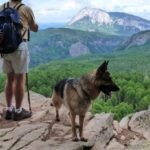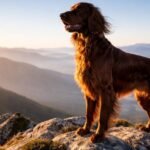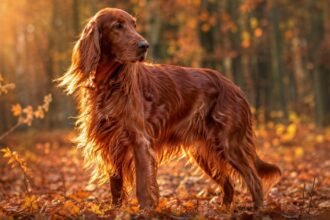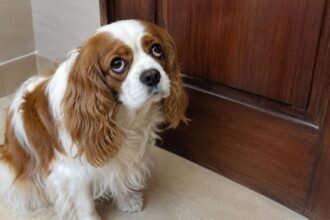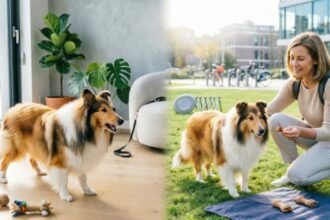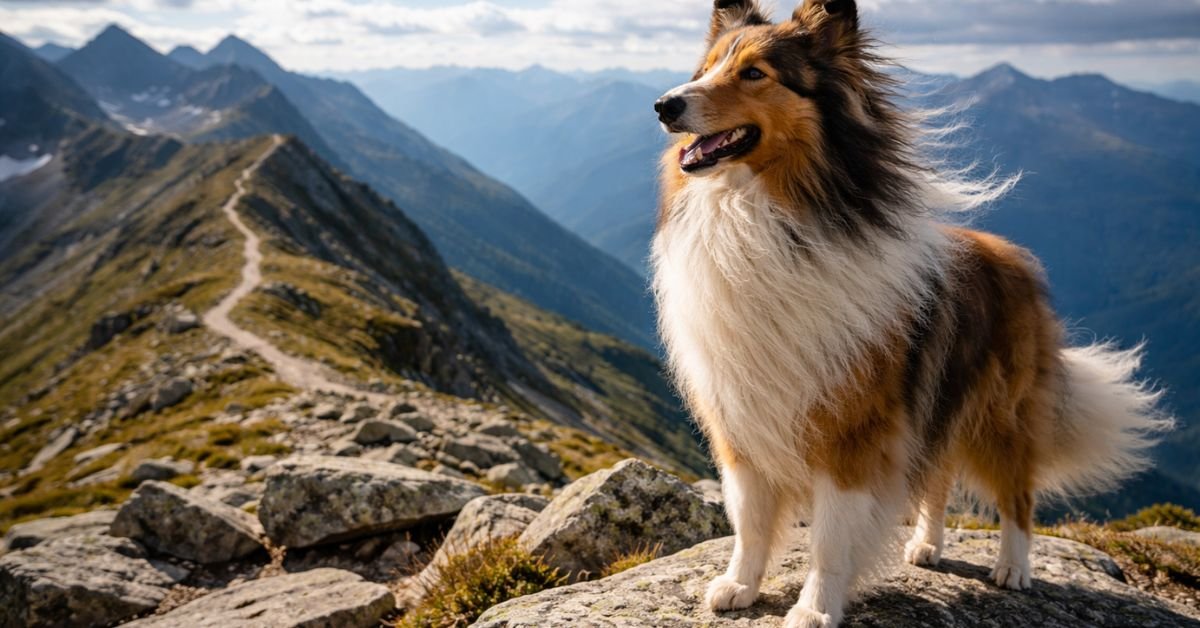
There’s a moment on every trail when your Collie locks eyes with you, matches your stride perfectly, and you realize this dog was made for this.
Collies aren’t just pets that tolerate hiking. They’re working dogs whose genetics are hardwired for covering terrain alongside a human. But that same intelligence and sensitivity that makes them magical trail partners also creates challenges that a Labrador owner would never face.
This guide doesn’t recycle the same “bring water and poop bags” advice. It goes deep into the Collie-specific physiology, psychology, and trail mechanics that will make every hike safer, smoother, and more rewarding for both of you.
Quick Answer Box
Can Collies go hiking? Yes, Collies are exceptional hiking companions. Their natural stamina, intelligence, and loyalty make them ideal trail partners. However, their MDR1 gene mutation, herding instinct, and double coat require specific management strategies that most generic dog hiking guides completely ignore.
The MDR1 Factor: Why Your Collie’s First-Aid Kit Is Different From Every Other Dog’s
What Is MDR1 and Why Should Every Collie Hiker Know It?

The MDR1 (ABCB1) gene mutation affects approximately 70% of Rough Collies and a significant percentage of Smooth Collies. This mutation causes a defect in the blood-brain barrier, making certain drugs dangerously toxic at doses that are perfectly safe for other breeds.
On a trail, this isn’t abstract. If your Collie gets injured and a well-meaning hiker or even an uninformed vet administers the wrong medication, it can be fatal.
MDR1-Sensitive Medications to Avoid
The following drugs are commonly used in trail first-aid and veterinary emergencies. For MDR1-positive Collies, they carry severe neurological risk:
| Drug | Common Use | Risk for MDR1+ Collies |
| Ivermectin | Parasite prevention | Severe neurotoxicity, death |
| Loperamide (Imodium) | Diarrhea treatment | Respiratory depression |
| Acepromazine | Sedation | Prolonged sedation, hypotension |
| Butorphanol | Pain management | CNS depression |
| Doxorubicin | Cancer treatment | Increased toxicity |
Building Your Collie-Specific Trail First-Aid Kit
MDR1 safe medications to discuss with your vet before any hike include fenbendazole for parasite control and meloxicam for inflammation. Always carry a printed card stating your dog is MDR1-positive.
Your kit should also include:
- A printed MDR1 alert card (laminated, attached to collar)
- Your vet’s emergency number AND a 24-hour animal poison control number
- Vetrap bandage, sterile saline, and tick removal tools
- No generic antiparasitic spot-on treatments unless confirmed MDR1-safe
Pro Tip: Get your Collie DNA tested through Washington State University’s Veterinary Clinical Pharmacology Lab. Knowing your dog’s exact MDR1 status before the first hike is non-negotiable.
The “Velcro” Problem: Managing a Collie That Won’t Stop Blocking Your Path
Why Collies Do This (It’s Not Stubbornness)
Rough Collie hiking stamina is legendary, but their tendency to orbit your legs on narrow trails is a behavioral pattern rooted in herding instinct not disobedience. Your Collie is literally trying to keep you from “straying from the flock.”
On a wide fire road, it’s charming. On a rocky ridgeline with a steep drop, it’s dangerous.
The Three-Step “Velcro Fix” Protocol
Step 1 Teach a designated side. Before the trail, spend two weeks reinforcing a “left” or “right” command so your Collie learns they have a designated lane.
Step 2 Use a short, fixed-length leash on technical terrain. A retractable leash actually worsens Velcro behavior by giving inconsistent feedback. A 4-foot fixed leash communicates your position clearly.
Step 3 Reward forward momentum, not checking in. Many owners accidentally reinforce Velcro behavior by praising their dog for looking back at them. Instead, reward your Collie with a marker word only when they’re moving forward beside you, not in front of or behind you.
The Best Harness for Collies on Technical Trails

The best harness for Collies addresses two breed-specific issues: their deep chest-to-waist ratio and their thick neck ruff (in Rough Collies) that makes collar-only hiking uncomfortable.
Look for these features:
- Y-front design (not straight across the chest this restricts shoulder movement)
- Padded sternum strap to prevent hot spots in the ruff area
- A back handle for assisted scrambles over boulders
- Reflective stitching for low-light trail starts
Recommended harness types: Julius-K9 IDC or Ruffwear Front Range, both of which accommodate the Collie’s unique torso shape.
Coat Physics: The Science of Keeping Your Collie’s Double Coat Trail-Ready
Understanding What That Coat Actually Does
The Rough Collie’s double coat isn’t just beautiful, it’s functional insulation. The outer guard hairs repel moisture and debris; the dense undercoat regulates body temperature. When this system works correctly, your Collie is more weather-resistant than most humans on the trail.
When it breaks down, you get Undercoat Dampness, a condition where sweat and moisture become trapped against the skin, creating a breeding ground for hot spots, fungal infections, and bacterial dermatitis.
Preventing Undercoat Dampness

The biggest mistake hikers make is bathing their Collie the night before a long hike. Wet undercoat that isn’t completely dried takes 24 to 48 hours to fully release moisture at the skin level.
Follow this pre-hike coat protocol:
- Bathe at least 72 hours before a demanding hike
- Use a high-velocity dryer (not a standard hair dryer) to blast the undercoat
- Do a 5-minute brush-out the morning of the hike to remove loose undercoat that blocks airflow
- Never shave a Collie for summer hikes the double coat insulates against heat, not just cold
The Coconut Oil Shield for Burrs and Stickers
This technique is a genuine game-changer for trails with goatheads, foxtails, or bur-heavy brush. Before the hike, apply a thin layer of virgin coconut oil to the leg feathering, chest ruff, and tail.
The oil creates a friction-reducing surface that causes burrs to slip off rather than embed into the coat. It also conditions the coat, making post-hike brushing significantly faster.
Apply sparingly too much oil will attract dirt and defeat the purpose.
Mental vs. Physical Fatigue: The Signal Most Collie Owners Misread
Why Your Collie Barks More When They’re Tired

Here’s a counterintuitive truth most hiking guides miss: a Collie that starts barking, lunging, or becoming hyper-reactive on the trail is often over-stimulated, not under-exercised.
The herding breed brain processes environmental information intensely. On a busy trail with unfamiliar dogs, cyclists, and hikers, your Collie is running a constant cognitive load that’s as exhausting as the physical miles.
Reading the Two Types of Fatigue
| Signal | Physical Fatigue | Mental Over-Stimulation |
| Pace | Slowing down, lagging | Erratic fast then stops |
| Breathing | Heavy, sustained panting | Short bursts, scanning |
| Eye contact | Soft, seeking you | Hard, fixed on stimulus |
| Leash pressure | Pulling backward | Pulling sideways/forward |
| Vocalization | Quiet or whimpering | Barking, whining |
When you see mental over-stimulation signals, the solution is not more exercise. Find a quiet spot off-trail, ask your Collie to perform a few simple known commands (sit, down, touch), and allow them to decompress for 5–10 minutes.
This “reset” protocol works because it redirects the Collie’s active brain into structured, familiar territory.
Trail Etiquette: Stopping the Herding Instinct Toward Other Hikers
Why Other Hikers Aren’t Livestock (But Your Collie Disagrees)
Managing herding instinct is the single most important social skill for a trail Collie. Left unaddressed, a Collie will attempt to circle, cut off, or nip at the heels of joggers, cyclists, and children all behaviors that are dangerous and create negative encounters.
This isn’t aggression. It’s a misapplied purpose. But the distinction matters only to you, not to the terrified child your Collie just circled.
The “Leave It + Station” Training System
“Leave It” stops the behavior in the moment. But for trail reliability, you need a second command: “Station” which means “move to my left side and match my pace until released.”
Train this at home first with a helper jogging past. Reward the moment your Collie disengages from the jogger and returns to your side. Proof it in increasingly distracting environments before taking it onto busy trails.
For smooth Collie trekking on multi-use trails, also practice:
- Voluntary sits when passing other dogs
- A “let them pass” default behavior for fast-moving cyclists
- Consistent exposure to trail runners during the puppy socialization window (8–16 weeks) if possible
Conclusion
Your Collie isn’t a couch ornament. They are a centuries-refined working animal with the stamina, intelligence, and devotion to be your most loyal trail companion for a decade or more.
The hikers who struggle with their Collies on trails are usually fighting against breed nature rather than working with it. Every piece of advice in this guide does one thing: it aligns your hiking strategy with your dog’s biology.
Test your dog’s MDR1 status this week. Order a proper Y-front harness. Work on the Station command in your backyard this weekend.
The summit is better with a Collie beside you. And now you have everything you need to get there together.
Frequently Asked Questions
Q1: My Rough Collie is 2 years old is that too young for multi-day backpacking trips?
Most veterinary sports medicine specialists recommend waiting until 18–24 months before demanding hikes, as growth plates in large-breed dogs close around this time. At 2 years, a healthy Rough Collie can handle multi-day trips with proper conditioning build up mileage over 8–12 weeks before a demanding trip, not overnight.
Q2: My Collie pants excessively after just 2 miles. Is something wrong or is this normal?
Excessive panting at low mileage is often a coat management issue specifically, trapped heat from undercoat dampness or an ungroomed coat that’s blocking airflow. Rule out coat issues first. If panting persists after proper grooming and conditioning, get a cardiac and thyroid panel done, as both conditions present as exercise intolerance in Collies.
Q3: Can I use a standard flea/tick prevention like Bravecto or NexGard on my MDR1-positive Collie?
Bravecto (fluralaner) and NexGard (afoxolaner) are not on the MDR1-sensitive drug list and are generally considered safe for MDR1-positive dogs at labeled doses. However, always confirm with your vet before use, as individual dogs can vary and new data emerges regularly. Never use Ivermectin-based products on MDR1-positive Collies.
Q4: My Collie herds my kids on hikes. How do I stop this without damaging their bond?
The key is redirecting to incompatible behavior rather than pure correction. Teach your kids to stop moving the instant herding begins and movement triggers the instinct. Then recall your Collie to your side and reward. Over time, your Collie learns that herding the kids ends the fun, while walking calmly beside them continues it.
Q5: Is a Smooth Collie better for hot-weather hiking than a Rough Collie?
Counterintuitively, the difference is smaller than most people expect. Smooth Collie trekking in heat has a slight advantage due to lower coat density, but both varieties share the same double-coat thermoregulation system. For either type, hike before 9 AM or after 5 PM in summer, carry 1 oz of water per pound of body weight per hour of activity, and use cooling bandanas on the neck and groin area.