You picked a Labrador because they’re friendly, right?
Gentle with kids. Loves everyone. A dog that wags its tail at the world. What could possibly go wrong?
Here’s the paradox: that same friendliness, left unguided, creates chaos. A 10-week-old Lab puppy bouncing on strangers is adorable. A 30kg, 18-month-old Lab doing the exact same thing? That’s a lawsuit waiting to happen.
Labs don’t grow out of enthusiasm they grow into it. Their breed instinct is to engage, retrieve, and connect. Without a proper Labrador retriever socialization guide to follow, you don’t get a social butterfly. You get a bulldozer with a wagging tail.
The good news? Labs are also among the most trainable dogs on the planet. Their eagerness to please is your greatest tool if you know how to use it.
Quick Answer
Labrador retriever socialization isn’t about letting your dog “meet everyone.” It’s about teaching calmness around stimuli, not excitement. Labs are wired for enthusiasm, so the goal is controlled exposure that rewards neutral, settled behavior not wild greetings. Start at 8 weeks and never stop.
The “Over-Friendliness” Trap: The Mistake 90% of Lab Owners Make
Most puppy guides will tell you: “Expose your dog to lots of people and dogs!”
That advice is dangerously incomplete for Labradors.
Here’s why: over-socialization without structure teaches your Lab that every person, dog, or bicycle deserves a reaction. Their brain learns: “New thing = exciting = I must engage.” This creates what behaviorists call a “frustrated greeter” a dog that barks, lunges, or spins on the leash not out of aggression, but out of pure, desperate friendliness.
True socialization means teaching your Lab to notice distractions and choose to ignore them.
Think of it this way:
- Wrong goal: “My Lab meets 100 dogs this month.”
- Right goal: “My Lab can see 100 dogs this month and remain calm.”
The difference is monumental. One creates a reactive dog. The other creates a reliable companion.
Sensory Socialization: The Category Everyone Ignores

Most owners focus on people and dogs. Smart owners go further they socialize their Lab’s entire sensory world.
Textures
Labs used as working dogs or service dogs encounter dozens of surfaces daily. Start young:
- Gravel and grates (metal grates spook many adult dogs)
- Wet grass vs. dry grass
- Slippery tile and hardwood floors
- Sand, mud, and uneven terrain
Sounds
The goal isn’t just “not being scared” it’s neutrality under noise.
- Vacuum cleaners running in the next room
- Traffic and construction noise
- Sirens and alarms
- Thunderstorms (use recordings during calm playtime)
- Crowds and overlapping voices
Objects & Visual Stimuli
- Umbrellas opening suddenly
- People in hats, sunglasses, or uniforms
- Bikes, skateboards, wheelchairs, and strollers
- Balloons and flags moving in wind
Pro tip: Never force your Lab to approach something that scares them. Let them investigate on their own terms. Forced exposure creates fear, voluntary exposure builds confidence.
The Adolescent Fear Period: The Window Most Owners Miss

Your Lab puppy breezes through early socialization. Then, somewhere between 6 and 14 months, something changes.
The dog that used to confidently greet strangers suddenly startles at a garden hose. The Lab who loved the dog park now barks at unknown dogs. You wonder if you did something wrong.
You didn’t. This is the adolescent fear period a neurological reality, not a training failure.
During this window, the brain is rapidly pruning neural connections. New fears can form quickly and stick for life if handled badly. Here’s how to navigate it:
Do This:
- Reduce pressure. Don’t force greetings or interactions.
- Keep exposures positive and low-stakes watching from a distance is enough.
- Reward calm observation, not avoidance or engagement.
- Be patient. This phase passes, usually by 14 to 18 months.
Never Do This:
- Push your dog to “just get over it”
- Flood them with the scary stimulus
- Use punishment or corrections when they show fear
- Laugh it off and ignore it unaddressed fear compounds
If your Lab is in this window, slow down and let them lead the pace.
Vaccination vs. Socialization: The Debate You Need to Understand

This is one of the most controversial topics in puppy raising and one with real stakes.
The old advice: Wait until your puppy is fully vaccinated (typically 16 weeks) before socialization.
The problem: The prime socialization window closes at 12–14 weeks. Waiting until full vaccination means missing the most critical developmental period entirely.
The American Veterinary Society of Animal Behavior (AVSAB) has been clear: the risk of behavioral problems from under-socialization outweighs the risk of disease in most settings.
Safe Pre-Vaccination Socialization:
| Activity | Risk Level | Safe? |
| Puppy classes at reputable facilities (cleaned floors) | Low | Yes |
| Visiting vaccinated dogs’ private homes | Very Low | Yes |
| Being carried in public places | Very Low | Yes |
| Dog parks with unknown dogs | High | No |
| Sniffing unknown dog waste on sidewalks | High | No |
| Controlled car park/café observation | Low | Yes |
Talk to your vet about your specific local disease risk then make an informed decision, not a fearful one.
Community Pain Points: What Reddit and Quora Lab Parents Ask Most
“My Lab Barks at Every Dog on Walks But He Just Wants to Play!”
This is textbook frustrated greeter syndrome. Your Lab has learned that tension + barking = eventually gets to say hi. The behavior is reinforced, even when you don’t mean to reward it.
Fix it:
- Change direction the moment your dog spots another dog and before the reaction starts.
- Reward heavily for any second of calm focus on you.
- Work at threshold distance far enough that your dog notices the dog but stays below reaction level.
- Never allow the greeting as a reward after barking. It teaches: “barking works.”
“My Lab Jumps on Every Guest. It’s Embarrassing.”
Jumping is a self-rewarding behavior Labs jump because humans accidentally reward it with eye contact, touch, or even verbal scolding (still attention!).
The fix is boring, but it works:
- Turn your back. Fold arms. Zero eye contact.
- The moment all four paws hit the floor: calm, immediate praise and a treat.
- Instruct guests to do the same consistency is everything.
- Practice “sit to greet” until it’s muscle memory.
“Dog Training Classes Are Expensive. What Are Free Alternatives?”
You don’t need a $300 puppy class to socialize a Lab. Here’s what works at zero cost:
- Hardware stores (allow leashed dogs, expose to carts, sounds, strangers)
- School drop-off zone observation (from your car or nearby bench)
- Café or restaurant patios just sit, watch, and reward calm
- Parking lot training sessions 10 minutes of watching the world go by
- Neighbour exchanges swap visits with vaccinated-dog-owning neighbours
The Art of Doing Nothing: Your Lab’s Most Underrated Skill

Here’s the socialization secret nobody talks about: the most valuable thing you can teach a Lab is how to be boring.
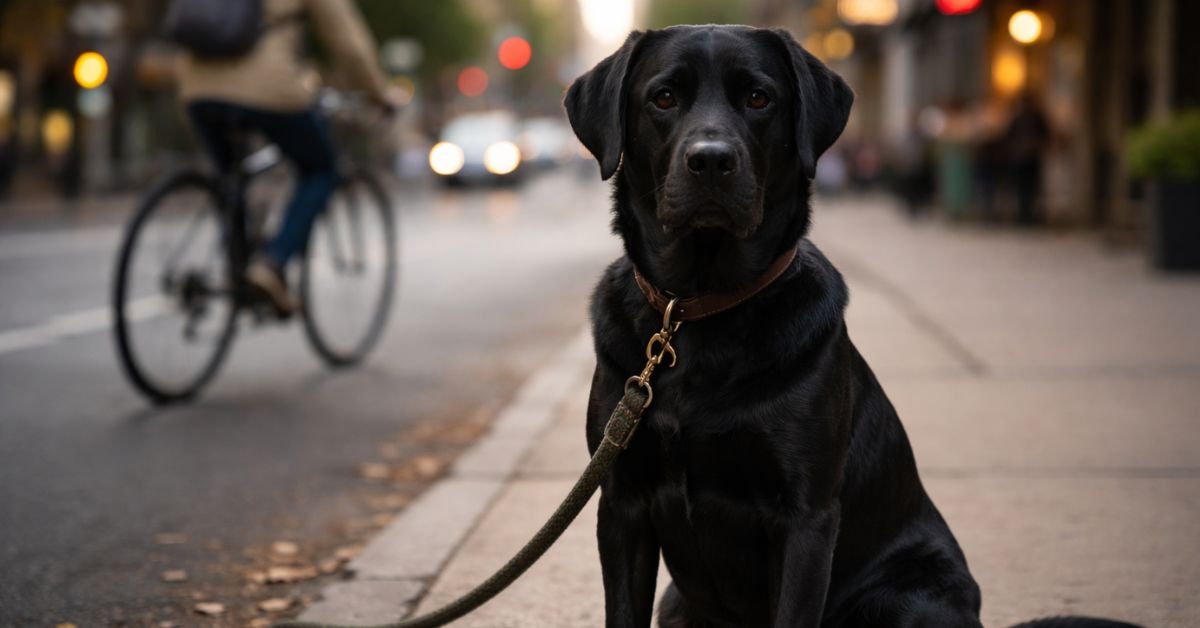
A well-socialized Lab can sit at a café patio while cyclists pass, children shriek, and other dogs walk by and simply exist. No barking. No lunging. No whining. Just a calm presence.
This is called puppy neutrality, and it’s the gold standard.
How to Train “Café Mode”:
- Start at home with mild distractions TV on, family moving around.
- Add a mat or bed as a “neutral zone.” Reward heavily for settling on it.
- Graduate to the car park. Sit with your Lab on leash. Any time they look at a distraction and don’t react, click or mark and treat.
- Increase the challenge slowly busier locations, closer to other dogs, longer durations.
- Never rush this. A Lab that can “do nothing” for 10 minutes in a busy park is worth 1,000 “socialized” dogs who just greet everyone.
The goal is a dog who looks at the world and thinks: “Yep. That’s the world. No big deal.”
Age-Specific Lab Socialization Checklist
| Age | Key Focus | Action Steps | What to Avoid |
| 8 Weeks | Primary sensory exposure | Introduce household sounds, textures, family members; carry in public | Overwhelm, dog parks, sick dogs |
| 12 Weeks | Controlled social exposure | Puppy classes, vaccinated dog playdates, car rides, café observation | Forced greetings, high-stimulation environments |
| 16 Weeks | Confidence building | Busier public spaces, walking on varied surfaces, meeting calm strangers | Flooding, negative experiences with people or dogs |
| 6–14 Months | Adolescent fear period navigation | Go slow, reward neutrality, reduce pressure, revisit basics | Punishment, forced exposure, new overwhelming experiences |
| 14+ Months | Maintenance & refinement | Regular exposure to keep skills sharp, advanced neutrality training | Letting good habits lapse — Labs regress without practice |
The Long Game: What a Well-Socialized Lab Looks Like
A properly socialized Labrador is one of the most magnificent animals you’ll ever meet.
They walk calmly past barking dogs. They greet children with a soft nudge, not a flying leap. They settle at your feet in a crowded pub. They don’t bolt after cyclists. They travel without anxiety.
This dog is not rare. This dog is achievable. But it requires you to invest in socialization as an ongoing practice not a checkbox you tick at 12 weeks and forget.
The Lab who gets it right is a dog who enriches every room they enter. The Lab who doesn’t? They spend their life behind a gate while the world happens without them.
Your dog deserves better than that. And so do you.
Frequently Asked Questions
Can You Socialize an Older Labrador?
Yes absolutely. It’s harder than starting at 8 weeks, but far from impossible. Adult desensitization is a well-documented process. Use counter-conditioning (pairing scary stimuli with high-value treats), work below threshold, and be patient. Progress is slower, but most adult Labs make significant improvement within 3 to 6 months of consistent work.
What If My Lab Is Already Fearful?
Start with a vet check pain and thyroid issues can cause fear-like behaviour. Then work with a Certified Applied Animal Behaviorist (CAAB) or a trainer who uses force-free methods. Avoid “flooding” (forcing exposure). Fear that’s addressed early and correctly can often be dramatically reduced, even in adult dogs.
How Do I Stop My Lab From Jumping on Everyone During Walks?
Manage the environment first: use a front-clip harness to reduce pulling and momentum. Train a default “sit to greet” behaviour at home until it’s automatic. On walks, ask people to not greet your dog unless your dog is sitting calmly. Most people are happy to help when you explain. Consistency from everyone who interacts with your dog is non-negotiable.
At What Age Should I Start Socializing My Lab Puppy?
The day they come home is typically 8 weeks. The primary socialization window runs from approximately 3 to 12 weeks, with a secondary window up to 14 weeks. Every day in that window that passes without positive exposure is an opportunity lost. Don’t wait for full vaccination, socialize safely and immediately.
How Long Does Labrador Socialization Take?
Socialization is not a phase, it’s a lifestyle. The critical period is 8 to 14 weeks, but Labs need ongoing exposure throughout their adolescence (up to 2 years) and regular maintenance as adults. Think of it like fitness: you don’t get fit once and stop exercising. The same logic applies to your Lab’s social skills.