Let’s be honest nobody warned you about this part of bulldog ownership.
The wheezing you expected. The drool on your freshly laundered pants? Sure. But the sour milk smell coming from your dog’s face at 7 a.m.? That one hits differently.
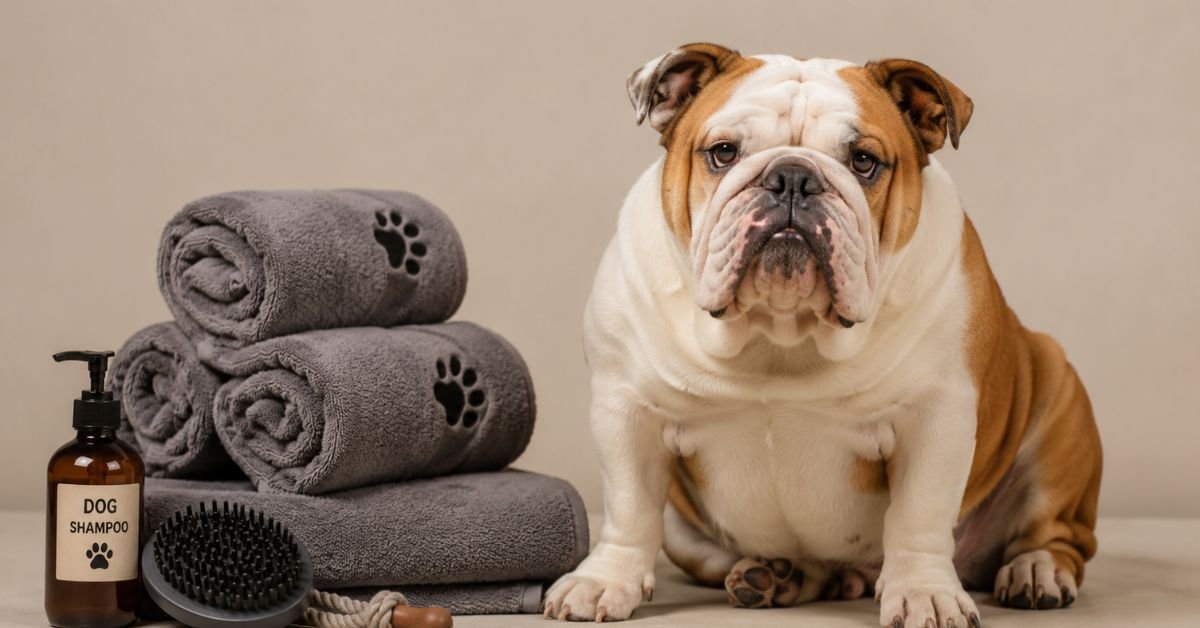
As bulldog parents, we know the struggle of staying one step ahead of the funk, the folds, and the full-blown attitude your dog throws at you the moment you pull out a brush. This bull dog grooming guide was written specifically for owners who’ve Googled “why does my bulldog smell like cheese” at least once and came up empty on real answers.
Whether you own an English Bulldog, a French Bulldog, or an American Bulldog, this guide covers the science, the step-by-step routine, and the community-tested tips that generic pet blogs simply skip.
Why Bulldogs Are a Completely Different Beast (Not in a Bad Way)
Ask any bulldog owner on Reddit’s r/Bulldog grooming guides and they’ll tell you the same thing: “Nothing prepared me for the folds.”
Bulldogs aren’t high-maintenance because they’re dramatic, they’re high-maintenance because of biology. Their adorable facial wrinkles, compacted tail pockets, and ultra-short coats create micro-environments where bacteria, yeast, and moisture thrive.
Here’s what the community is really saying:
- “The smell comes back within 24 hours of cleaning.” → You’re probably not drying the folds thoroughly enough. Moisture is the enemy, not the dirt.
- “My bulldog acts like I’m murdering him when I trim his nails.” → You’re not alone. This is a breed-wide trait, and there’s a method for it.
- “I clean the tail pocket and it’s already infected again.” → That’s because most guides don’t teach frequency or the right technique.
Understanding that these pain points are structural not personal failures is step one.
The 2026 Ultimate Step-by-Step Bulldog Grooming Blueprint
Phase 1: How to Clean Bulldog Wrinkles (Step-by-Step)

To clean bulldog wrinkles properly:
- Wipe each fold with an enzyme-based cleanser on a cotton pad work fold by fold, not all at once.
- Immediately follow with a dry microfiber cloth or cotton pad to remove every trace of moisture.
- For stubborn moisture, use a hair dryer on the coolest setting held 12+ inches away for 10–15 seconds per fold.
- Finish with a thin layer of pet-safe barrier cream (Squishface Wrinkle Paste, zinc-based cream, or coconut oil) to seal and protect.
Frequency: Once daily for English Bulldogs. Every 2 days for French Bulldogs with shallower folds.
What to use: Enzyme-based cleanser > chlorhexidine wipes > plain baby wipes (in that order of preference). Avoid alcohol and hydrogen peroxide they strip the skin barrier and make recurring infections more likely.
Why this matters more than most guides tell you:
Here’s the thing nobody warns you about it’s not the dirt that causes fold infections. It’s the moisture left behind after cleaning. That’s why owners who wipe their bulldog’s face daily still end up at the vet with dermatitis. The wipe is step one. The dry is the actual fix.
Neglect the folds and you’re looking at skin fold dermatitis a painful bacterial or yeast infection that smells exactly as bad as it sounds. Yeast infections show up as dark, musty residue with a reddish-brown tint. Bacterial infections produce yellowish or greenish discharge with a sharper, more pungent odor. They need different treatments, so identifying which you’re dealing with matters before you grab a product off the shelf.
The 2026 vet-recommended approach is prevention through barrier protection, not just reactive cleaning. Once you add that final barrier cream step, most owners see fold infections drop dramatically within 2 to 3 weeks.
Phase 2: How to Clean a Bulldog Tail Pocket (Step-by-Step)

To clean a bulldog’s tail pocket safely:
- Lift your bulldog’s tail and locate the skin pocket directly beneath or around it you’ll need to physically press to open it.
- Follow immediately with a dry cotton pad wipe until no moisture remains.
- Apply a thin layer of pet-safe anti-fungal powder or barrier cream inside the pocket. Do not use corn starch it feeds yeast.
- Inspect for redness, swelling, or unusual odor every single time you clean.
Frequency: Every 2–3 days minimum. Daily during summer, humid months, or if your dog is infection-prone.
Red flag warning signs see your vet immediately if you notice:
- Persistent odor even after a fresh clean
- Visible redness, swelling, or warmth around the tail base
- Any discharge that isn’t clear
What most owners don’t realize about the tail pocket:
The tail pocket is the small skin fold tucked just under or around the base of your bulldog’s screw tail. It’s completely hidden from view. You have to lift and press to find it. And it traps fecal matter, moisture, and debris every single day without any airflow to help it dry out.
Most owners discover it only after it’s already infected. By that point, you’re looking at vet bills, antibiotics, and in the worst cases surgical tail removal. That’s not dramatic. It’s genuinely one of the most common and preventable causes of chronic illness in English Bulldogs.
The fix is simple: check it, clean it, dry it, protect it. It takes 90 seconds. Make it part of your routine now.
Phase 3: Coat & Shedding Management

Don’t let the short coat fool you. Bulldogs shed. A lot. Bulldog owners affectionately call it the “glitter problem” white hairs on every black item you own, forever.
The key to managing it is regular deshedding, not just brushing.
Best tools for sensitive bulldog skin in 2026:
- Rubber curry brush or grooming mitt The gold standard for bulldogs. It stimulates circulation, removes loose hair, and most dogs actually enjoy it.
- Fine-bristle soft brush For finishing and redistributing skin oils.
- Deshedding glove Great for dogs who resist traditional brushes.
Avoid: Slicker brushes with stiff wire pins they’re too harsh for a bulldog’s thin, sensitive skin and can cause micro-abrasions.
Brush 2 to 3 times per week. This also gives you a chance to check for hotspots, lumps, or skin irritation hidden under that deceptively smooth coat.
Phase 4: Paw Care, Interdigital Cysts & The Nail Drama

Ah, nail trimming. The Everest of bulldog grooming.
First, interdigital cysts red, swollen bumps that appear between the toes. They’re incredibly common in bulldogs and are often caused by ingrown hairs, blocked pores, or repeated trauma from hard surfaces. Keeping paws clean, dry, and moisturized with paw balm reduces recurrence significantly.
Now, the nails and yes, they’re going to be difficult:
Bulldogs have thick, often black nails where the quick (the blood vessel inside) is invisible. The community’s most common fear? Cutting the quick and causing bleeding.
2026 approach to black nail trimming:
- Use sharp guillotine-style clippers dull ones crush instead of cut.
- Trim tiny slivers at a time, looking at the cross-section of the nail. When you see a small gray or pink oval appear in the center, stop you’re near the quick.
- Dremel/grinder tools are safer for anxious dogs because they remove material gradually without the pressure of a snap-cut.
- Desensitize beforehand: Touch paws daily, tap the clippers on the floor near them, and treat heavily. It takes weeks but it works.
If your bulldog is truly unmanageable, your groomer or vet can trim nails with one person restraining and one person cutting. No shame in it this breed invented the phrase “pick your battles.”
Paw moisturizing: Apply paw balm or shea butter-based cream 2 to 3 times weekly to prevent cracking, especially in winter.
Phase 5: Bathing Without Wrecking Their Skin

Bulldogs should be bathed every 3 to 4 weeks. More frequent bathing strips the skin’s natural oil barrier and triggers overproduction of sebum making the dog smell worse, not better.
The 2026 bathing checklist:
- Water temperature: Lukewarm never hot. Their skin is more sensitive than it looks, and hot water dilates pores and causes irritation.
- Shampoo: Use a sensitive skin dog shampoo with a neutral pH (look for labels that say pH-balanced for dogs). Oatmeal, aloe vera, and ceramide-based formulas are excellent in 2026. Avoid anything with artificial fragrances or sulfates.
- Lather the folds, tail pocket, and paw crevices carefully these spots need direct attention, not just runoff.
- Rinse thoroughly. Leftover shampoo residue in the folds causes more irritation than not bathing at all.
The drying routine this is the most critical step:
- Towel dry the entire body first.
- Use a low-heat pet dryer or human hair dryer on cool setting never hot air near the folds.
- Physically open and dry every fold, the tail pocket, and between every toe.
- Do not let your bulldog outside or lie on a damp surface until completely dry.
A damp bulldog is a ticking time bomb for yeast. This step alone eliminates about 70% of the recurring fold infection cycle.
Comparison Table: Traditional Grooming vs. 2026 Smart Bulldog Grooming
| Grooming Area | Old School Method | 2026 Smart Method |
| Wrinkle Cleaning | Baby wipes, let air dry | Enzyme cleanser + microfiber dry + barrier cream |
| Tail Pocket | Clean only when it smells | Every 2–3 days; anti-fungal powder barrier |
| Coat Brushing | Any brush, once a week | Rubber curry mitt, 2–3x/week, skin check included |
| Nail Trimming | Clip and hope | Gradual sliver trimming or Dremel; paw desensitization |
| Bathing Frequency | Weekly (thinking cleaner = better) | Every 3–4 weeks; pH-balanced shampoo only |
| Drying After Bath | Towel dry and done | Full blow-dry on cool; every fold physically opened |
| Infection Treatment | One product for all infections | Identify yeast vs. bacteria; treat accordingly |
| Paw Care | Nails only | Nails + paw balm + interdigital cyst monitoring |
Grooming Is Bonding Don’t Forget That
Here’s the truth that doesn’t get said enough: grooming is the most intimate thing you do with your dog.
Your bulldog may be stubborn, sheddy, wrinkly, and occasionally pungent but that dog trusts you with every fold check, every nail clip, every awkward tail pocket cleaning session. That trust is earned slowly, through consistency, patience, and a whole lot of high-value treats.
Build the routine. Start slow. Make it low-pressure. Your dog will come around and when they finally flop over and let you check their tail pocket without a fuss, that’s a win worth celebrating.
You’ve got this, bulldog parent.
FAQs
Q: How often should I really clean my bulldog’s tail pocket?
At minimum, every 2–3 days and daily during summer or if your dog is prone to infections. Once an infection is established, you’ll be doing it once or twice daily with medicated wipes on vet advice. Prevention is far easier than treatment.
Q: My bulldog bites the brush and acts like I’m torturing him. What do I do?
Start with a grooming mitt or rubber glove instead of a brush it feels more like a petting session than grooming. Pair every single touch with a high-value treat (small, smelly think boiled chicken or cheese). Keep first sessions to 30 seconds. Gradually extend over weeks. Never force it; a bad experience sets the training back significantly.
Q: What’s that “corn chip” smell coming from my bulldog’s paws?
Totally normal and it’s actually caused by naturally occurring bacteria (Pseudomonas and Proteus) that live on dog paw pads. It becomes a problem only when it gets strong or is accompanied by redness, licking, or swelling (which signals a yeast overgrowth or infection). Regular paw wipes, keeping paws dry, and monthly paw balm application keeps the corn chips at an acceptable level.
Q: Can I use human shampoo on my bulldog in a pinch?
One emergency use is unlikely to cause lasting damage, but don’t make it a habit. Human shampoo is formulated for a skin pH of around 5.5, while dogs need 6.5–7.5. Regular use disrupts the skin barrier, increases flaking, and can trigger bacterial overgrowth in the folds. Keep a backup bottle of sensitive skin dog shampoo on hand for emergencies.
Q: My bulldog’s wrinkles keep getting infected despite cleaning. What am I missing?
Nine times out of ten it’s the drying step. Moisture trapped after cleaning feeds yeast and bacteria just as much as not cleaning at all. Make sure you’re using a dry cloth or cool air to physically dry inside each fold after every cleaning. If infections persist despite perfect drying technique, see your vet chronic fold dermatitis sometimes requires a short course of antifungal or antibiotic treatment to reset the skin flora before maintenance cleaning can keep up.