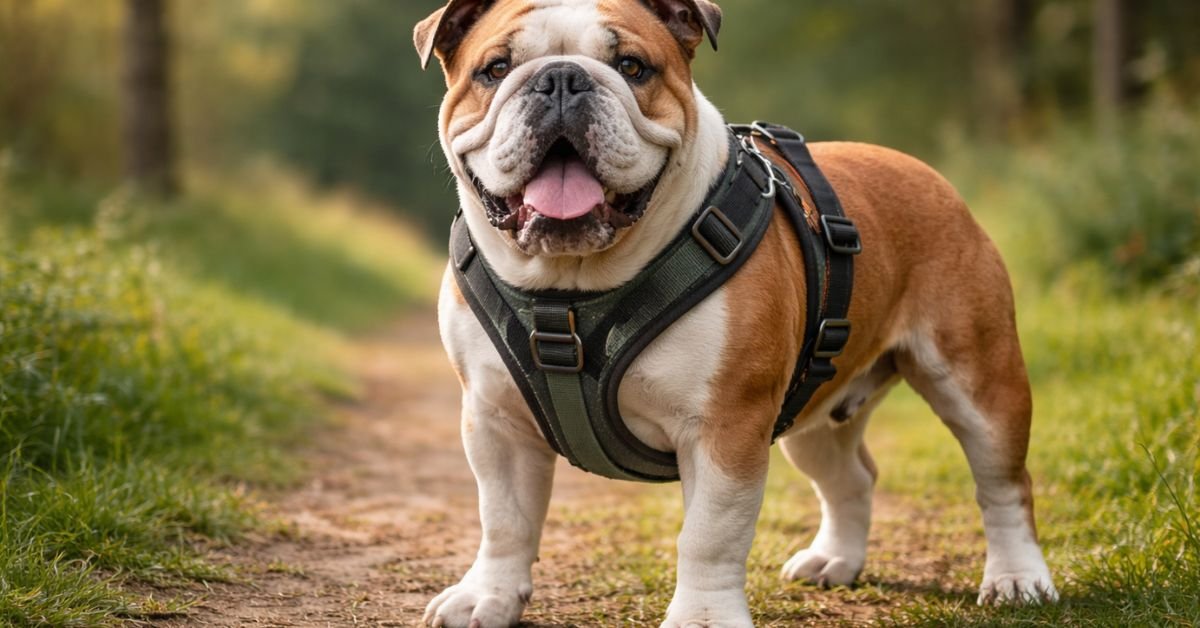
The classic image of a Bulldog is a snoring loaf on a sofa. However, in 2026, the “Active Bully” movement has proven that with the right preparation, these stout companions make excellent low-impact trail partners.
While they lack the endurance of a Lab, Bulldogs possess a curious and adventurous spirit. The challenge isn’t their willingness; it’s their unique anatomy. As we navigate a world with more extreme micro-climates, traditional hiking advice is no longer enough to keep these flat-faced explorers safe.
This guide is designed for the modern “Bully-Adventurer.” Whether you are trekking a local woodland or a coastal path, these 2026-updated safety standards ensure your Bulldog returns home wagging, not wheezing.
Quick Answer: Yes, Bulldogs can hike, but they require 2026-standard safety protocols. Limit treks to under 2 miles in temperatures below 20°C. Due to their brachycephalic nature, Bulldogs face high risks of heatstroke and respiratory distress. Use a cooling vest, monitor vitals via smart-wearables, and always have an emergency extraction plan for “the flop.”
1. The 2026 ICP: Are You a Responsible Bully-Adventurer?
Before hitting the trail, you must identify as an owner who values Safety over Distance. A Bulldog’s physical limits are non-negotiable.
- Priority: Health monitoring over reaching the summit.
- Mindset: You are comfortable carrying a 25kg dog if needed.
- Tech-Savvy: You utilize apps to check ground temperature and humidity.
2. Pre Hike Conditioning: The “Joint Loading” Phase
You wouldn’t run a marathon without training; your Bulldog shouldn’t hike without “Pre-Conditioning.” In 2026, vets recommend a 4-week lead-up before any trail over 1 mile.
- Cardio-Conditioning: Gradually increase walk duration by 5 minutes every 3 days.
- Joint Loading: Walk on varied surfaces like sand or tall grass to strengthen stabilizing muscles around the hips.
- Stair Work: Practice 2-3 flights of stairs to simulate the small inclines found on flat trails.
- Weight Management: Every extra 500g puts exponential strain on a Bulldog’s heart during a climb.
3. Micro Climate Awareness & The “10% Humidity Rule”
Bulldogs don’t just breathe; they struggle for air efficiency. In 2026, we will monitor more than just the “high” temperature.
- The 20°C Ceiling: Never hike a Bulldog if the ambient temperature exceeds 20°C (68°F).
- Humidity Shifts: A 10% increase in humidity can decrease a Bulldog’s cooling efficiency by 30%. High humidity prevents saliva evaporation, which is their primary cooling mechanism.
- Ground Heat: Asphalt or dark rock can reach 50°C+ even in mild weather. Use a “Paw-Ground” app to verify surface safety.
- Altitude Impact: Oxygen levels drop as you climb. Flat-faced breeds should stay below 3,000 feet to avoid acute respiratory distress.
4. Advanced 2026 Gear: Tech for the Trail

Forget the standard leash. A 2026 Bulldog hike requires specific tech to mitigate biological risks.
- Biometric Smart-Harnesses: Use harnesses with integrated heart-rate and respiratory sensors that sync to your phone.
- Y-Shaped Non-Restrictive Harness: Avoid any gear that puts pressure on the trachea. The harness must allow full shoulder rotation.
- Phase-Change Cooling Vests: These aren’t just wet towels. They use advanced inserts that maintain a constant 15°C against the dog’s skin for up to 4 hours.
- GPS Trackers: Given their low stamina, a Bulldog that wanders off can become heat-exhausted within minutes.
5. The “Flop” Management: Your Exit Strategy

“The Flop” is when a Bulldog reaches its absolute limit and refuses to move. This is a survival mechanism, not stubbornness.
- The 50lb Problem: If your dog weighs 25kg, you must have a way to transport them if they stop 1 mile in.
- Collapsible Wagons: For wide trails, a lightweight off-road wagon is a lifesaver.
- Emergency Carry-Slings: Invest in a heavy-duty dog lift harness that allows you to carry the dog like a suitcase or a backpack.
- The “Half-Mile” Check: Stop every 0.5 miles. If the dog doesn’t immediately show interest in moving after 5 minutes, turn back.
6. The Brachycephalic Emergency Kit

Standard dog first-aid isn’t enough for the unique anatomy of a Bulldog.
- Portable Nebulizer: Using a saline mist can help clear thick mucus from the airways during heavy panting.
- Electrolyte Solution: Add 50ml of dog-specific electrolytes to their water every 20 minutes of movement.
- Cooling Gels: High-evaporation gels applied to the paw pads and belly can drop core temps quickly in an emergency.
- Digital Rectal Thermometer: If your Bulldog’s temp hits 39.5°C (103°F), they are in the danger zone for heatstroke.
7. Post-Hike Recovery: The 24 Hour Window
The hike isn’t over when you reach the car. Bulldogs often suffer from “Delayed Onset Heat Stress.”
- Immediate Cool Down: Keep the car AC on high. Do not use ice-cold water; use lukewarm water to prevent shock.
- Joint Recovery: Provide an orthopedic bed for the 24 hours following a hike to manage inflammation.
- Observation: Monitor for “Heavy Snorting” or lethargy. If they haven’t regained their usual appetite within 4 hours, consult a vet.
Conclusion
Hiking with a Bulldog is a rewarding exercise in mindfulness. It teaches you to appreciate the smaller details of the trail rather than the speed of the finish line. By following these 2026 safety protocols focusing on micro-climates, biometric monitoring, and proper exit strategies you can give your Bulldog a life of adventure without compromising their health.
FAQs
Q: My Bulldog pants very loudly even on flat ground. Is this normal?
Loud panting is common, but “stridorous” breathing (a high-pitched whistling or rasping sound) is an emergency. It indicates that the soft palate is obstructing the airway. Stop immediately and apply cooling measures.
Q: Are incline trails okay if the weather is cold?
Steep inclines put massive pressure on a Bulldog’s front-heavy frame and joints. Even in cold weather, keep inclines below a 10% grade to avoid premature joint wear and respiratory over-exertion.
Q: How much water should I actually carry?
A Bulldog needs roughly 50ml of water per pound of body weight daily, but this triples during a hike. For a 50lb Bulldog on a 2-hour hike, carry at least 2 liters of water.
Q: Can I use boots to protect their paws?
Yes, but be careful. Dogs sweat through their paws. In 2026, we recommend breathable mesh boots that protect from sharp rocks but still allow for some heat dissipation.
Q: What is the “Red Tongue” rule?
If your Bulldog’s tongue becomes dark red or purple and takes on a “spatula” shape (very wide and flat), they are dangerously overheated. This is the final warning before heatstroke occurs.