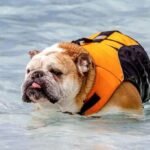
Pugs have been a popular household pet for hundreds of years. Some theories suggest their name comes from the pug monkey or marmoset monkey, which was a popular house pet in the 1700s. Today, these pint-sized pooches are still winning over hearts across the world. With their square-shaped body, adorable wrinkly faces, and big bulgy eyes, pugs are the ultimate companion dog.
In this article, we’ll be exploring whether or not pugs can swim. And if they can, what precautions should you take? Read on to find out what these canines are capable of. Your Pug can swim instinctively, like most dogs, but due to their scrunched-in face, they will struggle to breathe and get tired quickly. This often causes them to head for shore or the side of the pool immediately.
Swimming also doesn’t come naturally for them because the shape of their head requires them to hold it higher than many other dog breeds in order to get air. Therefore, it’s best to swim with the dog, like you would with a small child, and only let them stay in the water for a short time.
All dogs, including Pugs, are born with the instinct to paddle their paws when they’re in water. This doesn’t automatically make them good swimmers. Some breeds are literally born to swim. For instance, Labrador Retrievers were bred to retrieve waterfools for hunters. Newfoundlands were trained for water rescue, while Portuguese Water Dogs helped fisherfolk by herding fish into nets.
As for Pugs? Not so much. Technically, Pugs can swim and paddle if they have to. Unfortunately, they won’t last long in the water before needing to be rescued. Due to being flat-faced dogs and at a higher risk of brachycephalic obstructive airway syndrome (BOAS), Pugs often suffer from respiratory difficulties and reduced exercise tolerance, which can further hinder their ability to swim safely.
Can Pug Dog Swim
The short answer is yes, but with a massive asterisk. If you drop a Pug into water, their legs will move in a paddling motion. This is a survival reflex. However, just because they can move their legs doesn’t mean they are swimming effectively or safely.
Pugs face several physical challenges that make swimming difficult. First, they are “front-heavy.” Their thick, muscular chests and heavy heads act like an anchor. This makes it very hard for them to keep their rear ends afloat. When a Pug tries to swim, their back half often sinks, making them vertical in the water.
When a dog is vertical in the water, they have to work twice as hard to stay afloat. For a Pug, this extra effort is dangerous. Because they have short snouts, they have to tilt their heads back significantly to keep their nose and mouth above the water line.
This head tilt makes it even harder to stay level. It also puts a lot of strain on their neck and back. Within just a minute or two, a Pug can become completely exhausted. If they aren’t wearing a life jacket, they can sink very quickly.
Pug Dog Puppies Swimming
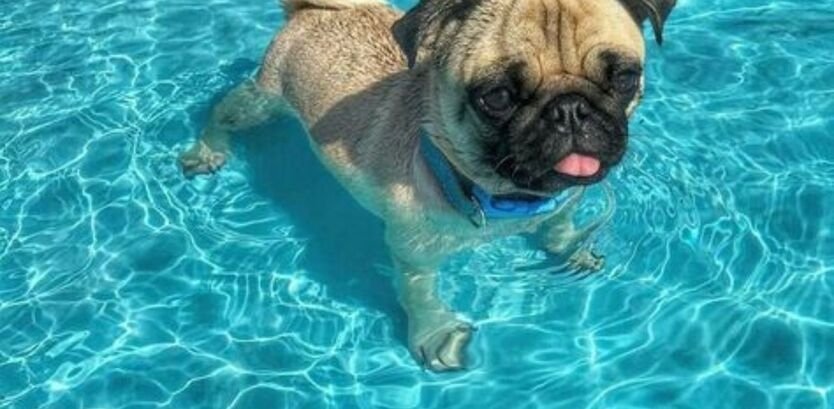
If you have a Pug puppy, you might be excited to introduce them to the family pool or a local lake. While early exposure is great for confidence, you must be extremely careful with Pug dog puppies swimming. Puppies do not have the muscle strength or the stamina of adult dogs.
Start in a very controlled environment. A shallow plastic kiddie pool is the best place for a Pug puppy to experience water for the first time. The water should only be deep enough to touch their chest. This allows them to feel the water without the fear of sinking.
Always supervise your puppy. Even two inches of water can be dangerous for a small Pug puppy if they trip or get scared. Use lots of treats and praise. You want them to associate the water with fun and rewards, not with fear or struggling to breathe.
Keep these sessions very short. Five minutes is more than enough for a puppy. They tire out much faster than you think. Also, remember that puppies are more sensitive to temperature. Ensure the water is lukewarm, as cold water can cause their body temperature to drop rapidly.
Are Pug Dog Good Swimmers
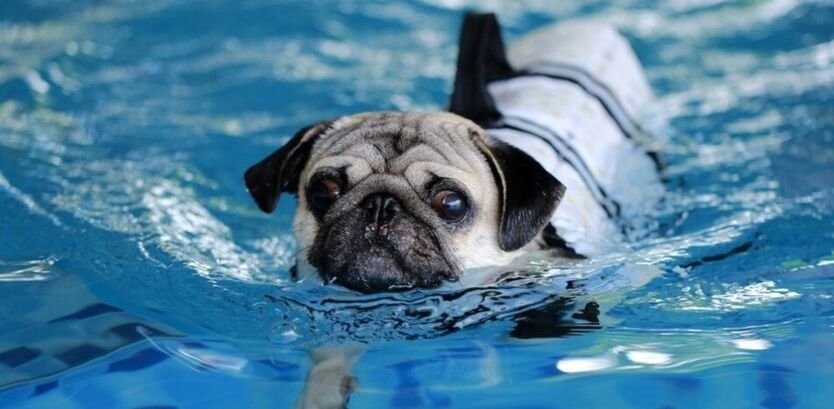
In the world of dogs, Pugs are generally considered poor swimmers. If we compared dog breeds to Olympic athletes, a Lab would be a gold-medal swimmer, while a Pug would be the person cheering from the sidelines with a cold drink.
Their anatomy is the primary reason. Pugs are “brachycephalic,” which is a fancy word for having a flat face. This facial structure means their airways are much smaller and more compact than other dogs. When they exert themselves, like when swimming, they can’t take in enough oxygen to keep up with the physical demand.
Another factor is their coat. While it looks short, it is actually quite dense. When that fur gets soaked with water, it becomes heavy. This added weight makes it even harder for the Pug to stay on the surface.
So, while your Pug might enjoy a quick dip, they will never be the type of dog that can spend thirty minutes fetching a ball from the middle of a lake. They are “dip and sit” dogs. They like to get wet, cool off, and then get back to solid ground as fast as possible.
Pug Dog Swimming Ability
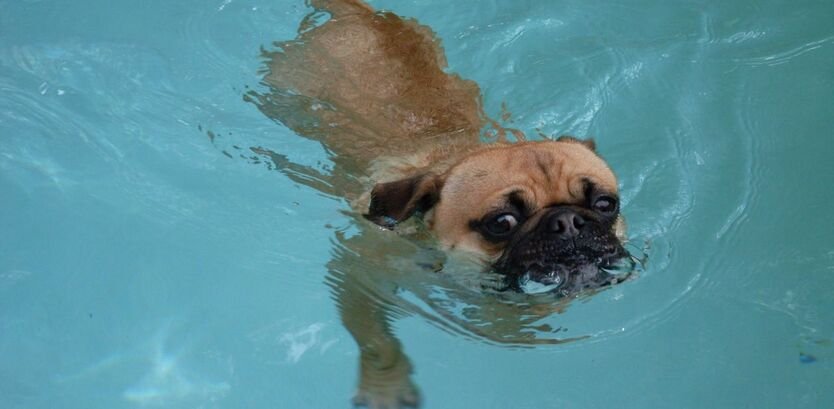
When we talk about Pug dog swimming ability, we are really talking about how much support they need. A Pug’s ability to swim is almost entirely dependent on the gear they wear and the supervision they receive.
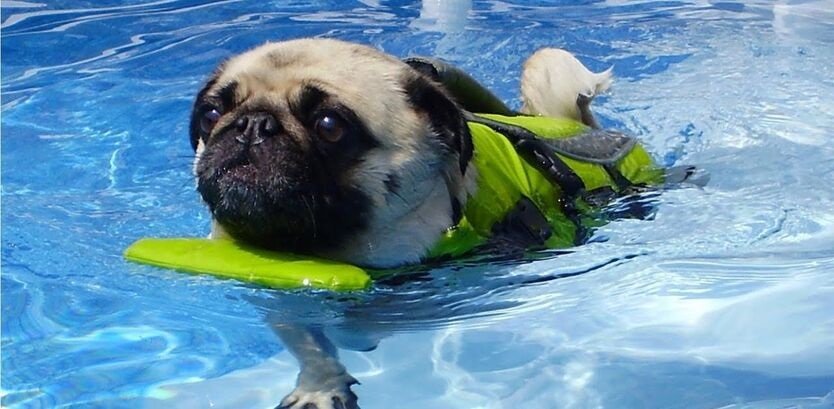
The Importance of a Life Jacket A life jacket is not optional for a Pug. It is a vital piece of safety equipment. A high-quality dog life jacket provides buoyancy at the chest and neck. This helps keep their heavy front end up and, more importantly, keeps their face out of the water.
Look for a life jacket with a handle on the back. This allows you to grab your Pug instantly if you see them struggling. It also helps you guide them through the water so they don’t have to work so hard to steer themselves.
Energy Levels and Breath Because of their breathing issues, Pugs have very low endurance. You will notice that after just a few laps, your Pug’s breathing will become loud and raspy. This is a sign that they need to stop immediately. Overexertion in water can lead to heatstroke or secondary drowning, which is why monitoring their breath is the most important part of the Pug dog swimming guide.
Pug Dog Swimming Facts
To help you understand your little aquatic explorer better, here are some interesting facts about Pugs and the water:
- Paddling Instinct: Pugs will start paddling their legs the moment they feel they aren’t touching the ground. This happens even if you are just holding them over the water!
- Water Temperature: Pugs are very sensitive to heat. While swimming is a great way to cool down, they can also overheat if the water is too warm or if the sun is beating down on them.
- Sinkers, Not Floaters: Without help, most Pugs will naturally sink rear-first. This is why human assistance is always required.
- The “Reverse Sneeze”: Getting water in their nose can trigger a reverse sneeze in Pugs. This sounds scary but is usually harmless. Just keep their face dry!
- Ear Infections: Because Pugs have folded ears, water can easily get trapped inside. Always dry your Pug’s ears thoroughly after any swimming session.
Steps for a Successful Pug Swim
- Introduce the Gear: Let your Pug wear their life jacket around the house first so they get used to the feeling.
- Enter Slowly: Never throw a Pug into the water. Walk them in slowly or carry them.
- Stay Within Reach: Always stay at arm’s length. You are their lifeguard.
- Fresh Water Rinse: Chlorine from pools or salt from the ocean can irritate a Pug’s sensitive skin and wrinkles. Always rinse them with fresh water afterward.
- Dry Those Wrinkles: This is the most important post-swim step. Moisture trapped in Pug wrinkles can lead to nasty infections. Use a soft towel to dry every fold on their face.
Conclusion
Swimming can be a wonderful, high-energy activity for your Pug, but it requires a lot of preparation. By following this Pug dog swimming guide, you can turn a potentially risky situation into a fun bonding experience.
Remember that your Pug relies on you to be their safety net. With a sturdy life jacket, constant supervision, and a focus on keeping those adorable face wrinkles dry, your Pug can enjoy the water just as much as any other breed.
Keep the sessions short, keep the treats flowing, and always listen to your dog’s breathing. Your spirited companion might not be a natural-born shark, but with your help, they can definitely be a happy little paddler!
Common Questions About Pugs and Water
Can Pugs be left alone near a pool?
No, never. Because Pugs are front-heavy and struggle to swim, falling into a pool can be fatal in a matter of seconds. Ensure your pool is fenced or that your Pug wears a life jacket whenever they are in the backyard.
How do I know if my Pug is enjoying the water?
Look at their body language. If their ears are back, their eyes are wide, and they are frantically trying to climb out, they are stressed. If they are moving calmly and have a relaxed facial expression, they are likely having a good time.
Is swimming good exercise for Pugs?
Yes, it is actually one of the best exercises for them! Because Pugs often suffer from joint issues or luxating patellas, the buoyancy of the water takes the pressure off their joints. It allows them to burn calories and build muscle without the impact of running on pavement.
What is the best age to start swimming?
You can start introducing your Pug to water as early as 12 to 16 weeks, provided they have had their necessary vaccinations. The earlier they learn that water isn’t scary, the more they will enjoy it as adults.
Should I let my Pug swim in the ocean?
The ocean can be tricky because of waves and currents. A small wave can easily submerge a Pug. If you take them to the beach, stick to the very edge of the water where the waves are small, and always keep them on a leash and in a life jacket.