Pugs. Just the name brings a smile to your face. These little dogs, with their unique smashed-in faces, wrinkly brows, and charming tail curls, have completely captured the world’s heart.
But as any Pug owner knows, these adorable goofballs come with a few specific needs especially when it comes to what they eat.
Fuelling your charming Pug is key to their happy, wheezy life! Their compact size and naturally lower activity level due to their breathing issues make them highly prone to weight gain. Even a small amount of extra weight can put serious stress on their joints and breathing.
Feeding your Pug well isn’t just about filling their bowl; it’s about supporting their body, protecting their joints, and giving them the best chance to thrive. This comprehensive guide will explore the ideal diet for Pugs, focusing on the specific pug dog food and nutrition requirements they need to maintain optimal health and vitality.
Pug Nutrition Facts: Understanding Their Unique Needs
Pugs are small, brachycephalic (flat-faced) dogs. This makes their nutritional needs slightly different from other breeds.
A balanced diet for a Pug must include all the basics proteins, fats, carbohydrates, vitamins, and minerals. However, the proportions must be carefully controlled to match their moderate activity level and their predisposition to weight gain.
The Three Cornerstones of Pug Health
1. High-Quality Protein for Muscle Tone
Pugs need strong, lean muscle to support their frame. Protein is absolutely crucial for muscle maintenance, immune strength, and general body function.
Look for high-quality animal proteins listed as the first ingredients on a food label. Good sources include named meats like chicken, turkey, lamb, or fish.
Aim for a food that provides a mid to high protein percentage, typically in the range of 25% to 30% for adult maintenance.
2. Healthy Fats for Skin and Coat
Pugs are notorious for having sensitive skin and developing allergies, which often shows up as itchy skin or a dull coat. Healthy fats, especially Omega-3 and Omega-6 fatty acids, are your best defense here.
These essential fatty acids, often sourced from fish oil or flaxseed, help reduce inflammation, keeping their skin healthy and their signature short coat shiny and vibrant.
While fats are vital for energy, remember Pugs gain weight easily. The fat content needs to be moderate and come from healthy sources, typically around 15% to 20% of the diet.
3. Controlled Carbohydrates and Fiber
Carbohydrates are the primary source of fast energy. For a less active breed like the Pug, too many simple, starchy carbs turn quickly into unwanted weight.
The focus should be on complex carbohydrates and fiber from whole grains (like brown rice or oats, if tolerated) and vegetables (like sweet potato and pumpkin).
Fiber is especially important as it aids in digestion, keeps stools regular, and helps your Pug feel full without adding a huge amount of calories. Look for fiber content in the 4% to 7% range.
Pug Food Amount:

When it comes to pug dog food and nutrition, knowing how much to feed is often more critical than knowing what to feed. Pugs love food and will often eat until they burst; they rely on you for portion control!
The Calorie Control Checklist
The best way to figure out the right portion is to focus on calories, not just cup size, as calorie counts vary widely between brands.
A general rule of thumb (which you should always confirm with your veterinarian) is:
- Adult Pug (Active): Needs about 40 to 45 calories per pound of ideal body weight.
- Adult Pug (Sedentary/Senior): Needs closer to 35 to 40 calories per pound of ideal body weight.
- Example: A healthy, moderately active 15-pound Pug needs roughly 600 to 675 calories per day.
This is just a starting point. Your Pug’s individual metabolism and activity level will determine the final number.
Actionable Takeaway: The Scoop Check
- Find the Calorie Count: Look on your dog food bag for the “Calorie Content (ME)” listed in kcal/kg or kcal/cup.
- Calculate: Divide your Pug’s daily caloric need by the calories per cup of their food. This tells you the exact amount of food in cups per day.
- Use a Measuring Cup: Do not eyeball it. Use a standard, labeled measuring cup to portion out their daily intake precisely.
Scheduled Feeding vs. Free Feeding
For Pugs, scheduled feeding is highly recommended over “free feeding” (leaving food out all day).
Scheduled meals make it much easier to track calorie intake and prevent grazing, which leads to weight gain.
Ideal Feeding Schedule:
- Adult Pugs: Should be fed two small meals per day (morning and evening). Splitting the food helps keep their energy stable and prevents issues like bile reflux.
- Snacks: Any treats or snacks given throughout the day should be low-calorie and their calories must be deducted from the total daily food amount.
Pug Puppy Dog Food: Building a Strong Foundation
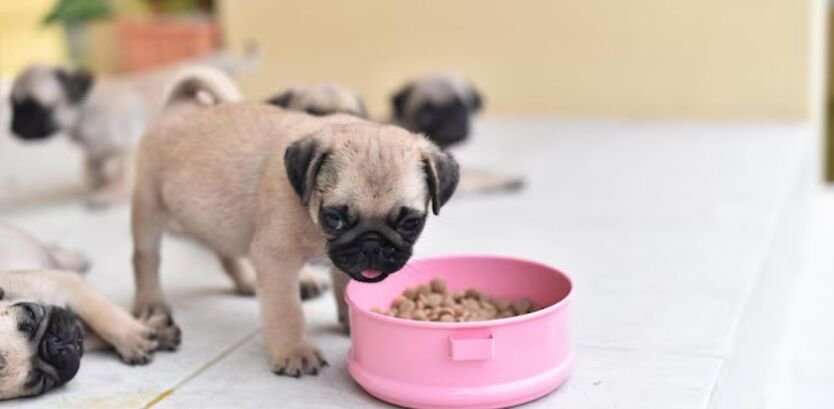
A Pug puppy is a bundle of energy and rapid growth, which means their nutritional demands are temporarily higher than an adult’s.
Puppy Nutritional Necessities
Pug puppies require diets that are:
- Higher in Protein and Fat: This supports rapid muscle and bone development, but it must be controlled to avoid overly rapid growth.
- Rich in DHA: Docosahexaenoic Acid (DHA), an Omega-3 fatty acid, is crucial for healthy brain and vision development.
- Balanced Minerals: The calcium and phosphorus levels must be balanced for controlled, healthy bone growth.
The Right Kibble Size and Texture
Due to their flat faces and crowded teeth, Pug puppies (and adults) need food that is easy to pick up and chew.
Look for:
- Small, flat, or uniquely shaped kibble designed specifically for small or brachycephalic breeds.
- The food should encourage chewing, rather than gulping, which can cause digestive upset and potential airway irritation.
Pug Puppy Feeding Schedule
Puppies burn energy quickly and need to eat more frequently to maintain their blood sugar levels.
| Age | Meals Per Day | Notes on Feeding |
| 8 to 12 Weeks | 4 times per day | Divide the total daily recommended amount by four. |
| 3 to 6 Months | 3 times per day | Gradually reduce to three meals as they grow, monitoring weight. |
| 6 to 12 Months | 2 times per day | Transition to two meals per day. Monitor their body condition closely. |
Best Pug Diet: Exploring Food Types
The decision of whether to feed kibble, wet, or a fresh diet comes down to balancing nutrition, convenience, and your Pug’s individual preferences and health needs.
1. Dry Kibble (The Most Popular Choice)
Kibble is convenient, easy to store, and the crunchy texture can offer some dental cleaning benefits (though it’s not a substitute for brushing). If you choose kibble, select a high-quality, small-breed formula with high-quality protein sources. Be aware that the high-heat processing can sometimes reduce the bioavailability of nutrients.
2. Wet Food (Canned or Pouched)
Wet food has high moisture content, which is excellent for Pugs who don’t drink enough water. Its stronger smell and softer texture make it ideal for picky eaters or older Pugs with dental issues. The volume of wet food can also help your Pug feel full, aiding in weight management. A drawback is that the soft texture doesn’t help clean teeth.
3. Fresh or Raw Food Diets
Minimally processed diets may retain more natural nutrients and can lead to improved digestion and better skin/coat condition. However, raw food carries a safety risk of bacterial contamination for both the dog and the handlers. Home-prepared fresh or raw diets also require careful, professional formulation to ensure they are nutritionally complete and balanced.
Conclusion on Diet Types: No matter which diet you choose, the most important factor is that the food is complete and balanced for your Pug’s life stage (puppy, adult, or senior), meeting all the AAFCO (Association of American Feed Control Officials) guidelines.
Healthy Dog Food for Pugs: Navigating the Label
Being a smart consumer means reading and understanding your dog’s food label. For Pugs, there are specific ingredients to look for and others to avoid.
What to Look For
- Named Meat as the First Ingredient: Look for “Chicken,” “Lamb,” or “Salmon,” not vague terms like “meat meal” or “meat by-products.” This confirms a high-quality protein source.
- Omega Fatty Acids: Ensure the food includes sources like fish oil, flaxseed, or canola oil for those essential Omega-3s.
- Natural Preservatives: Look for natural options like Vitamin E (tocopherols), Vitamin C, or Rosemary extract instead of artificial preservatives.
- Digestible Carbs/Fiber: Ingredients like sweet potatoes, pumpkin, or highly digestible rice are preferred over high-glycemic fillers.
What to Approach with Caution (For Pugs)
- Excessive Fillers: Ingredients that primarily exist just to bulk up the food (like excessive corn or wheat) provide little nutritional value and can contribute to unnecessary weight gain.
- Artificial Colors and Flavors: These offer no nutritional benefit and are often linked to sensitivities or allergies in some dogs.
- Soy: Soy is a common allergen and filler, which is best avoided if your Pug has sensitive skin.
- Excessive Treats: Remember to check the calorie count on training treats and deduct those calories from their main meal portions!
Supporting Pug-Specific Health Needs
Because Pugs are prone to certain health issues, the right diet can act as a preventative measure:
- Joint Health: Look for foods or supplements containing Glucosamine and Chondroitin. These are vital for supporting the health of their joints, which are prone to issues like hip dysplasia.
- Eye Health: Antioxidants, found in fruits and vegetables, can help support their eye health.
- Weight Management: If your Pug is already overweight, your vet may recommend a prescription weight-loss diet or a food with higher fiber and lower fat to manage calories while maintaining fullness.
Practical Pug Feeding: Tips and Techniques

Feeding is more than just placing the bowl down; how you feed your Pug can be just as important as what you feed them.
Use a Slow-Feeder Bowl
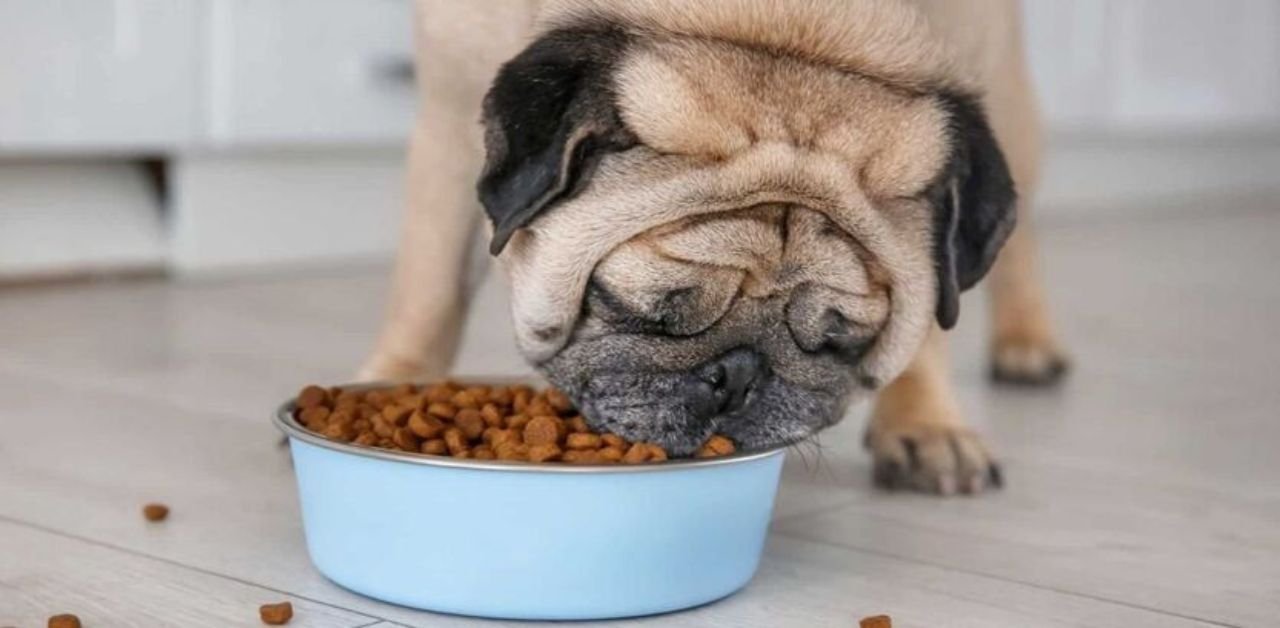
Pugs are known for eating their food incredibly fast. This rapid eating can cause them to swallow a lot of air, potentially leading to excessive gas or digestive upset.
- The Solution: Use a slow-feeder bowl. These bowls have ridges and mazes that force your Pug to slow down, pick up the food one piece at a time, and chew properly. This is especially helpful for flat-faced breeds.
Consider an Elevated Bowl
Due to their brachycephalic structure, some Pugs may benefit from eating out of a bowl that is slightly raised off the floor. An elevated bowl can help improve their posture while eating, potentially making swallowing easier and reducing the amount of air they gulp down.
The Golden Rule: Never Exercise Around Mealtimes
This is an important safety rule for all dogs: Avoid strenuous exercise for one hour before and one hour after a meal. Exercise around eating can lead to stomach discomfort or vomiting. Give your Pug time to rest and digest.
Conclusion:
Ensuring your Pug receives the best pug dog food and nutrition is the foundation of their long and happy life. Focus on quality ingredients, measure every meal precisely, and address their unique needs from their flat-faced structure to their tendency for weight gain. By paying attention to their diet, you are actively supporting their health and guaranteeing your little companion is fueled for maximum happiness and longevity.
FAQs
1. My Pug is always begging. How do I manage their constant hunger?
Manage constant begging with strict, scheduled mealtimes and low-calorie snacks. Use dog-safe vegetables (like carrots or green beans) or puzzle feeders to satisfy their urge to chew and keep them mentally engaged without adding excess calories.
2. Should I give my Pug supplements?
Most high-quality foods are complete. However, Pugs often benefit from supplements like Glucosamine and Chondroitin for joint health and Omega-3 fish oil for skin/coat issues. Always consult your vet first.
3. Are grains bad for my Pug?
No, quality grains (like oats or rice) are good sources of energy and fiber. Avoid them only if your Pug has a confirmed allergy. Otherwise, focus on whole, healthy grains rather than cheap fillers.
4. How do I know if my Pug is at a healthy weight?
You should be able to easily feel their ribs without pressing hard and see a slight waist tuck behind the ribs. Regular vet checks and using a Body Condition Score (BCS) are the most accurate methods. A lean Pug is a healthy Pug.