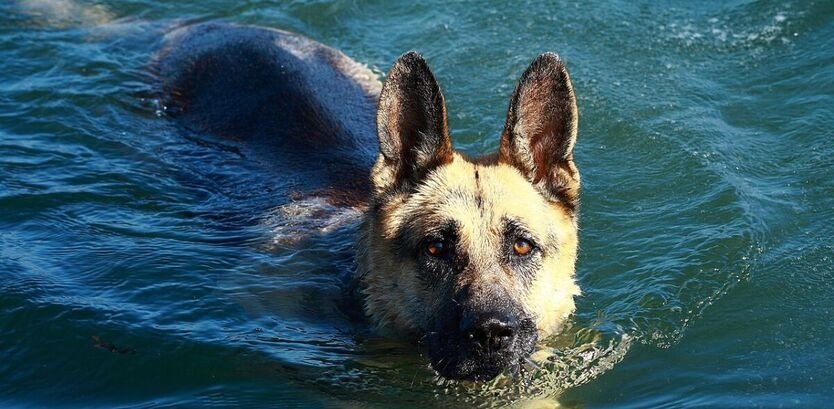
As the proud owner of a German Shepherd, you may be wondering how you can keep your big guy or girl active. If summer is rolling around, you may even be wondering if your furry friend can swim. That line of thought also opens up more questions, such as will my shepherd go into my backyard pool, paddle around in lakes, or frolic in the waves at the beach?
Those are all good questions. Let’s take a look at whether German Shepherds take to the water and some safety tips for swimming with your pup if it turns out they can swim along with you.
Most German Shepherds can start swimming while they’re still puppies. Some are ready at ten weeks. However, young pups are still weak, so make sure they only swim in controlled environments with warm water.
If your German Shepherd seems too frail to swim at ten weeks, try again when they’re five to six months old. They should have the necessary muscles and confidence by then.
Can German Shepherd Swim
The short answer is yes, German Shepherds can swim. However, it is a common mistake to assume they are born experts like Labradors or Golden Retrievers. While those breeds have “water” in their history, German Shepherds were originally bred for herding and guard duty on solid ground.
Because they are athletic and intelligent, they usually pick up swimming very quickly. Their powerful legs and deep chests give them the physical tools they need to stay afloat. But for a German Shepherd, swimming is often a learned skill rather than a pure instinct.
Some Shepherds will jump right into a pool without a second thought. Others might stand on the edge and bark at the water like it is a strange monster. Both reactions are normal! If your dog is hesitant, it just means they need a little more time to realize that water can be fun and safe.
The key to a successful first dip is patience. You want to show them that the water isn’t going to pull them under. Once they find their “sea legs,” most Shepherds grow to love the way the water cools them down on a hot summer day.
German Shepherd Puppies Swimming
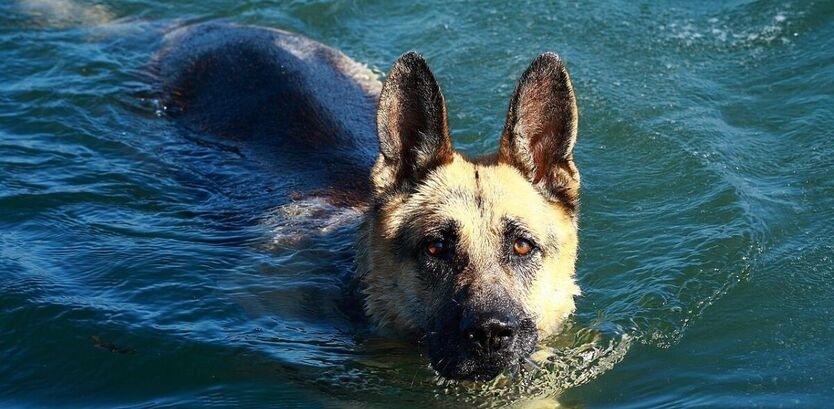
If you have a little German Shepherd puppy, you might be excited to see them do their first doggy paddle. Starting early is a great way to build a lifetime of confidence. As we mentioned, ten weeks is often the earliest they should try, but every puppy grows at a different speed.
When you start with a puppy, the environment is everything. Never just toss a puppy into a pool or lake. This can cause a huge amount of fear that lasts for years. Instead, find a very shallow area where they can just get their paws wet.
Think of it like a toddler at the beach. They should be able to walk around and feel the water against their belly without having to actually swim yet. This helps them get used to the sensation of being wet and the resistance of the water.
- Start in warm water: Puppies can’t regulate their body temperature as well as adult dogs. Cold lake water can be a shock to their system.
- Use a life jacket: Even in shallow water, a puppy-sized life jacket is a smart move. It gives them a “floaty” feeling that builds confidence.
- Keep it short: Swimming is a massive workout for a growing pup. Five to ten minutes is plenty for a beginner.
As they get older and stronger, usually around the five or six-month mark, they will have the muscle mass to handle longer swim sessions. By this time, their coordination is also much better, so they won’t splash around as frantically.
Are German Shepherd Good Swimmers
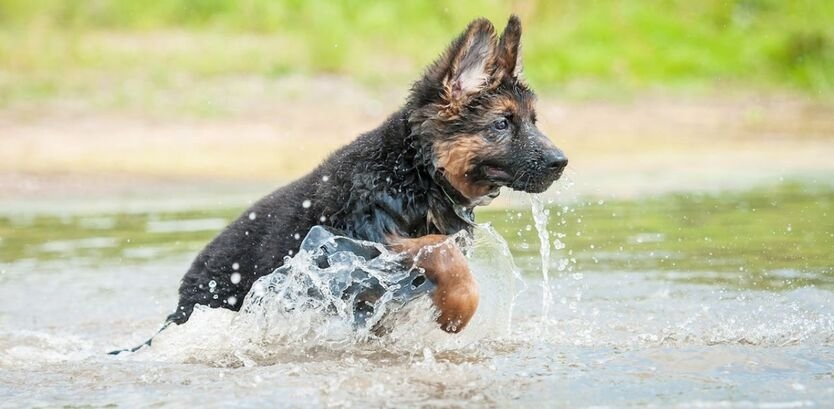
Once they are trained, German Shepherds are actually excellent swimmers. Their muscular frames and high endurance levels make them look like “aquatic commandos” in the water. They are built for work, and that work ethic carries over into their swimming style.
However, there is a catch. Because German Shepherds have very dense bones and heavy muscles, they aren’t as naturally “buoyant” as some other breeds. Think of them more like a powerful boat rather than a light cork. They have to work a bit harder to keep their heavy back ends from sinking.
This is why you might see a German Shepherd doing a very vertical “splashy” paddle at first. They are trying to keep their head high and their rear end up. With practice, they learn to level out their bodies. When a German Shepherd is swimming well, they look smooth and rhythmic, with their back almost parallel to the surface of the water.
Their double coat also plays a role. It is weather-resistant and helps keep them warm, but it can also hold a lot of water. This makes the dog much heavier when they try to climb out of a pool or onto a boat. Always be ready to give them a helping hand during the exit!
German Shepherd Swimming Ability
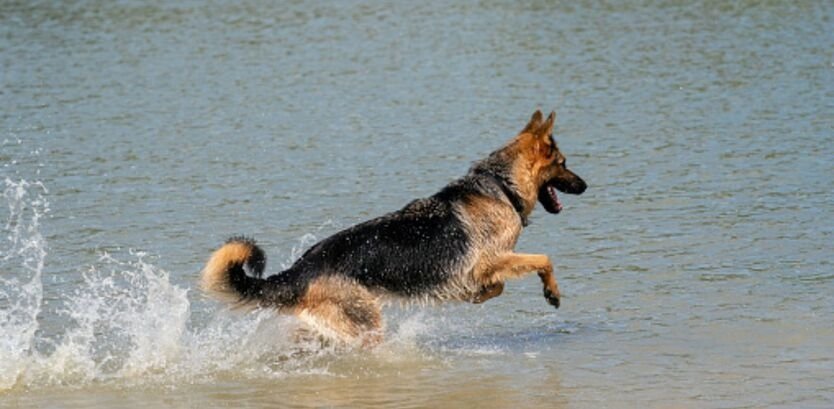
The swimming ability of a German Shepherd comes down to three things: strength, stamina, and confidence. Physically, they have everything they need. Their paws are relatively large, which acts like natural paddles, and their long tails can help them steer a bit in the water.
One of the most impressive parts of their ability is their stamina. A healthy German Shepherd can often out-swim their owners! They don’t tire easily, which is why it’s so important for you to watch them for signs of exhaustion. Sometimes they are so focused on the “mission” like fetching a ball
that they don’t realize they are getting tired.
If you notice your dog’s rear end starting to sink lower in the water, or if they are panting heavily while swimming, it is time to take a break. Their heavy muscle mass means that once they do get tired, they can sink quite quickly.
To maximize their ability, you should:
- Focus on the “Exit Strategy”: Make sure they know exactly where the steps or the shallow ramp are located.
- Practice “Four-Wheel Drive”: Encourage them to use all four legs to paddle, not just the front ones.
- Use Gear: A high-buoyancy life jacket isn’t just for safety; it actually helps them focus on their swimming form because they don’t have to worry about staying afloat.
German Shepherd Swimming Facts
To really master the German Shepherd swimming guide, it helps to know some fun and important facts about how they interact with the water. These “aquatic commandos” have some unique traits that set them apart from other dogs.
- Fact 1: They have a water-resistant coat. Their thick double coat is designed to shed water. After a swim, a good shake will actually remove a large portion of the moisture. However, that same coat can trap bacteria or salt, so a rinse is always needed.
- Fact 2: They are used in water rescues. Because of their strength and intelligence, German Shepherds are often trained for search and rescue missions that involve crossing rivers or lakes.
- Fact 3: One minute of swimming equals four minutes of running. Swimming is a high-intensity workout. It’s perfect for Shepherds who have too much energy but might have sensitive joints that can’t handle too much pavement pounding.
- Fact 4: They can be “Vertical Paddlers.” As mentioned before, they have a habit of swimming with their front paws while their back legs just sink. Training them to use all four legs turns them into much faster swimmers.
Essential Gear for the Shoreline Superstar
If you want your German Shepherd to be the ultimate shoreline superstar, you need the right gear. Safety isn’t just a suggestion; it is the most important part of the journey.
The Life Jacket A premium, high-buoyancy life jacket is the #1 item on your list. Look for one with a “rescue handle” on the back. This allows you to grab your dog easily if they get stuck or tired. It also helps you guide them when they are first learning.
The Quick-Dry Towel Because of that dense double coat, a regular bathroom towel won’t cut it. A rugged, microfiber quick-dry towel is a lifesaver. It sucks the water out of the undercoat, which prevents that “wet dog smell” and keeps your car clean on the ride home.
Ear Cleaning Solution German Shepherds have big, open ears. Water gets in there easily and can cause infections. Always have a vet-approved ear cleaner ready to dry out those ears after a day at the lake.
Conclusion
Swimming with your German Shepherd is one of the best ways to bond. It combines their love for “missions” with a great physical workout. Whether you are at the local lake or in your own backyard, remember that confidence is your ultimate power move.
By starting slow, using the right safety gear like a life jacket, and keeping a close eye on their energy levels, you can transform your courageous protector into a smooth, rhythmic glider.
With a little bit of practice, those disciplined paddles will become second nature. So, grab your rugged towel, strap on that life jacket, and get ready to hit the water. Your German Shepherd is ready for their next big aquatic adventure!
Common Questions
Can my German Shepherd swim in a chlorine pool?
Yes, but you should rinse them off immediately afterward. Chlorine can dry out their skin and damage their beautiful coat if left to sit. Also, make sure they don’t drink too much pool water, as it can upset their stomach.
How do I know if my dog is a natural or needs help?
Place them in very shallow water. If they start paddling with all four legs and seem calm, they are natural! If they only use their front legs and look panicked, they need a life jacket and some slow training.
Is swimming good for older German Shepherds?
Absolutely! It is one of the best exercises for senior dogs. Since it is low-impact, it doesn’t hurt their joints, but it still keeps their muscles strong. Just keep the sessions very short and use a life jacket for extra support.
What should I do if my dog is afraid of the water?
Never force them. Use high-value treats and their favourite toys to lure them near the edge. Sometimes, getting in the water yourself and showing them it’s safe is the best way to build trust.