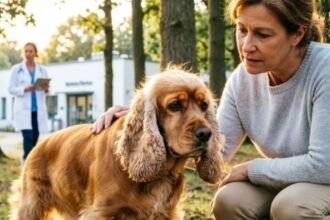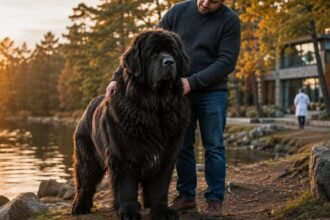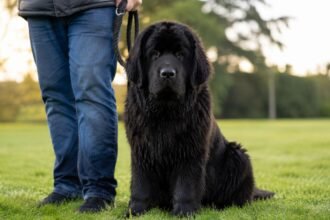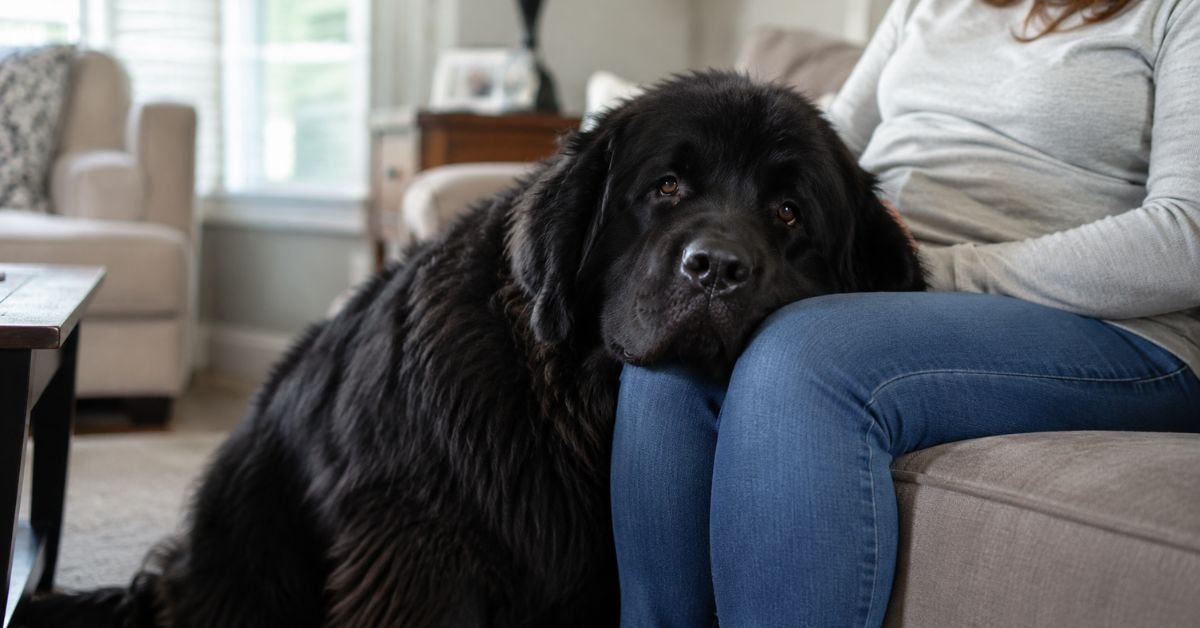
Picture this: a bear-sized dog with the temperament of a kindergarten teacher, the swimming ability of a Labrador on steroids, and the emotional intelligence of a trained therapist. That’s the Newfoundland dog breed in a single breath.
These dogs don’t just live in your home, they inhabit it. They fill doorways, commandeer sofas, and leave a drool-art installation on every wall they pass. And yet, owners who’ve had one almost never go back to another breed. The devotion is that complete.
This guide goes far beyond the basics. You’ll get real owner insights, a technical grooming masterclass, a brutally honest cost breakdown, and everything else that top-ranking sites consistently leave out.
The Competitor Gap: What No One Actually Tells You About Newfies
Most articles describe Newfoundlands as “gentle giants who love water.” Technically accurate. Practically useless. Here’s what real owners on Reddit, Quora, and breed-specific forums actually say the unfiltered truth that catches first-time Newfie owners completely off guard.
The Drool Is a Lifestyle, Not a Minor Inconvenience

Newfoundlands have loose, pendulous lips a physical trait directly tied to their water-rescue heritage that also makes them champion drool producers. This isn’t occasional slobber. This is a full household management challenge.
- Walls at dog-head-height develop permanent splatter patterns within weeks
- Guests will get hit by a “drool fling” when your dog shakes its head after drinking
- You will own more microfiber towels than bath towels
- Drool volume spikes sharply in heat, post-drinking, and during excitement
One Reddit owner described it as “decorating your home in abstract beige art, daily, forever.” Dog drool bibs exist buy several. Keep one on the dog during meals and guests. Keep one on yourself as backup.
The True Annual Cost of Ownership
Generic articles say “higher than average costs.” That’s unhelpfully vague. Here are real numbers:
| Expense Category | Estimated Annual Cost |
| Quality large-breed dry food | $1,200 – $2,000 |
| Routine veterinary care | $500 – $800 |
| Professional grooming (every 6–8 weeks) | $800 – $1,500 |
| Joint supplements (fish oil, glucosamine) | $300 – $600 |
| Orthopedic bedding replacement | $100 – $300 |
| Emergency vet reserve (recommended) | $2,000+ |
| Realistic Annual Total | $4,900 – $7,200+ |
This excludes the purchase price ($1,500–$3,500 from a health-tested breeder), spay/neuter, puppy classes, and specialty equipment. Giant dog breed care is financially demanding. Budget for it before you fall in love.
Apartment Living: The Honest Reality
Newfoundlands are surprisingly calm indoors, but they are not apartment dogs in practical terms. A fully grown Newfie takes up genuine floor real estate simply by lying down. Add the twice-yearly coat blow where fur comes off in visible clouds and small-space living becomes genuinely stressful for both owner and dog.
They also struggle in sustained heat without access to cool, well-ventilated space. If you live in a studio or one-bedroom apartment, even the gentlest Newfie will likely be miserable and so will you.
Is Newfoundland Right For You?
The Perfect Match
| Factor | What You Need |
| Home | House with fenced yard; suburban or rural preferred |
| Climate | Cool to temperate; managed heat access in warm regions |
| Family | Families with children of any age; singles who work from home |
| Time | Home most of the day; this breed does not tolerate long isolation |
| Budget | Comfortable with $400–$600/month in pet-related expenses |
| Tolerance | Fur, drool, muddy paws, wet dog smell must embrace all four |
| Experience | First-timers welcome if thoroughly researched and committed |
Who Should Reconsider
- Highly neat households. This dog will change every surface in your home.
- Frequent travelers. Newfies bond deeply and suffer real separation anxiety.
- Hot-climate owners without A/C. Heat stress in this breed is a genuine medical risk.
- Tight budgets. Orthopedic surgery, cardiac workups, and emergency care hit hard.
- Allergy sufferers. Heavy seasonal shedders with moderate year-round fur output.
Deep Dive into the Newfoundland Dog Breed
Origin and Water-Rescue Heritage

The Newfoundland dog breed originated on the Canadian island of the same name, where 18th-century fishermen selectively bred them for cold-water hauling, net retrieval, and open-water rescue. Their webbed feet, oily double coat, and powerful build are direct evolutionary products of North Atlantic working conditions.
These weren’t companion dogs who happened to like water. They were purpose-engineered marine working animals. Documented rescues include pulling drowning sailors to shore against strong ocean currents a task requiring both physical power and an almost eerie calm under pressure.
That heritage shows up in every modern Newfoundland. Your dog will instinctively body-block children near swimming pools. It will circle distressed swimmers. It may attempt to “rescue” you from your own bathtub. This is not trained behavior. It is centuries of selective pressure expressing itself in a domestic setting.
Newfoundland Dog Temperament & Family Compatibility

The Newfoundland dog temperament is among the most consistently gentle in the entire canine world. The AKC calls them “sweet-natured.” Owners call them “the dog that makes you believe in goodness.”
Key temperament traits:
- Patience with children that borders on supernatural tolerates rough handling with calm dignity
- Emotional perceptiveness they move toward distress, not away from it
- Low aggression baseline true aggression in a well-bred Newfie is genuinely rare
- Whole-family bonding not a one-person dog; attaches to the entire household unit
The caveat worth repeating: their size means toddlers can be knocked over accidentally by a wagging tail or an enthusiastic greeting. Supervision with children under three is not optional it’s physics.
Size, Growth Milestones, and Dietary Needs
| Age | Male Weight | Female Weight |
| 8 weeks | 10–15 lbs | 8–12 lbs |
| 6 months | 65–85 lbs | 55–70 lbs |
| 12 months | 100–120 lbs | 80–100 lbs |
| 18 months | 120–140 lbs | 95–115 lbs |
| Full adult (2 yrs) | 130–150 lbs | 100–120 lbs |
The most critical feeding rule: Never push rapid weight gain in Newfoundland puppies. Overfeeding for fast growth forces immature joint structures to bear disproportionate weight loads, accelerating dysplasia development. Feed a large-breed puppy formula, specifically standard puppy food, contains excess calcium and phosphorus ratios unsuitable for giant breeds.
Adults require 4 to 6 cups of premium large-breed kibble daily, split into at minimum two meals to meaningfully reduce bloat risk.
Newfoundland Grooming Masterclass: The Technical Guide Competitors Don’t Write

The Newfoundland’s coat is a weather-resistant double-layer system consisting of a coarse, flat outer coat and a dense, oily undercoat. Proper grooming requires understanding both layers independently their shedding cycles, vulnerability to matting, and correct tool pairings to maintain coat health and prevent skin problems beneath.
This is where most grooming guides fall apart. “Brush regularly” tells you nothing. Here is the actual system.
Anatomy of the Newfoundland Double Coat
The outer coat (guard hairs) is coarse, slightly wavy or flat, and water-repellent due to natural oil secretion. It protects against debris, UV, and surface moisture.
The undercoat is dense, soft, and insulating it traps warm air in cold weather and acts as a thermal buffer in moderate heat. This is the layer that sheds most dramatically and mats most aggressively if neglected.
Critical rule: Never shave a Newfoundland. Shaving destroys the coat’s layered function, disrupts natural temperature regulation, removes UV protection, and can cause permanent coat texture damage. If a groomer suggests shaving for summer comfort find a different groomer.
The Complete Grooming Toolkit with Tool Configurations
| Tool | Purpose | Correct Configuration |
| Slicker brush (firm, medium-pin) | Daily surface work, detangling outer coat | Use with light pressure in short strokes; don’t drag through mats |
| Undercoat rake (rotating teeth) | Penetrating and loosening packed undercoat | Work in sections against hair growth direction first, then with it |
| Wide-toothed metal comb | Post-brush quality check to skin level | Run from skin outward — any resistance indicates a hidden mat |
| Deshedding blade (e.g., Furminator L) | Seasonal coat-blow management | Use 2–3x weekly during blows only; daily use thins the outer coat |
| Dematting comb (curved blade) | Cutting through established mats | Work from mat edges inward; never pull from root outward |
| Detangling spray (dog-safe) | Pre-brush lubrication on dry coats | Apply to sections before brushing; reduces breakage by 40–60% |
The Weekly Grooming Protocol Step by Step
- Start behind the ears. Mats form here first due to constant moisture and friction from collar wear. Address before anywhere else.
- Section and clip the coat into working zones: neck, shoulders, flanks, hindquarters, tail, and legs. Work one zone completely before moving.
- Apply detangling spray to each dry section before the slicker brush pass.
- Slicker brush pass surface layer, following hair growth direction.
- Undercoat rake pass deeper penetration, using short pulling strokes to lift packed undercoat.
- Metal comb verification drag from skin to tip. Any snag = hidden mat. Address immediately.
- High-friction zones last: armpits, groin, inside back legs, and around the collar. These mat fastest and are most sensitive.
- Between-toe inspection remove debris, check for matting between paw pads.
- Jowl and lip fold wipe dry thoroughly after every meal and water session to prevent bacterial skin infections in the skin folds.
Seasonal Coat Blow Management
Twice yearly typically spring and fall Newfoundlands shed their entire undercoat over 3–6 weeks. This is not a shedding uptick. This is a full undercoat evacuation.
During coat blow periods:
- Switch to daily brushing minimum, ideally twice daily
- Use the deshedding blade 2–3 times weekly (not daily)
- Vacuum with a unit rated for large-volume pet hair
- Expect fur accumulation in corners, on clothing, in food, and in places that defy physics
- Consider a professional de-shedding bath and blowout at the season’s peak this single appointment can remove weeks’ worth of loose coat at once
Crucial Health & Lifespan Realities
Lifespan of a Newfoundland Dog
The average lifespan of a Newfoundland dog is 8 to 10 years. Some exceptional individuals reach 11 or 12. The breed’s large size is directly correlated with its shorter lifespan a biological reality of giant breeds that no amount of excellent care fully overcomes.
This deserves honesty before ownership, not after.
Core Newfie Health Issues
Subvalvular Aortic Stenosis (SAS) The most serious congenital concern in the breed. A narrowing of the aortic valve that ranges from mild to life-limiting. Reputable breeders perform annual cardiac exams by a board-certified cardiologist. Always request written cardiac clearance for both parents not just one.
Hip and Elbow Dysplasia Weight-bearing joint malformation accelerated by rapid growth and excess weight. Require OFA (Orthopedic Foundation for Animals) certifications from both parents. Begin joint support (omega-3 fatty acids, glucosamine/chondroitin) by 12–18 months even in asymptomatic dogs.
Bloat / GDV (Gastric Dilatation-Volvulus) A surgical emergency where the stomach rotates on its axis, cutting off blood supply. Symptoms: unproductive retching, hard distended abdomen, restlessness post-eating, pale gums. Response time is measured in minutes, not hours.
Prevention protocol:
- Two meals daily never one large meal
- No vigorous exercise within 60 minutes of eating in either direction
- Discuss prophylactic gastropexy (surgical stomach tacking) with your vet at time of spay/neuter
Cystinuria A hereditary metabolic disorder causing kidney stone formation, significantly overrepresented in Newfoundlands compared to other breeds. DNA testing is available; ethical breeders test all breeding animals.
Hypothyroidism Common in the breed; manageable with daily oral medication once diagnosed. Watch for unexplained weight gain, coat thinning, lethargy, and cold intolerance.
Training and Exercise Requirements
Training a Newfoundland Puppy

Training a Newfoundland puppy early is non-negotiable not because they’re difficult, but because a 150-pound untrained dog is a genuine safety hazard regardless of temperament. Start the day your puppy arrives home.
Priority commands in order of importance:
- “Off” before they can knock anyone over
- Loose-leash walking a pulling Newfie can drag an adult off their feet
- “Leave it” critical around food, children’s toys, and small pets
- Recall reliable off-leash recall is a safety essential at this size
- Crate acceptance reduces separation anxiety and provides a safe retreat
Use positive reinforcement exclusively. Newfoundlands are emotionally sensitive and respond to pressure by shutting down, not by complying. Harsh corrections damage trust irreparably in this breed. Enroll in a puppy class by 12–16 weeks for structured socialization alongside basic obedience work.
Exercise Needs
Moderate not the high-energy demands of working breeds, but not negligible either.
- Daily walks: 30 to 45 minutes in cooler parts of the day
- Swimming: Their preferred activity; superb joint-friendly full-body exercise
- Avoid: Running on pavement, high-impact repetitive exercise before 18 months (growth plates are still open and vulnerable)
- Mental enrichment: Puzzle feeders, scent work, and short training sessions prevent boredom-driven destructive behavior
Conclusion
The Newfoundland dog breed demands real commitment from your floors, your grooming schedule, your veterinary budget, and eventually, the part of yourself that has to say goodbye far too soon.
What they give back is harder to quantify. It’s the dog that stays beside you when you’re sick without being asked. The one that circles children instinctively without a single day of training. The presence that makes a house feel genuinely safe in a way no alarm system replicates.
If you can meet this breed honestly the drool, the cost, the grooming hours, the short years a Newfoundland will be among the most profound relationships of your life.
The drool is worth it. Every single owner will tell you the same thing.
Frequently Asked Questions
1. Can Newfoundlands live in hot climates like Texas or Florida?
Yes, but only with active management. Air-conditioned indoor living is non-negotiable. Outdoor time should be restricted to early morning and after sunset during summer months. Always provide unlimited fresh water, never leave them in vehicles, and watch for heat exhaustion signs: excessive panting, drooling beyond normal, and disorientation. Many Southern owners make it work successfully it simply requires intentional planning, not passive awareness.
2. Are Newfoundlands good with cats and small pets?
Generally excellent. Their naturally low prey drive makes them one of the safer large breeds around smaller animals. Most Newfies introduced to cats during puppyhood coexist peacefully and many become quietly protective of them. Proper introductions across several days, with escape routes available to the cat, remain important. Individual prey drive varies, so supervised integration initially is always the smarter approach.
3. How severe is Newfoundland shedding compared to other large breeds?
Among the heaviest of any large breed. Year-round moderate shedding is punctuated by two major seasonal coat blows spring and fall during which the full undercoat evacuates over 3–6 weeks. During these periods, daily brushing and high-capacity vacuuming become a near-daily task. The fur is long and coarse, tending to clump in corners rather than drift, which makes it slightly easier to collect but no less voluminous.
4. Can a Newfoundland be left alone during full workdays?
This is one of the most important questions prospective owners avoid asking. Honestly: not well. Newfoundlands are deeply social dogs with genuine attachment needs. Extended daily isolation 8 to 10 hours consistently frequently leads to separation anxiety, destructive behavior, and visible depression. If your lifestyle requires full-day absences, plan for a dog walker midday, doggy daycare, or a second dog for company. This mismatch is among the leading reasons Newfoundlands enter rescue.
5. What health certifications should I require from a Newfoundland breeder?
A responsible breeder will offer these proactively, not reluctantly:
- OFA Hip and Elbow certifications on both parents
- Annual cardiac clearance by a board-certified cardiologist (SAS screening)
- Cystinuria DNA test results for both breeding animals
- CAER eye exam results (within 12 months)
- Membership or involvement with the Newfoundland Club of America or national equivalent
If a breeder hesitates, cannot produce documentation, or has multiple litters simultaneously available, walk away. The wait for a properly health-tested Newfoundland puppy is 6 to 18 months. That wait is genuinely worth it.