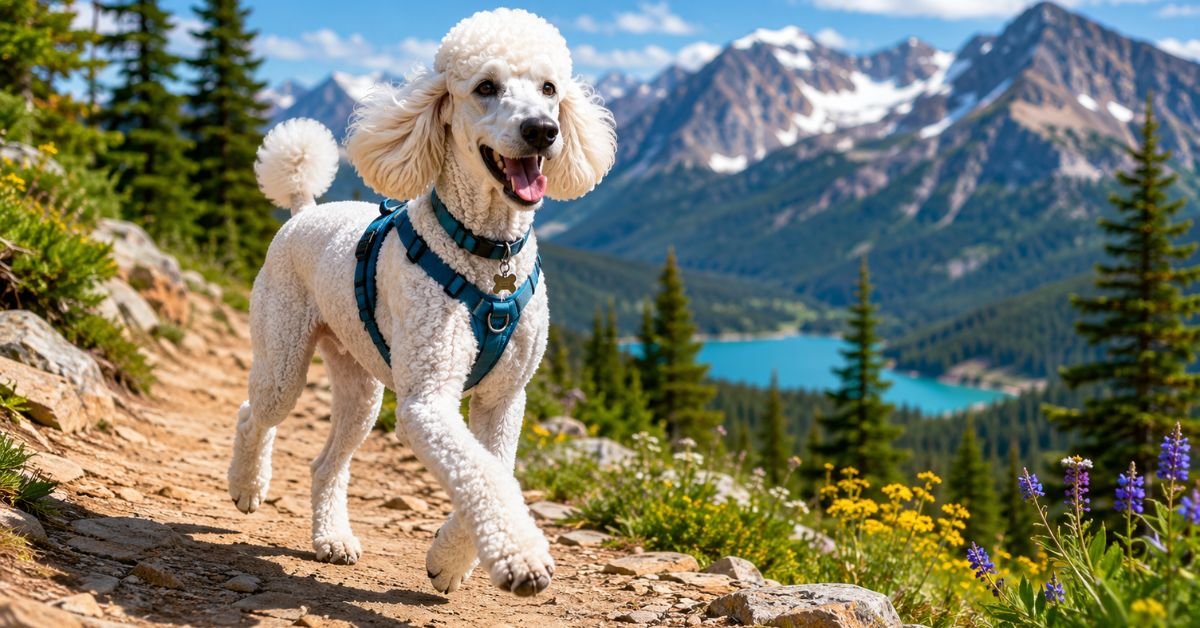
If you’ve ever pulled up to a trailhead with your Poodle and caught skeptical looks from the “serious” hiking crowd, you already know the bias. But here’s the truth with the right poodle dog hiking tips, your curly-coated companion can outpace and out-smart most dogs on the trail. This guide gives you everything you need to hike confidently with your Poodle in 2026.
The Athletic Poodle Debunking the Show-Dog Myth
Poodles weren’t bred for the show ring. They were bred to retrieve waterfowl in cold German lakes. That signature pom-pom clip was functional protecting joints from icy water while reducing swimming drag.
Standard Poodles are built like athletes: long-legged, deep-chested, with lean muscle perfect for covering miles efficiently. Miniature Poodles are surprisingly capable on technical, rocky trails where larger breeds struggle. Even Toy Poodles can handle well-maintained nature paths when conditioned gradually.
The real challenge isn’t physical it’s managing their unique coat, anatomy, and sky-high intelligence on the trail.
Pre-Trail Grooming & Coat Hacks
The Optimal “Sporting Clip” for Hiking

The Sporting Clip is the gold standard for active Poodles. Keep body coat trimmed to 1–1.5 inches short enough to resist burrs, long enough for thermal insulation and skin protection.
Key trimming priorities:
- Paws: Trim inter-pad hair flush to prevent debris buildup and slipping
- Ears: Short ear canal hair reduces trail-moisture infection risk
- Belly & groin: Shorter here reduces tick attachment and mud accumulation
Best Hiking Clips for Poodles Quick Reference
| Clip Style | Body Length | Best For | Avoid If |
| Sporting/Utility | 1–1.5 inches | All trail types | Never avoid — ideal |
| Puppy Clip | 2–3 inches | Mild, clean trails | Cold/wet conditions |
| Lamb Clip | 1 inch uniform | Hot climates | Temps below 45°F |
| Full Show Clip | 4+ inches | Show ring only | All hiking |
Poodle Coat Protection on Trails The Burr Secret

The biggest 2026 upgrade for outdoor Poodle owners is eco-certified leave-in conditioning sprays with plant-based silicones and natural repellents like neem oil and cedarwood extract. Brands like TrailCoat Pro and WildPaws BotanicShield coat each hair strand with a micro-slick barrier that causes burrs and seeds to slide off rather than embed.
Apply 30 minutes before the trail, focusing on legs, belly, and ears. It cuts post-hike detangling time by roughly 60 to 70%.
Pro tip: Carry a small silicone-bristle brush in your pack. A quick brush-out at rest stops prevents minor tangles from becoming major matting emergencies.
Trail Safety & Poodle Anatomy
The Bloat Warning Every Standard Poodle Owner Must Know

Standard Poodles are a deep-chested breed, placing them at elevated risk for Gastric Dilatation-Volvulus (GDV). Strenuous uphill climbing on a full stomach is a serious danger.
Non-negotiable trail feeding rules:
- No full meal within 2 hours before a hike
- No vigorous exercise for 1 hour after eating on trail
- Use a slow-feeder travel bowl for mid-hike snacks
- Watch for: unproductive retching, distended abdomen, restlessness
Carry your vet’s emergency number and know the nearest animal hospital when hiking remotely.
How Far Can a Poodle Hike?
- Standard Poodles (conditioned adults): 10–15+ miles on moderate terrain
- Miniature Poodles (conditioned adults): 5–10 miles on moderate trails
- Toy Poodles: 2–4 miles on gentle, flat-to-rolling terrain always carry them if fatigued
Build distance at a 10% increase per week the standard protocol used by canine sports medicine vets in 2026.
Paw Care on the Trail
Poodle paws are slender and sensitive. Rough granite and sharp gravel cause pad abrasions quickly.
- Check paws every 45–60 minutes on rough terrain
- Apply paw wax before the hike for a protective layer
- Watch for limping, excessive licking, or reluctance to walk
Mental Management on the Trail
A bored Poodle on a trail is a liability. Poodles rank in the top 2 for canine intelligence that brain is always looking for a job. Without engagement, prey drive kicks in and suddenly you have an athletic genius bolting after a squirrel down a steep hillside.
Scent Work: Do 5 minutes of nose-work exercises in the parking lot before the hike. This activates their scent brain and satisfies mental appetite before you hit the trailhead.
Trail Puzzle Feeders: At rest stops, use lightweight collapsible silicone puzzle mats (under 2 oz, fold to credit-card size) to deliver snacks. Five focused minutes of problem-solving burns cognitive energy and resets their attention back to you.
Recall Training: Use high-value freeze-dried treats exclusively for recall on trail. That smell association cuts through even high-distraction moments.
Keep your Poodle on a 6-foot leash in wildlife-active areas regardless of off-leash reliability at home. A well-fitted Y-harness distributes pressure evenly across the chest and allows free shoulder movement on uphill terrain.
The 2026 Poodle Hiking Gear Checklist
Footwear

Poodle paws are notably narrower than most breeds, causing standard boots to twist and slip. Look for slim-profile, tapered-toe dog boots with non-slip rubber soles and hook-and-loop ankle closures. Ruffwear Grip Trex Slim and Ultra Paws Trail Light Narrow fit the Poodle foot profile well in 2026.
Introduce boots at home first Poodles accept them quickly when you make it a positive training game.
Cooling & Thermal Gear
- Evaporative cooling vest: Lightweight mesh-shell with polymer-crystal cooling core soak, wring, and wear. Hurtta’s 2026 line includes Poodle-specific girth measurements.
- Merino trail bandana: Lightweight warmth for cooler conditions, dries fast.
Pack Essentials
| Item | Notes |
| Collapsible water bowl | Minimum 500ml capacity |
| Trail paw wax | Apply every 3–4 hours on rough terrain |
| Burr-release leave-in spray | Post-rest-stop touch-up |
| Slow-feeder travel bowl | Critical for Standard Poodles (GDV prevention) |
| Silicone trail puzzle mat | Mental enrichment at rest stops |
| Dog-specific first aid kit | Saline, vet wrap, tick remover tool |
| High-value recall treats | Freeze-dried protein only |
Conclusion
The next time someone at the trailhead eyes your Poodle skeptically, just smile. With the right grooming prep, smart gear, awareness of their anatomy, and a plan for that brilliant brain, your Poodle doesn’t just survive a hike they thrive on it.
Start with shorter trails, build distance thoughtfully, and listen to your dog. Poodles are honest communicators. They’ll tell you when they’re loving it.
Here’s to more miles, muddier paws, and curly-haired trail magic.
Frequently Asked Questions
How do I get burrs out of Poodle hair after a hike?
Work tip-to-root, never root-to-tip. Apply a drop of coconut oil or leave-in conditioner directly on the burr, wait 60 seconds, then use a wide-tooth metal comb to tease it free. Pre-hike Sporting Clip + burr-repellent spray makes removal far less frequent.
Can Toy Poodles handle mountain trails?
Gentle to moderate trails at lower elevations, yes. Steep alpine terrain, no. Their small body mass makes them vulnerable to temperature swings and they tire faster. Carry a dog carrier backpack for longer adventures and avoid elevation gains over 1,000 feet per hike.
What’s the best harness for hiking with a Standard Poodle?
A front-clip or dual-clip Y-harness that doesn’t restrict shoulder movement. The Ruffwear Front Range and Julius K9 IDC Powerharness offer Standard Poodle-friendly sizing. Avoid step-in harnesses with a horizontal chest strap they compress shoulder movement on uphill terrain.
At what age can a Poodle puppy start hiking?
Wait until growth plates close 12 to 14 months for Miniature/Toy Poodles, 18 months for Standards. Before that, short flat walks on soft surfaces are fine. Once cleared by your vet, start with 2–3 mile hikes and build gradually.