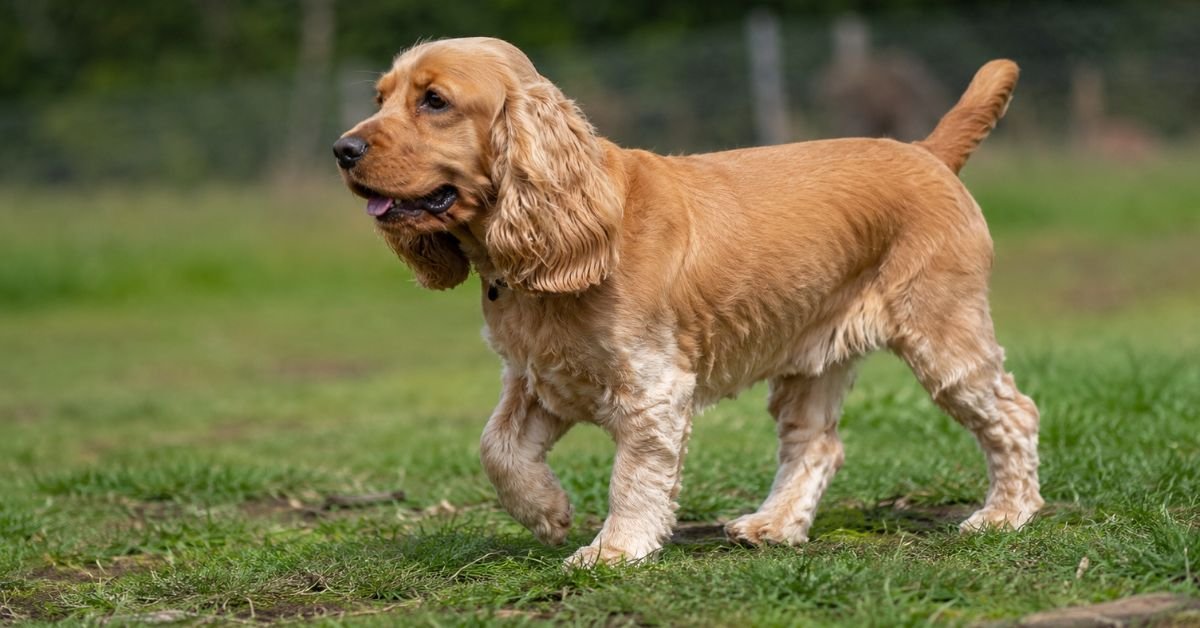
If you’ve ever come home from a hike with a coat full of burrs, a crashed-out pup, or a dog that vanished into the bushes mid-trail you already know that these cocker spaniel hiking tips need to go way deeper than “bring water and use a leash.”
This guide covers what most blogs completely skip. Real breed-specific prep, from that iconic coat to scent-lock recall built from actual trail miles with actual Cockers.
Coat & Terrain Management

Protecting a Cocker Spaniel’s coat on the trail requires three things: pre-hike lubrication to repel burrs, hourly mid-trail comb-outs in brushy sections, and a strict five-zone tick check after every hike.
Pre-Hike Coat Prep (Most Owners Skip This)
Apply a light coat of coconut oil or canine detangling spray (Chris Christensen Ice on Ice works well) to all feathering before you leave the trailhead. Burrs grip dry, flyaway coat they slide right off a lubricated one.
Carry a wide-toothed comb in your pack. A 45-minute sweep mid-trail takes two minutes and saves an hour of painful post-hike detangling.
Sap: Worse Than Burrs
Tree sap hardens fast and mats the coat completely. If your dog brushes a pine, immediately work peanut butter or olive oil into the patch with your fingers before it sets. Never pull or scissor it dry, you’ll break the coat or lift skin.
The Field Trim Rule
Never shave a Cocker for trail season; the coat insulates against heat, cold, UV, and insects. Instead, ask your groomer for a “working Cocker trim” (1–1.5 inches of feathering). It eliminates most snag points without removing protection.
Five-Zone Tick Protocol
Standard checks miss the Cocker’s highest-risk spots. After every hike, check in this order:
- Inside the ear flap crease (warm, dark, and ticks’ favourite)
- Between the toes and under paw pads
- Groin and inner thigh feathering
- Collar line
- Under the tail base
Run a fine comb through ear feathering and you’ll feel a tick before you see it.
Energy & Stamina Pacing
Pacing a Cocker Spaniel on trail means managing a dog whose emotional enthusiasm will consistently outlast their physical stamina and who will not slow down on their own.
The 20-Minute Rule for New Trail Dogs
. Cardiovascular fitness and joint resilience build slowly. A Cocker that seems fine on trail can crash hard the next morning with sore muscles and inflamed paws.
Real Fatigue Signals (Ignore the Panting)
Cockers pant when excited, not just tired. Watch for these instead:
- Lagging 2–3 steps behind when they were walking ahead
- Shortened rear stride a subtle hitching motion
- Spontaneously lying down or seeking shade
- Disinterest in sniffing a Cocker that stops engaging their nose is genuinely tired
Two or more of these means stop now, not in five minutes.
Steep Incline Strategy
For every 10 minutes of climbing, pause 2–3 minutes and let your dog stand (not sitting keeps rear muscles tense). Keep the leash short on switchbacks; lateral zig-zagging on inclines burns far more energy than a straight climb. On gains over 400 feet of elevation, add canine electrolyte powder (Nupro or Hydra-Charge) to their water to prevent the sharp energy crash Cockers often hit on descent.
Scent Distraction & Trail Recall

Breaking scent lock in a Cocker Spaniel on trail requires a specific four-step technique: a pre-loaded “Find It” foundation, a turn-and-run movement cue, a single-call rule, and consistent voluntary check-in rewards across multiple hikes.
Why Your Backyard Recall Doesn’t Transfer
A yard has low-value distractions. A forest is an olfactory overload. When a Cocker locks onto a fresh deer or rabbit trail, their brain goes functionally offline. You must train recall specifically in high-distraction outdoor environments not assume it carries over.
The Long-Line System
Use a 15–30 ft biothane long line not rope or nylon, which tangles in brush. Biothane is waterproof, snag-resistant, and the standard tool in spaniel field work. It gives freedom to range while keeping you in control.
Four-Step Scent Interruption Recall
Step 1 Find It Foundation: Before trail hikes, toss high-value treats (freeze-dried liver or cheese) into grass and cue “find it.” You’re teaching the dog to associate your voice with a rewarding sniff task.
Step 2 Puppy Voice + Turn Away: When scent lock hits, a serious tone fails. Use a high-pitched “Let’s GO!” and immediately turn and run the opposite direction. Movement triggers chase instinct and overrides the scent fixation.
Step 3 One Call Only: Repeating “come, come, COME” teaches that the first call is optional. One clear cue. If there is no response in 5 seconds, use the long line and never repeat.
Step 4 Voluntary Check-In Rewards: On every hike, reward your dog with a treat and praise the moment they glance back at you unprompted. After 6 to 8 consistent hikes, they’ll naturally break scent trails to check in.
2026 Gear Worth Knowing

The four gear updates most relevant to Cocker Spaniel hikers in 2026 are GPS collars with trail-database alerts, breed-cut cooling vests, silicone paw boots with a wider toe box, and harnesses with a Y-front chest design.
- GPS Collars: Tractive GPS 5S and Fi Series 4 now integrate with trail maps and alert you when your dog leaves the path essential for scent-prone Cockers near hunting grounds.
- Cooling Vests: New cuts are designed for longer-bodied dogs. Soak in cold water pre-hike for exposed or summer trails.
- Silicone Paw Boots: The Ruffwear Summit Trex 2026 edition includes a wider toe box for Spaniel paws, the first collapsible boot that actually stays on.
- Harness Fit: Most standard harnesses restrict shoulder rotation on a Cocker’s deep chest. Use a Y-front, back-clip harness (Ruffwear Webmaster or Julius-K9 IDC). A straight chest band limits stride on inclines.
What Other Blogs Get Wrong
| What They Say | What’s Actually True |
| “Cocker Spaniels are low-energy” | Sporting dogs with burst energy moderate endurance |
| “Brush coat after the hike” | Pre-hike lubrication is far more effective |
| “Use a 6-foot leash” | 15–30 ft biothane long line for spaniel recall |
| “Check for ticks at home” | Mid-hike ear checks are critical in high-tick terrain |
| “Any harness works” | Y-front design required for Cocker shoulder geometry |
Conclusion
Your Cocker Spaniel was bred to work through tangled undergrowth. The trail isn’t a challenge for them, it’s a homecoming.
Start short. Build gradually. Protect the coat before you leave the car. Learn their real fatigue signals. Train recall before you need it.
Do those things, and your Cocker won’t just handle the trail; they’ll absolutely love it.
Now go find a trail worth those floppy ears.
Frequently Asked Questions
1. At what age can a Cocker Spaniel start hiking?
Light trail walks can begin at 10 to 12 months, but hikes with significant elevation gain should wait until 14–16 months when growth plates in the hips and elbows fully close. Under 12 months: flat terrain only, under 30 minutes.
2. Are Cocker Spaniels prone to joint problems on trails?
Yes. The breed carries genetic risk for hip dysplasia and luxating patellas. Start a vet-approved glucosamine and chondroitin supplement (Cosequin DS or Nutramax Dasuquin) before regular trail hiking begins, and ask for an orthopedic screening first.
3. How far can a healthy adult Cocker Spaniel hike?
A trail-conditioned adult (ages 2–7) can manage 6 to10 miles on moderate terrain with proper pacing and hydration. Senior Cockers (8+) should cap at 3 to 4 miles on gentle trails based on individual health.
4. How do I handle water crossings with a Cocker Spaniel?
Always approach water on leash first to assess depth and current. Never let them enter with a submerged long line it can tangle fatally. Use a Ruffwear Float Coat for off-leash water. After any swim, check and dry the ears immediately trapped moisture is the leading cause of chronic ear infections in Cockers.
5. How do I spot heat exhaustion in a Cocker on a summer hike?
Watch for loud panting that won’t settle with rest, bright red gums, stumbling, or refusal to walk. Avoid trails between 10 AM and 3 PM in summer. Offer water every 20–25 minutes. If heat exhaustion is suspected, cool the inner thighs, paw pads, and neck with cool (not cold) water and get to a vet immediately.