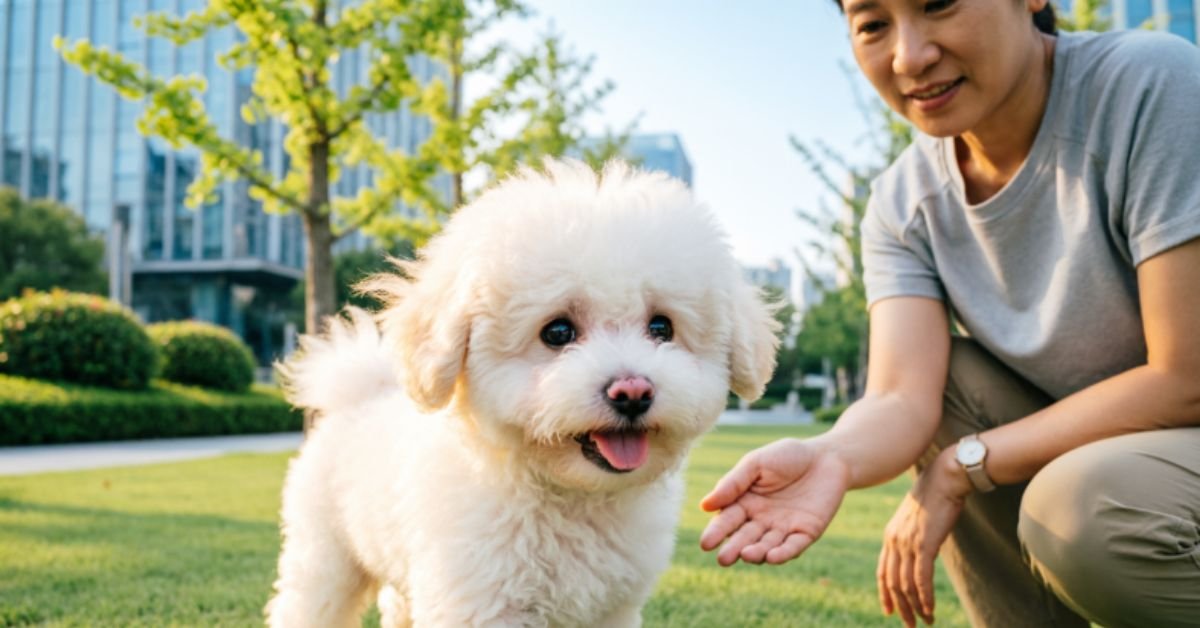
Your Bichon Frise is the life of the party fluffy, charming, and practically magnetic. Strangers stop on the street. Children squeal. Other dog owners melt. And somewhere in all that adorable chaos, a critical problem quietly takes root.
The Bichon Frise’s irresistible personality is precisely why socialization for this breed is so frequently done wrong. Most owners assume that a dog this friendly, this social, this eager to please surely doesn’t need a structured socialization plan. These are not bad dogs. These are under-socialized dogs.
In 2026, the standard for Socialization of Bichon Frise has evolved beyond “expose your puppy to lots of people.” Today, we understand that independent confidence not social dependence is the true goal. This guide gives you every tool to raise a Bichon who is calm, curious, and genuinely secure in the world.
The Bichon Frise Temperament: Sensitivity Meets Playfulness

The Bichon Frise temperament is defined by high emotional intelligence, sensitivity to human tone, and a strong desire for social connection. This breed is classified as a companion dog in the purest sense bred for centuries to be emotionally attuned to humans, acutely responsive to body language, and deeply oriented around close social bonds. Before you can socialize a Bichon effectively, you must understand this core profile: you are not working with a stoic, independent breed.
This makes them extraordinary pets. It also makes them uniquely vulnerable to:
- Separation anxiety, when their bond with humans becomes a dependency rather than a preference
- Noise and touch sensitivity, which can make grooming sessions traumatic without proper conditioning
- Stranger reactivity, ironically common in dogs who were over-socialized as puppies without learning how to self-regulate
- Small dog defensiveness, particularly around larger breeds when confidence hasn’t been properly built
The Bichon’s emotional intelligence is an asset but it needs to be channeled through structure. Without it, the same sensitivity that makes them extraordinary companions becomes the source of chronic anxiety.
Neutrality Training for Small Breeds: Why “Meeting Everyone” Leads to Anxiety

Neutrality training for Bichon Frise is a behavioral method where the dog is taught to observe environmental stimuli, people, dogs, noises, and movement without emotional reaction or unsolicited interaction. Rather than greeting every person or dog they encounter, the Bichon learns to notice, stay calm, and disengage. This represents one of the most important shifts in modern dog behavior science, and the 2026 standard treats it as non-negotiable for sensitive small breeds.
Here is why it matters so urgently: over socialization is a real problem.
For decades, puppy class instructors told owners to let their dogs greet every person, every dog, every stranger they encountered. The intention was good. The outcome, for sensitive small breeds like the Bichon Frise, was often damaging.
When a puppy is allowed or encouraged to greet every person with excitement, they develop what behaviorists call frustration reactivity. They begin to expect access to every person and dog they see. When that access is denied (on a leash, in a car, at the vet), the result is barking, lunging, whining, or shutdown.
The 2026 gold standard is Neutrality Training:
- Neutral exposure means your Bichon observes the world from a calm, settled state without rushing forward to engage
- The goal is a dog who notices a stranger and then looks back at you not one who strains toward them
- Controlled greetings are earned and brief, not a free-for-all
How to practice neutrality:
- Find a park bench or café with outdoor seating
- Bring high-value treats and your Bichon on a loose leash
- When people pass, quietly reward your dog for looking at them and then back at you
- Do not allow strangers to approach and pet unless your dog is in a calm state (four paws on the floor, not jumping)
- Practice “place” or “sit stay” while people pass at increasing proximity
This teaches your Bichon that the world is interesting but not overwhelming and that you are the most rewarding thing in their environment.
The Critical Socialization Timeline (8–16 Weeks)

The critical socialization window for Bichon Frise puppies runs from 8 to 16 weeks of age; this is the single most important period for shaping a dog’s lifelong behavioral responses to people, animals, environments, and handling. What happens during these weeks directly influences your dog’s brain architecture. We at DailyPetInfo urge every new Bichon owner to treat this period as the most important investment they will ever make in their dog’s wellbeing.
| Week | Socialization Focus | Key Activities | Neutrality Goal |
| Week 8–9 | Safe environments & handling | Touch ears, paws, mouth daily; introduce crate as a positive space; expose to household sounds (vacuum, TV, blender) | Calm observation; reward settled behavior |
| Week 10–11 | New surfaces & mild novelty | Walk on grass, tile, gravel, wood; introduce car rides; see bicycles and strollers from a distance | Dog observes, then checks in with you |
| Week 12–13 | Controlled social exposure | Meet 3–5 calm, vaccinated adult dogs; greet 5–8 calm strangers in structured settings; visit a pet-friendly store | Brief greetings; four paws on ground required |
| Week 14–15 | Grooming desensitization | Introduce brush, clippers (off), table surface, dryer sounds; mock grooming sessions | Dog accepts handling without trembling or snapping |
| Week 16 | Confidence consolidation | Short alone-time sessions (10–30 min); first puppy class; exposure to children of different ages | Dog self-settles in new environments |
The “Grooming Gap”: Socializing Your Bichon for a Lifetime of Maintenance

The “Grooming Gap” refers to the critical disconnect between a Bichon Frise’s lifelong grooming needs and the near-total absence of grooming desensitization in most puppy socialization plans. Because the Bichon Frise requires professional grooming every 4 to 6 weeks, potentially 150+ appointments over a lifetime, failure to socialize your puppy to handle clippers, tables, and dryers creates a dog that experiences chronic stress at every single session.
The grooming socialization protocol starts at 8 weeks old:
- Week 1–2 at home: Touch paws, ears, and muzzle daily with calm, deliberate handling. Use a soft brush and reward heavily after each stroke.
- Week 3–4: Introduce the sound of clippers (turned off first, then on nearby). Place them on the counter, give a treat. Let the dog sniff them. Reward curiosity, never force contact.
- Week 5–6: Begin mock grooming sessions on a non-slip mat on a table. This replicates the groomer’s environment. Practice standing still for 30–60 seconds.
- First professional visit (around Week 10–12): Book a puppy introduction appointment not a full groom. The goal is for your Bichon to walk in, be handled gently, receive treats, and walk out. That’s it. A positive first impression is worth more than a perfect haircut.
Key handling exercises:
- Paw handling: Hold each paw for 5 seconds, clip one nail, reward, stop. Build from there.
- Ear handling: Gently lift the ear flap, look inside, reward. Progress to ear cleaning over weeks.
- Muzzle and mouth: Touch gently, open lips, look at teeth. This also prepares for veterinary exams.
- Body restraint tolerance: Practice gentle, brief holds that mimic how a groomer stabilizes a dog. Reward calmly.
Choose your groomer carefully. A groomer who is experienced with small, sensitive breeds and willing to work slowly with puppies is worth the premium price. A bad grooming experience at 12 weeks can create lasting aversions that take months to undo.
Preventing Small Dog Syndrome: Training Confidence Around Big Dogs and Strangers

Small Dog Syndrome in Bichon Frises is a behavioral pattern characterized by excessive barking, snapping, or fearful reactivity toward larger dogs and strangers that develops when a dog lacks genuine confidence and has never been taught structured coping skills. It is not a personality trait. It is a preventable training gap. The solution is confidence training, not avoidance.
Building confidence around large dogs:
- Start at a distance where your Bichon is aware of the large dog but not reacting this is the threshold
- Reward calm observation with high-value treats (think: small pieces of chicken, not kibble)
- Gradually decrease distance over multiple sessions, always staying under threshold
- Avoid forced greetings. Sniffing a large dog nose-to-nose before your Bichon is ready is like asking a nervous person to hug a stranger immediately
- Arrange parallel walks with friendly, calm large dogs same direction, 6–10 feet apart before any direct greetings
Building confidence around strangers:
- Teach strangers to ignore your dog initially. Ask them to toss a treat on the ground near your Bichon rather than reaching for them
- Practice “go say hi” as a cued behavior your dog learns that greetings happen on your terms, not randomly
- Reinforce four on floor: no treats or attention when jumping; immediate reward when all paws are on the ground
Separation Success: Socializing Your Bichon to Be Alone

Separation success for Bichon Frise means systematically teaching the dog to tolerate and self-regulate during periods of solitude because aloneness is a learned skill, not an innate trait, for this breed. The Bichon Frise is among the companion breeds most susceptible to separation anxiety, engineered over centuries to stay close to humans. Without deliberate training, even a short absence can trigger distress.
The 2026 approach is called graduated departure training, built across three phases:
- Phase 1 (Weeks 1–2): Place your Bichon on their bed or crate and walk a few feet away. Return before any whining starts. Reward calm behavior, then gradually increase distance.
- Phase 2 (Weeks 3–4): Step out of sight behind a door for 5 seconds. Return calmly, no dramatic reunions. Build to 1, then 5 minutes over several days.
- Phase 3 (Weeks 5–8): Begin real departures starting at 5 minutes, increasing in small increments. Use a frozen Kong or puzzle toy to extend independent engagement.
5 Common Mistakes in Bichon Socialization (And How to Avoid Them)

Mistake #1: Over-consoling during fear responses. Scooping up and soothing a trembling Bichon rewards the fear. Instead, stay calm, use cheerful body language, and redirect to a simple “sit” before rewarding.
Mistake #2: Carry your Bichon everywhere. Dogs who are routinely carried never learn to navigate the world independently and keep them on the ground whenever safe. Walking builds confidence; being carried prevents it.
Mistake #3: Allowing every stranger to approach. This creates an over-aroused dog who expects unlimited social access. “He’s in training, thank you!” is a complete and perfectly polite sentence.
Mistake #4: Stopping socialization after puppyhood. Adult Bichons who stop encountering novelty can regress into fearfulness. Aim for at least one new controlled exposure per week, for life.
Mistake #5: Punishing reactive behavior. Leash corrections and shouting suppress the behavior but amplify the underlying anxiety. Address the feeling of insecurity and over arousal through the confidence-building methods in this guide.
The Confident Bichon Is a Happy Bichon
The Bichon Frise who thrives in 2026 is not the dog who greets every person with frantic excitement. It is the dog who walks into a new environment, looks around with interest, checks in with their owner, and settles calmly. That dog can be left alone without distress, handled at the groomer without drama, and introduced to a Great Dane without losing their mind.
That dog is the product of intentional, structured, compassionate socialization started early, maintained consistently, and always guided by the principle of building genuine independence and confidence rather than social dependency.
Frequently Asked Questions
Q: When should I start socializing with my Bichon Frise puppy?
The day your puppy comes home is typically 8 weeks. The critical window is 8–16 weeks, but early socialization within the breeder’s home (3–8 weeks) also shapes the foundation significantly.
Q: My Bichon is already 2 years old and anxious. Is it too late?
Never. Counter-conditioning and desensitization work in adult dogs. For moderate to severe anxiety, consult a certified applied animal behaviorist (CAAB) or veterinary behaviorist, who may also consider medication support.
Q: How do I find a groomer who is good with sensitive Bichons?
Ask about their experience with anxiety prone small breeds. A good groomer offers puppy introduction visits, uses positive reinforcement, and is willing to take breaks. Dismiss anyone who dismisses your concerns.
Q: My Bichon barks at larger dogs on walks. What should I do?
This is threshold reactivity. Work at a distance where your dog notices the larger dog but does not react reward calm observation heavily. Reduce distance gradually over multiple sessions. Parallel walking with a calm large dog is one of the fastest-working interventions.