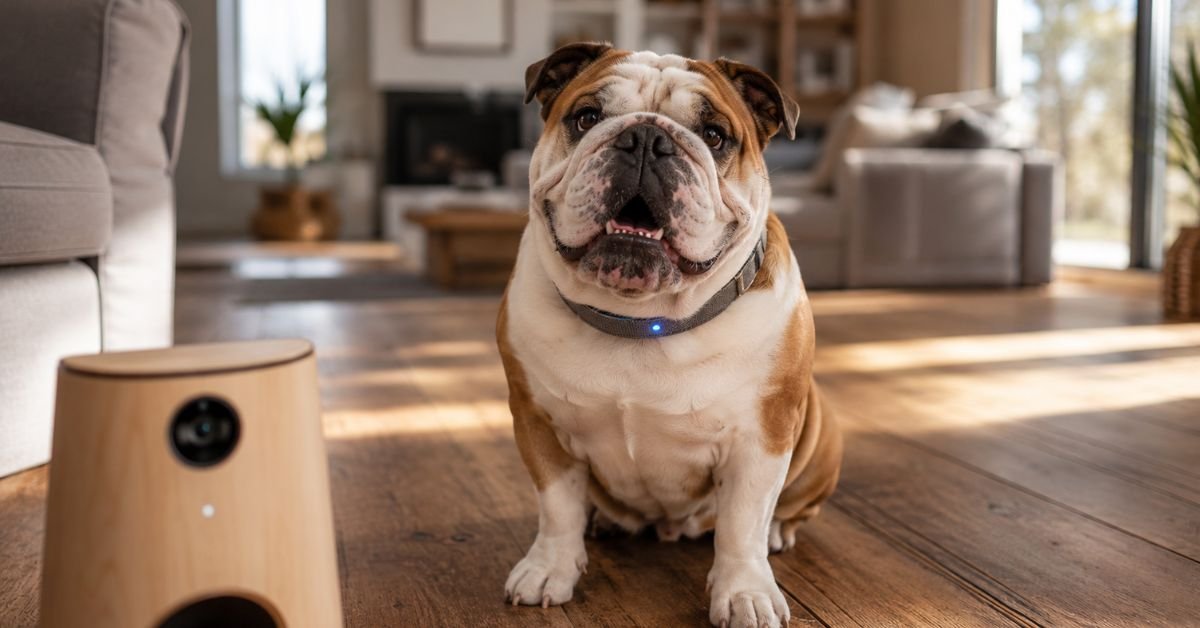
My English bulldog Barnaby once stared at a treat in my hand for a full eight seconds, sighed like I’d asked him to file taxes, and then lay down on my foot instead of sitting.
That wasn’t defiance. That was a 55-pound athlete with a respiratory system from the 1800s doing a cost-benefit analysis.
If you’ve ever felt like your bull dog training tips is running a silent committee meeting before deciding whether your commands are “worth it,” welcome to the club. This isn’t 2015 dog training anymore, either. In 2026, we’ve got AI treat dispensers, smart collars, and apps that track snoring patterns and honestly, bulldogs needed this upgrade more than any other breed.
Let’s get into the stuff that actually moves the needle.
Redefining the Bulldog Psychology (The “Why” Behind the Snort)

Bulldog “stubbornness” is a myth. It’s actually a low-effort survival strategy from a breed built for short, explosive bursts rather than endurance, combined with a brachycephalic airway that makes prolonged exertion physically costly. Once you train around energy conservation instead of fighting it, results come faster and sessions get shorter.
They’re Not Stubborn. They’re Energy Accountants.
Bulldogs were bred for short, explosive bursts of effort, not endurance. Their bodies are wired to ask one question before any movement: “Is this worth the oxygen?”
That’s not stubbornness. That’s a survival instinct baked into a body that overheats fast and breathes through a straw.
When Barnaby ignores a “come,” he’s not rebelling. He’s running an internal budget, and the couch usually wins.
The Brachycephalic Factor Changes Everything
A Border Collie can train for 45 minutes and barely break a sweat. Your bulldog can overheat in 10 minutes of moderate excitement, especially indoors with poor airflow.
Their flat faces mean:
- Less efficient panting
- Higher resistance when breathing fast
- A much smaller margin between “having fun” and “in distress”
Train with this body, not against it.
The Core 2026 Bulldog Training Tips
The best bulldog training tips for 2026 center on short micro-sessions, motivation audits, and posture-safe cues rather than long drills or repeated corrections. Bulldogs respond best to 3-minute training bursts, treats delivered low and slow to protect their airway, wall-assisted postures that don’t strain their hips, and calming rituals like wrinkle cleaning used as a reward. These methods work with the breed’s body instead of against it.
What Are the Best Bulldog Training Tips? (Quick Answer)
- Use 3-minute micro-sessions, not 15-20 minute blocks, to match their attention and oxygen limits
- Audit motivation before blaming stubbornness check room temperature, hunger, and treat quality first
- Deliver treats below nose level in small, swallow-ready pieces to prevent choking and snorting
- Use wrinkle cleaning as a calming reward ritual, not just a hygiene chore
- Train “sit” and “down” with wall-assisted, low-rider posture cues to protect hips and joints
- Stop the second a session window closes, even mid-success, to keep engagement high for next time
Now here’s the deeper version of each, plus what I learned doing this the hard way with Barnaby.
The 3-Minute Rule (Why Micro-Sessions Beat Marathon Training)

I used to do 15-minute training blocks because that’s what every guide said. Barnaby checked out around minute four every single time.
Here’s what changed everything: switching to 3-minute bursts, 4-6 times a day.
Why it works for bulldogs specifically:
| Training Style | Bulldog Result |
| 15-20 min sessions | Overheating, mental shutdown, “stubborn” labeling |
| 3-minute bursts | High engagement, no panting spiral, faster retention |
Their attention and oxygen efficiency both run out around the same time roughly 2 to4 minutes of active engagement. End the session before that cliff, not after.
Try this today: Set a phone timer for 3 minutes. One skill, one session. Stop the second the timer rings, even mid-success. Leaving them wanting more is the whole trick.
Stop Calling It Stubbornness Call It a Motivation Audit
Before you label your bulldog “difficult,” ask:
- Is the room too warm? (Bulldogs disengage above 75°F indoors)
- Have they eaten in the last hour? (Full bulldog = checked-out bulldog)
- Is the treat actually exciting, or just “fine”?
I learned the hard way that Barnaby would “ignore” basic commands at home but nail them instantly at the vet’s office for string cheese. He wasn’t stubborn. He was bored of kibble-flavored bribery.
Rotate three treat tiers:
- Everyday tier (kibble, plain biscuits)
- Training tier (freeze-dried liver, small training treats)
- Jackpot tier (cheese, boiled chicken reserved for breakthroughs only)
Wrinkle & Breathing Mechanics: The Treat-Timing Hack Nobody Mentions

Here’s something most training blogs completely skip: how you deliver the treat matters as much as when.
Bulldogs can struggle to chew and breathe at the same time, especially mid-excitement. Tossing a treat fast, or holding it too close to their nose, can cause snorting, choking, or a mini coughing fit that kills training momentum.
Do this instead:
- Deliver treats slightly below nose level, not straight at the face
- Use treats small enough to swallow in one bite no chewing marathons
- Pause one full second after the behavior before treating, so they’re not gulping mid-pant
Turn Wrinkle Cleaning Into a Calming Ritual (Not a Chore)
Most owners treat wrinkle cleaning as a hygiene task. Smart bulldog owners treat it as a reward and bonding mechanism.
After a good training session, a slow, gentle wrinkle wipe-down does two things:
- Reinforces calm, physical touch as a “good job” signal
- Builds tolerance for handling, which makes vet visits and grooming dramatically easier
Barnaby now associates the wipe with success, so much that he tilts his head into it like it’s a spa treatment he booked himself.
The Low-Rider Posture Hack for Sit & Down

Bulldogs are built low, wide, and heavy. Standard “lure the nose up and back” sit cues can strain their hips and shoulders, especially in dogs prone to joint issues.
Try the wall-assisted version instead:
- Stand your bulldog with their back lightly against a wall or low couch edge
- Lure the nose down and slightly back, not up this naturally tucks the rear without forcing weight onto the back legs
- For “down,” lure diagonally toward the floor between their front paws instead of straight down
This respects their center of gravity instead of fighting it, and it’s noticeably easier on aging or overweight bulldogs.
Tech-Assisted Training for the 2026 Bulldog Household

Modern pet tech fills the gaps between micro-sessions. AI treat dispensers, breathing-aware smart collars, and micro-session training apps are the three tools making the biggest difference for bulldog owners in 2026, especially in apartments and WFH setups where structured outdoor training time is limited.
If you’re working from home with a bulldog snoring under your desk, this tech does the heavy lifting between your 3-minute bursts.
AI Treat Dispensers
Smart dispensers now use motion-sensing cameras to reward calm behavior automatically, which is huge for bulldogs since rewarding stillness is half the training battle. Set one near your WFH desk to reinforce “settle” without you lifting a finger.
Micro-Session Training Apps
A wave of 2026 apps now build training plans specifically around 2-4 minute intervals, complete with built-in rest timers. This pairs perfectly with the 3-Minute Rule, since the app enforces the stop before you’re tempted to push for “just one more rep.”
Smart Collars & Breathing Monitors
Some wearable collars now track respiration patterns, flagging when a bulldog is approaching overexertion during play or training. For a brachycephalic breed, this is less of a gimmick and more of an actual safety net.
Apartment & WFH-Friendly Setups
- Indoor scent mats for low-impact mental stimulation on days too hot to train outside
- Smart water fountains with flow sensors to encourage hydration during and after sessions
- Video-monitored crates so you can check in on calm, independent rest periods between Zoom calls
Quick Reference Matrix Behavior to Instant Fix
Use this table as a fast lookup for the most common bulldog training hiccups. Match the behavior on the left to the likely cause and tactic on the right, and apply the fix in the same session rather than waiting until tomorrow.
| Behavior | Likely Cause | Instant Tactic |
| Refuses to sit after 2-3 reps | Mental/physical fatigue | End session immediately, restart later with shorter rep count |
| Heavy panting mid-training | Overheating risk | Pause, offer water, move to shade/AC, shrink session to 90 seconds |
| Ignoring cues at home but not outside | Low motivation environment | Rotate to “jackpot tier” treats, change training location |
| Snorting/coughing during treat delivery | Treat too big or delivered too fast | Use pea-sized treats, deliver below nose level |
| Sitting crooked or refusing “down” | Joint discomfort from posture | Use wall-assisted low-rider hack |
| Zoning out mid-session | Session ran too long | Cut to strict 3-minute blocks, increase daily frequency |
| Anxious during grooming/handling | Lack of positive touch association | Pair wrinkle cleaning with post-training rewards |
Wrapping This Up With a Little Bulldog Wisdom
Training a bulldog isn’t about out-stubborning your dog. It’s about working with a body built for short bursts, a brain that runs on motivation math, and a face that deserves gentle handling, not frustration.
Start with one 3-minute session today. Watch the wrinkles, time the treats, and let the wall-assisted sit take the strain off those hips.
Barnaby’s still not winning any agility trophies. But he sits, he settles, and he tilts his head into a wrinkle wipe like he invented self-care. That’s a win in any bulldog household.
Frequently Asked Questions
How long should a bulldog training session be?
Keep bulldog training sessions to 3 minutes at a time, repeated 4-6 times a day instead of one long block. Their attention span and oxygen efficiency both drop fast, so short bursts produce better retention than a single 15-20 minute session.
Why does my bulldog ignore commands he already knows?
This usually isn’t stubbornness it’s a motivation problem, not a memory problem. Check the room temperature, how recently he’s eaten, and whether the treat is actually exciting enough to compete with the couch.
Is it normal for bulldogs to snort or cough during training?
Occasional snorting is common due to their airway structure, but frequent coughing during treats usually means the treat is too big or being delivered too fast. Use pea-sized pieces and offer them slightly below nose level.
What’s the best way to teach a bulldog to sit without hurting their hips?
Use a wall-assisted, low-rider posture cue instead of the standard nose-up lure. Standing your bulldog against a wall and luring the nose down and slightly back protects their joints while still getting a clean sit.
Can smart pet tech actually help with bulldog training?
Yes AI treat dispensers, micro-session apps, and breathing-aware smart collars are especially useful for bulldogs because they reinforce calm behavior and flag overexertion automatically, which fits a breed that overheats easily.