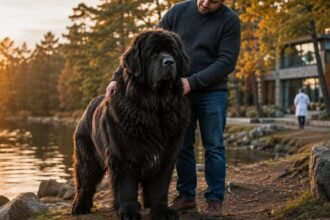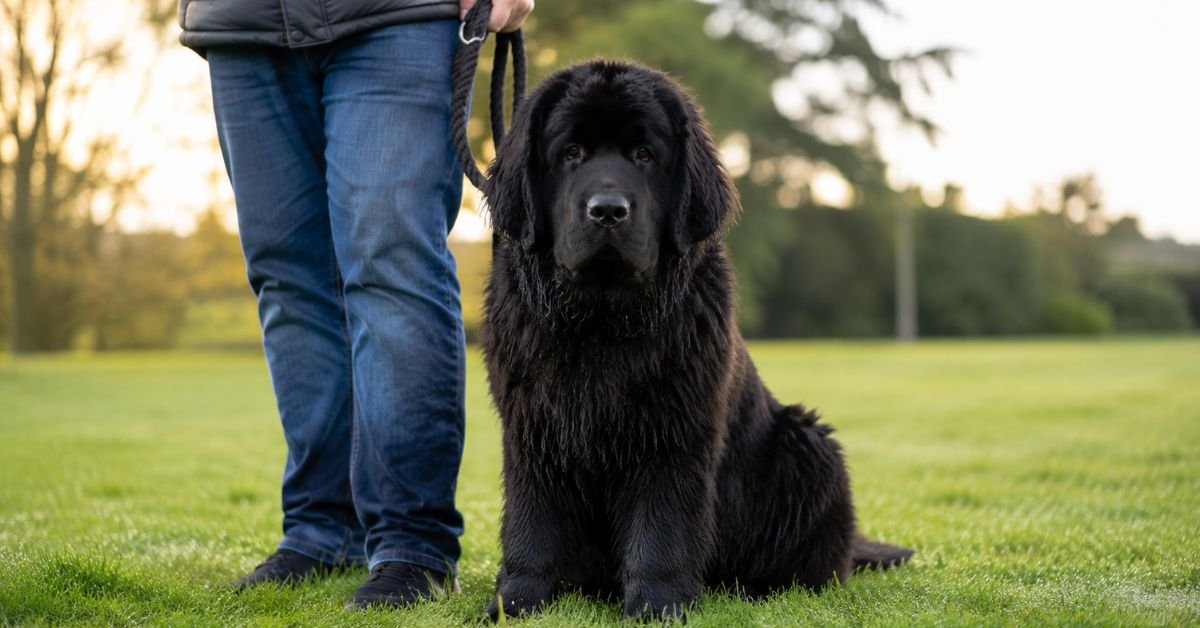
Socialization of Newfoundland dog requires a fundamentally different approach than standard puppy socialization, because this breed combines a 100 to 150 lb adult frame with an unusually soft, easily-overwhelmed temperament. Push too hard, too fast, and a Newfie doesn’t act out. They shut down. The sections below break down exactly where this breed’s socialization needs diverge from generic advice, and how to structure it correctly from week 8 through adulthood.
Newfies are built like small bears and feel like poets. If you’ve ever wondered why the “just take them everywhere” advice isn’t working for your dog, you’re not doing anything wrong. You’re just following a script written for a different kind of animal.
I’ve spent over fifteen years living with, breeding, and rehabilitating Newfoundlands, and the dogs who grow into calm, rock-solid adults are never the ones dragged to the busiest dog park in town. They’re the ones whose owners understood this paradox from day one.
The Newfie Paradox: Massive Body, Marshmallow Heart

The core issue: Newfoundlands respond to socialization pressure with freezing and disengagement, not defiance or aggression. Reading stillness as stubbornness and pushing through it is the single most common mistake new owners make, and it teaches the dog that neither the environment nor the owner is safe.
A client of mine, Sarah, called me in a panic about her ten-month-old Newfie, Barnaby. He’d frozen mid-walk near a construction site and refused to move for twenty minutes. Sarah assumed he was being stubborn, so she tried leash pressure to get him going.
Big mistake.
Barnaby didn’t budge for the rest of the walk, and for two weeks afterward he avoided that entire block. What Sarah read as defiance was actually a full nervous system shutdown.
The fix wasn’t more exposure. It was less pressure and more patience. We backed up, gave Barnaby distance from triggers, and let him choose to approach things on his own terms. Within a month, he was walking past construction sites like they were furniture.
This is the core truth of Newfie socialization: you’re not building bravery through repetition alone. You’re building trust through choice.
Standard Puppy Socialization vs. Newfoundland Socialization Requirements
| Factor | Standard Puppy Approach | Newfoundland-Specific Requirement |
| Size timeline | Adult size reached ~9–12 months | Adult size (100–150 lbs) often not reached until 18–24 months |
| Growth plate closure | Typically closed by 12–14 months | Often not closed until 18–24 months |
| Physical exposure (hikes, group play) | High-impact play generally safe by 6 months | High-impact activity should be limited and flat-ground only through 18+ months |
| Greeting behavior training | Cute jumping often tolerated early on | Jumping/leaning must be corrected by 8–12 weeks due to adult weight risk |
| Water exposure | General swim safety | Requires dedicated “rescue instinct” training separate from general water fun |
| Fear response | Often bounces back with light redirection | Requires distance and choice-based recovery; punishment causes lasting shutdown |
| Grooming desensitization | Can often start later without major issue | Must start by 8–10 weeks; adult size makes late starts unsafe for groomers/vets |
Breed-Specific Socialization Rules Most Blogs Never Mention

Three factors drive Newfoundland-specific socialization: adult body weight, an inherited water-rescue instinct, and delayed growth plate closure. Each requires a modified approach that generic socialization checklists don’t account for.
The Weight Factor
A Newfie puppy who jumps on guests at twelve weeks is cute. That same behavior at eight months, from a dog pushing 90 pounds, can knock a grown adult off their feet.
Practice a “four on the floor” greeting ritual from the very first week home, and reward calm bodies, not excited ones. Don’t wait until the excitement becomes a liability.
Water and Rescue Instincts
Newfoundlands were bred to pull drowning sailors out of the North Atlantic, and that instinct doesn’t stay dormant just because your dog has never seen the ocean. Many Newfies will attempt to “rescue” swimmers who are simply enjoying themselves, which can create dangerous or embarrassing situations at public beaches.
Socializing around water needs its own separate track:
- Start on leash near calm water, watching swimmers from a distance before any off-leash time.
- Teach a rock-solid “leave it” and recall specifically around water, since a Newfie mid-instinct won’t respond to normal commands.
- Introduce a properly fitted flotation harness early so water time feels structured, not chaotic.
The Growth Plate Danger
Newfoundland growth plates don’t fully close until somewhere between 18 and 24 months, considerably later than most breeds. Current giant-breed veterinary orthopedic guidance continues to emphasize limiting high-impact, repetitive-stress activity well into the second year of life.
Long group hikes, rough wrestling with adult dogs, and repeated jumping in and out of vehicles can quietly set your dog up for hip or elbow issues down the road. Modify, don’t skip. Short, structured meet-and-greets on flat ground are fine. Rocky trail romps with three other large dogs are not.
The 2026 Modern Socialization Blueprint

A structured timeline works better than open-ended exposure. Break the process into three phases controlled observation (weeks 8–12), neutrality training (months 4–6), and targeted desensitization (months 6+) and use a socialization-tracking app to log exposures and flag stress responses so nothing gets missed.
Weeks 8–12: The Controlled Bubble
This stage is about exposure without expectation. Your puppy should experience new sounds, textures, and sights from a safe distance, without being required to interact.
- Let them observe a vacuum cleaner from across the room before it ever comes near them.
- Walk them across five different surfaces (tile, grass, gravel, metal grating) in short sessions.
- Log each new exposure and flag any that caused visible stress, so you know what to revisit later.
Months 4–6: The Polite Giant Phase
This is where most owners overcorrect by forcing play with every dog they meet. Don’t. Teach neutrality instead.
The goal is a dog who can walk past another dog, person, bicycle, or skateboard without needing to greet it. Neutral is the win here, not friendly. Save actual play sessions for a small, known circle of calm, compatible dogs.
Months 6+: Heavy Crowd and Sound Desensitization
By six months, your Newfie is big enough that grooming tools, vet equipment, and crowded spaces need dedicated attention.
- Practice handling paws, ears, and mouth daily, even for thirty seconds at a time.
- Introduce clippers and dryers at low settings before a real grooming appointment, not during one.
- Take short, calm trips to busier environments like hardware stores or outdoor markets, always with an exit plan.
Three Critical Mistakes That Ruin a Newfie’s Temperament

The three most common temperament-damaging errors are: forced dog-park exposure, delayed grooming desensitization, and punishing fear responses. Each creates a lasting behavioral consequence that’s difficult to reverse.
Mistake 1: The Dog Park Flooding Disaster
Dropping an under-socialized Newfie into an open dog park is a gamble every time. One bad interaction with an aggressive dog can create lasting fear, and because Newfies are so large, other owners often assume yours is the intimidating one, leading to unfair confrontations.
Mistake 2: Ignoring Grooming Desensitization Until It’s Too Late
A wiggly ten-pound puppy who dislikes having their paws touched is manageable. A resistant 130-pound adult who feels the same way is a genuine safety issue for groomers and vets. Start handling exercises absurdly early.
Mistake 3: Correcting Fear With Punishment
If your Newfie freezes or backs away from something, correcting that response with leash pressure or a stern voice teaches them that fear itself is punished. That doesn’t remove the fear. It teaches your dog to stop showing you when they’re scared, which is far more dangerous.
Calm, Confident, and Neutral Is the Real Goal
Socialization was never about creating a dog who loves every person, dog, and situation they encounter. It’s about raising a dog who can move through the world without being ruled by fear or overwhelmed by excitement.
Your Newfie doesn’t need to adore the mail carrier or the vacuum cleaner. They just need to know none of it requires a reaction. That’s the finish line, and with patience, it’s within reach.
Frequently Asked Questions
Is it too late to start a socialization routine for an adult Newfoundland dog?
No, though the approach shifts. Adult dogs can learn new associations, but progress tends to be slower and more dependent on trust-building than pure exposure. Focus on counter-conditioning around specific triggers rather than broad outings, and expect the process to take months rather than weeks.
How do I stop my Newfoundland puppy from leaning on or jumping on strangers during socialization?
Reward four-on-the-floor greetings from day one, and ask visitors to ignore your puppy completely until they’re calm. Leaning is often a self-soothing behavior in this breed, so redirecting it to a “sit and lean against my leg” cue can satisfy the instinct without startling strangers.
How can I socialize my Newfie to tolerate heavy professional grooming sessions?
Start handling exercises at home weeks before any appointment. Practice with clippers and dryers turned on nearby but not touching, gradually working up to actual contact. Short “hello only” visits to the groomer, with no actual grooming involved, make real appointments far less stressful.
My Newfoundland hides behind me at the pet store. Should I force them to meet people?
No. Forcing an interaction when your dog is already retreating tends to backfire, teaching them that hiding doesn’t work and that you can’t be trusted to protect their space. Give them distance, let curious people ignore your dog rather than approach, and let your Newfie decide if and when to come out from behind you.
E