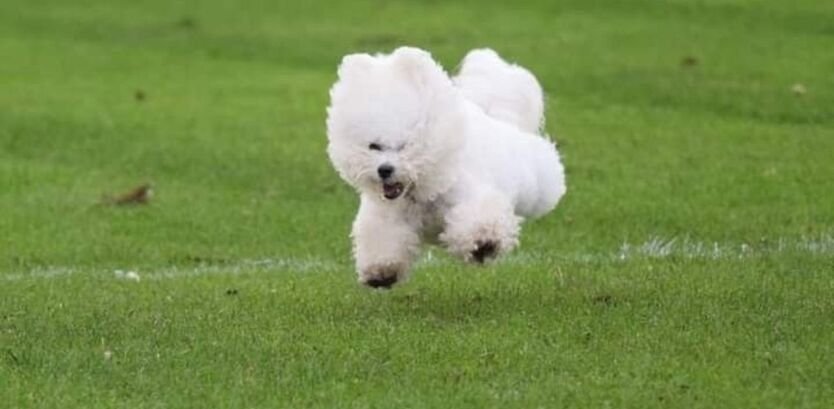
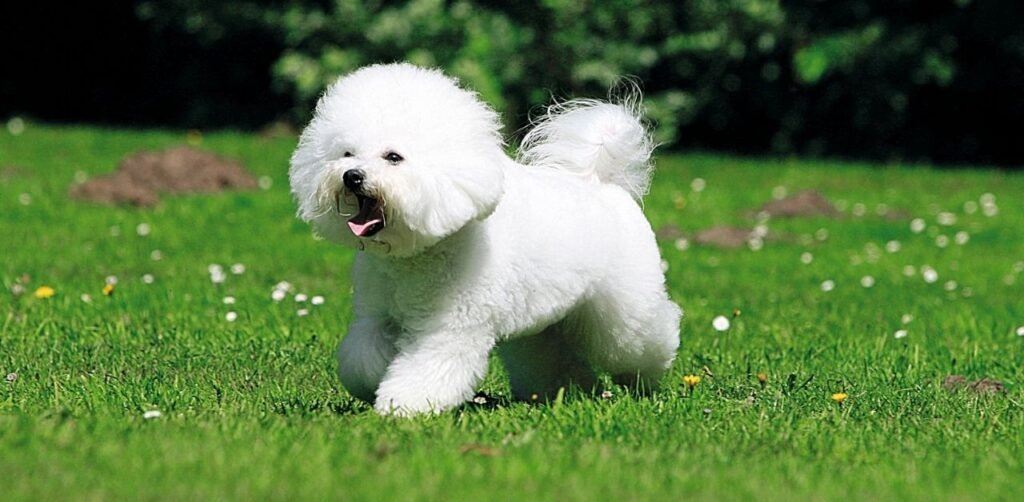
The Bichon Frise is frequently pigeonholed as a sedentary “lap dog” or a fragile show animal. However, looking at their lineage as the Bichon Tenerife reveals a history of seafaring resilience. These dogs were built for the shifting decks of sailing ships requiring core strength, agility, and mental alertness.
For the modern urban pet parent, transitioning a Bichon from the pavement to the trail is not a question of the dog’s “will,” but of the owner’s “technical preparation.” This article breaks down the physiological limits, gear requirements, and coat-preservation hacks necessary to turn your Bichon into a capable hiking partner without sacrificing their health or their iconic appearance.
Quick Answer: Can a Bichon Frise Go Hiking?
Yes, a healthy Bichon Frise can hike 3 to 5 miles on moderate terrain. Originally bred from sturdy Mediterranean water dogs, they possess high stamina but require specific management. Success depends on preventing tracheal collapse with a Y-harness, using silicone coat shielding to stop trail matting, and monitoring for heat exhaustion due to their dense double coat.
Section 1: Physiological Limits and “Stride Math”
The 3-5 Mile Endurance Rule
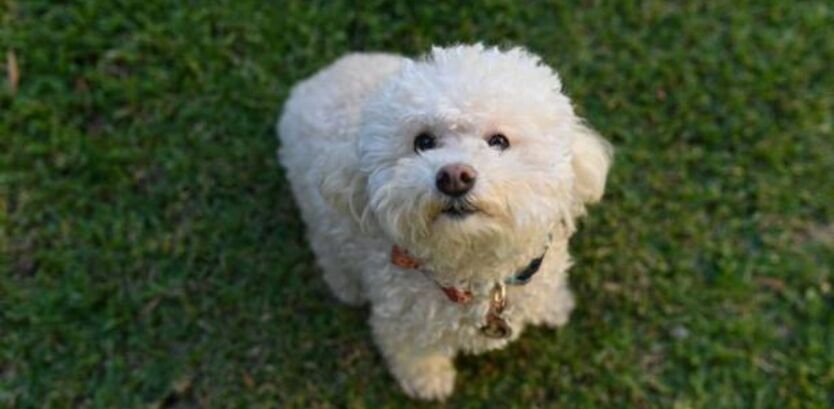
When planning a hike, you must calculate the Work-to-Stride Ratio. For every mile you walk, a Bichon Frise takes approximately four to five times the steps. A 3-mile loop for you is a 12-mile marathon for them.
- Conditioning: Start with 1-mile flat walks on soft soil to build up their “trail paws.”
- The Fatigue Threshold: Most Bichons hit a physical wall at the 4-mile mark. Pushing beyond this without a carrier bag increases the risk of DOMS (Delayed Onset Muscle Soreness) and joint inflammation.
Heat Sensitivity and Thermoregulation
Bichons possess a dense, curly double coat that acts as a thermal insulator. While excellent for cold winds, it is a liability in high-humidity hiking.
- The 70/70 Rule: If the temperature exceeds 70°F (21°C) and humidity is over 70%, the risk of heatstroke in small, low-to-the-ground breeds increases exponentially.
- Radiant Heat Absorption: Because of their short stature, their bellies are closer to the “thermal radiation” reflecting off dark rocks or dirt.
Altitude and Oxygen Density
If you are hiking in mountainous regions, remember that Bichons have smaller lung capacities. Rapid elevation gain (anything over 2,000 feet in a single drive) requires a 24-hour acclimatization period. Watch for signs of lethargy or “blueish” gum tint, indicating low oxygen saturation.
Section 2: Pre-Hike Preparation: Coat Shielding and Paw Health
The “Paperclip Test” for Nail Integrity
Nail maintenance is the foundation of canine trail safety. Long nails force the foot to splay, causing unnatural pressure on the pasterns and hocks.
- The Test: On a hard, flat surface, try to slide a standard paperclip under the dog’s nail. If it catches or won’t fit, the nails are too long. Short nails allow the digital pads to grip the terrain, preventing slips on wet rocks or inclines.
The Silicone Detangler Hack (Anti-Matting)
The Bichon’s coat is a “Bur Magnet.” To prevent organic debris from weaving into the hair shaft:
- Application: 30 minutes before the hike, spray the legs, belly, and “trousers” with a silicone-based grooming sheen (dimethicone-based).
- The Benefit: This creates a microscopic, slippery barrier. Mud, seeds, and burs will sit on the surface of the hair rather than becoming embedded in the undercoat. This single step saves hours of painful post-hike dematting.
Section 3: Mandatory Gear for the Bichon Hiker
The Y-Shaped Harness: Avoiding Tracheal Collapse
Bichons are genetically predisposed to Tracheal Collapse a condition where the tracheal rings weaken.
- Technical Requirement: Never hike with a leash attached to a collar. Use a Y-shaped harness that rests on the sternum (breastbone).
- Why Y-Shaped? Unlike “H-style” or “No-Pull” harnesses that can restrict shoulder movement, a Y-shape allows for full “reach and drive” in the dog’s stride, reducing the risk of early-onset arthritis.
The “Safety Backup” Carrier Bag
In the veterinary community, we advocate for a “Carrier Protocol.” A small dog carrier is not a sign of “pampering”; it is an emergency evacuation tool.
- Scenarios: If your Bichon suffers a torn pad, an insect sting, or sudden heat exhaustion, you cannot carry them in your arms for miles while navigating technical terrain. A chest-mounted or backpack carrier is essential safety gear.
Cooling Vests and UV Protection
Bichons have pink skin beneath that white fur. On high-altitude trails where UV rays are stronger, they are prone to sunburn. A reflective evaporative cooling vest reflects sunlight and uses water evaporation to lower the dog’s core temperature by up to 10 degrees.
Section 4: Trail Etiquette and Predator Safety
The “White Contrast” Risk
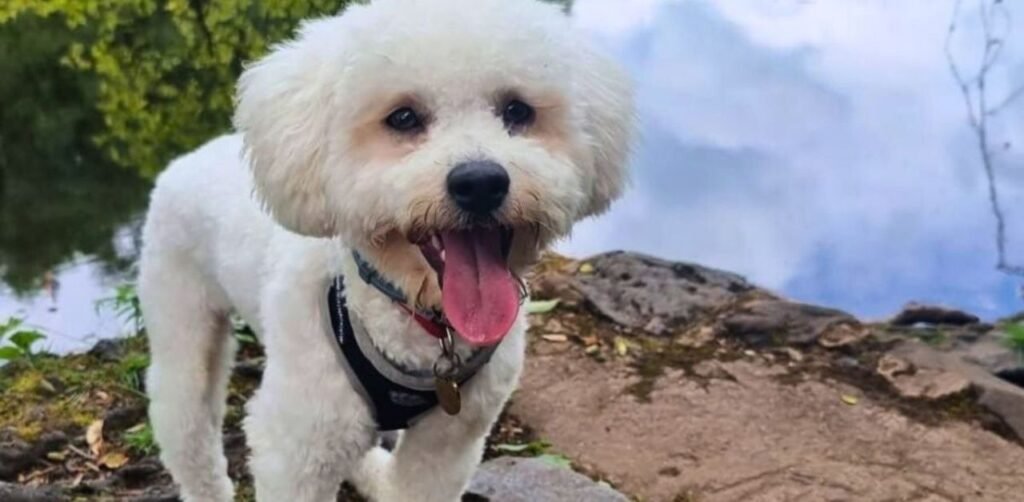
In the wild, a white, fast-moving Bichon is highly visible not just to you, but to predators.
- Aerial Predators: Large hawks and owls can perceive a 12lb dog as prey. Keep your dog within a 6-foot radius in open meadows.
- Large Breed Dynamics: Many “off-leash” dogs have high prey drives. To a large, untrained dog, a Bichon can look like a rabbit. Always advocate for your dog’s space and use a “Pick Up” command if an off-leash dog approaches aggressively.
Trail Anxiety and Socialization
Urban Bichons may find the “silence” or the sudden sounds of the woods (breaking branches, rushing water) overstimulating. Use high-value treats to reward “calm checking-in” behavior. If the dog begins to “pancake” (lie flat on the ground), they are over threshold and need a break or to be carried.
Section 5: Post-Hike Protocol: The Technical Clean
The “Tactile Sweep” for Foxtails
Foxtails (grass seeds) are the “silent killers” of the trail. Their barbed shape allows them to move only one way: forward. They can burrow into the skin, ears, and even lungs.
- Protocol: Do not just look; feel. Run your fingers through the “armpits,” between every toe, and around the base of the ears. Any hard, seed-like object must be removed immediately.
Cleaning without Matting
If your Bichon is covered in mud:
- Do Not Scrub: Scrubbing with a towel creates “friction mats” that are impossible to brush out.
- The Rinse: Use a high-pressure (but low heat) rinse to blast mud out of the coat.
- The Blow-Dry: Always blow-dry the coat on a “cool” setting. Leaving a Bichon to “air dry” after a hike is the fastest way to cause a full-body pelt mat.
Conclusion: Building the Bond through Adventure
Hiking with a Bichon Frise requires more logistics than hiking with a Labrador, but the rewards are profound. By respecting their physical limits and utilizing technical gear like Y-shaped harnesses and silicone shields, you transform a “city dog” into a resilient explorer. The key is to prioritize safety over distance and coat health over convenience.
Frequently Asked Questions (FAQs)
1. Can a Bichon Frise hike in the snow?
Yes, but they require a full-body snowsuit. Without it, the “snowballing effect” occurs where moisture freezes to their curly hair, creating heavy, painful ice clumps that can cause skin tearing and hypothermia.
2. What are the first signs of exhaustion?
Look for “lagging” (staying behind the owner), excessive yawning (a stress signal), and a “spoon-shaped” tongue. If the tongue is wide and curled at the end, the dog is struggling to cool down and needs immediate shade and water.
3. Is it safe to hike where there are coyotes?
Only if the dog is on a non-retractable leash. Coyotes are opportunistic. Keeping your Bichon close and carrying a “deterrent” (like a loud whistle or bear spray) is mandatory in coyote-heavy regions.
4. How does rocky terrain affect their joints?
Repeated jumping off rocks higher than the dog’s shoulder can lead to Patellar Luxation (kneecap slipping). Use the “Hand-Assist” method: use the handle on their harness to lift them down from high ledges to absorb the impact.
5. How often should we take hydration breaks?
Every 30 to 45 minutes. Bichons are “efficient” drinkers, but they often forget to drink when overstimulated. Force a “rest and hydrate” break even if the dog doesn’t seem thirsty.